
Learn more about how Trevisan’s Horizontal Machining Centers can help you minimize set up time and labor costs.

2026 Best Arm Cylinder Types for Global Buyers

Choosing the right Arm Cylinder can determine whether heavy equipment works smoothly or fails under pressure. Global buyers face many options, including welded, tie-rod, telescopic, single-acting, and double-acting designs. Each type suits different loads, spaces, duty cycles, and maintenance conditions. A compact excavator working on wet farmland needs different protection from a loader operating in dusty quarries.

Hydraulic systems engineer Dr. Ivantysyn offers a useful principle: “A cylinder must be selected as part of the complete system, not as an isolated component.” That principle shapes this guide. Bore diameter affects pushing force. Rod diameter influences buckling resistance. Stroke length controls movement and installation space. Seal materials must also match temperature, pressure, and fluid compatibility. Small details matter. A poorly matched pin diameter can create uneven wear within months.

The 2026 market also demands stronger evidence from suppliers. Reliable manufacturers should provide pressure-test records, dimensional drawings, material certificates, and traceable quality inspections. Buyers should review fatigue performance, surface treatment, corrosion resistance, and replacement-seal availability. ISO compatibility may simplify sourcing, but it does not guarantee perfect field performance. Real operating conditions still matter.

This guide compares leading Arm Cylinder types for construction, agriculture, mining, material handling, and specialized machinery. It considers performance, service life, customization, delivery risk, and total ownership cost. Some recommendations remain conditional. No design wins everywhere. The best choice may be slightly heavier, less attractive, or more expensive at purchase. Yet that decision can prevent leaks, downtime, and costly redesigns later.
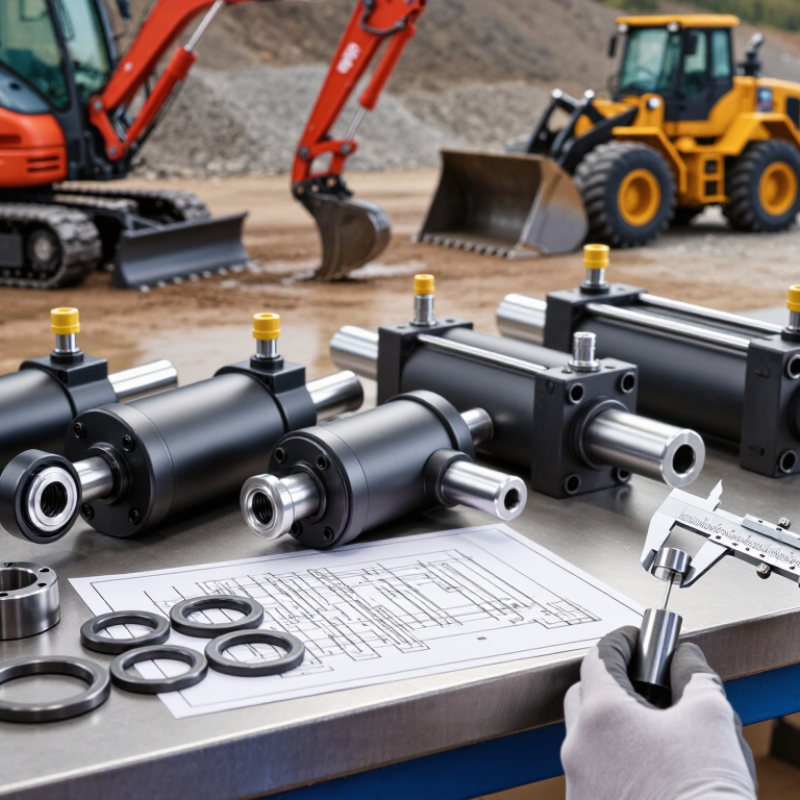
2026 Best Arm Cylinder Types for Global Buyers

Arm Cylinder Basics and Their Role in Hydraulic Equipment

Arm cylinders convert hydraulic pressure into controlled boom, stick, or bucket movement. They usually use double-acting designs, allowing force in both directions. Tie-rod cylinders suit lighter equipment and easier maintenance. Welded cylinders handle vibration, compact spaces, and demanding excavator cycles. Telescopic cylinders provide long extension from limited installation space.

Cylinder selection depends on bore diameter, rod diameter, stroke, mounting points, and working pressure.

A 100 mm bore at 250 bar can theoretically produce about 196 kN during extension.

Real output is lower because of friction, seal wear, and pressure losses.

The Fortune Business Insights 2024 Hydraulic Cylinder Market report estimated the global market at USD 15.94 billion in 2023.

MarketsandMarkets projected growth from roughly USD 14.8 billion in 2024 to USD 19.7 billion by 2029.

The figures differ. That is a useful warning: market estimates are not equipment specifications.

Tips:

Measure the existing pin centers carefully.

Check rod buckling risk during retraction.

Confirm seal materials for temperature, dust, and hydraulic fluid compatibility.

ISO 6020/2 and ISO 6022 provide useful dimensional and performance references, but they do not replace field testing.

In practice, alignment problems often damage cylinders faster than pressure alone.

Keep installation tolerances visible.

A perfect sizing chart rarely exists.

Main Types of Arm Cylinders for Different Operating Conditions

2026 Best Arm Cylinder Types for Global Buyers

Main Types of Arm Cylinders for Different Operating Conditions

Arm cylinder selection depends on load, space, temperature, and duty cycle. A tie-rod cylinder suits light and medium equipment with accessible mounting space. Its replaceable parts can simplify workshop repairs. This design is practical for agricultural machines and general material handling. Keep the rod protected from stones and impact.

Welded cylinders fit excavators, loaders, and other machines facing shock loads. Their compact body saves installation space. A stronger housing also supports demanding digging cycles. In cold regions, specify seals and hydraulic fluids for low temperatures. In dusty sites, a scraper seal helps limit abrasive contamination. Small details matter.

Telescopic cylinders serve applications needing long extension from limited retracted length. They appear in lifting platforms, dump bodies, and specialized handling equipment. However, their extended sections need careful alignment. Side loading can shorten service life quickly. I have seen failures caused by mounting errors, not weak cylinder materials. That lesson is easy to overlook.

For coastal or humid environments, corrosion-resistant rods and suitable surface treatments deserve attention. Buyers should request load data, stroke length, mounting dimensions, and working pressure before approval. A cylinder that fits today may perform poorly after a design change. Prototype testing is still worthwhile. It costs less than repeated field replacements.

How to Compare Arm Cylinder Materials, Designs, and Performance

2026 Best Arm Cylinder Types for Global Buyers

How to Compare Arm Cylinder Materials, Designs, and Performance

Choosing an arm cylinder starts with the working environment, not the catalog photograph. Alloy steel barrels handle repeated pressure and heavy side loads well. A chrome-plated rod resists scoring, but coating quality matters more than appearance. I have seen polished rods fail early when moisture reached damaged seals. Small scratches become expensive leaks.

Compare welded and tie-rod designs carefully. Welded cylinders usually suit excavators and other high-load equipment. Tie-rod versions can simplify maintenance in lighter applications. Check the piston diameter, rod diameter, stroke length, and rated pressure together. A large piston may create force, but it can also slow movement. That trade-off is easy to miss.

Look closely at seals, bushings, and rod guides. Polyurethane seals suit many demanding cycles, while temperature changes may require different compounds. In dusty regions, effective wipers are essential. In coastal climates, surface treatment and drainage deserve extra attention. Ask for pressure-test records, material certificates, and dimensional inspection data. Reliable suppliers should explain their testing method clearly. Performance claims without test conditions are weak evidence. Do not compare prices alone. Compare cycle life, repair access, delivery consistency, and spare-seal availability. A perfect cylinder does not exist. The right specification depends on load patterns, contamination, temperature, and operator habits.

Selection Factors for Global Buyers and Equipment Applications

2026 Best Arm Cylinder Types for Global Buyers

Arm cylinders should match the machine, duty cycle, and service environment. Welded cylinders suit excavators and mobile equipment because they save installation space. Tie-rod cylinders support easier maintenance in factories and lighter machinery. Telescopic cylinders fit applications requiring long reach within limited storage length. Mill-duty designs handle severe cycles, high side loads, and demanding steel-production environments.

Grand View Research estimated the global hydraulic cylinder market at about USD 14.95 billion in 2023. It also forecasts roughly 4.8% annual growth from 2024 to 2030. This growth reflects wider use in construction, agriculture, material handling, and industrial automation. However, market growth does not make every cylinder interchangeable. Buyers should compare rated pressure, bore diameter, rod strength, stroke length, mounting geometry, and calculated buckling risk. Seal materials must also match temperature, dust, water, and hydraulic-fluid conditions. The wrong seal may fail before the cylinder reaches its expected service life.

Tips: Request load-cycle data, not only maximum pressure. Check whether local technicians can replace seals and rods. Confirm port standards, coating thickness, and spare-part availability before ordering. ISO 6020 and ISO 6022 dimensions can simplify international integration, but they do not guarantee identical performance. A perfect selection rarely exists; real field loads are uneven, and many specifications remain estimates. Review operating records after installation, then adjust future orders.

Installation, Maintenance, and International Purchasing Considerations

2026 Best Arm Cylinder Types for Global Buyers

Installation, Maintenance, and International Purchasing Considerations

Choosing an arm cylinder starts with movement, not catalog appearance. Welded cylinders suit heavy equipment and resist contamination around the barrel. Tie-rod cylinders simplify service and are practical for controlled industrial environments. Telescopic cylinders fit applications needing long reach from limited installation space. Compact systems may require custom mounting dimensions.

Confirm bore size, rod diameter, stroke, pressure rating, and retracted length before ordering. Installation errors often create side loads, uneven wear, and early seal damage. Keep mounting pins aligned with the machine’s natural movement. Never force a crooked connection. Use clean hydraulic fluid and protect open ports during assembly. Bleed trapped air carefully after installation, then inspect fittings for leaks under working pressure.

Maintenance records should include operating hours, leakage observations, pin condition, and fluid changes. A small leak may become a serious failure after temperature changes. Inspect the rod for scratches, rust, and bending. Replacement seals should match the fluid and temperature range. International buyers should request technical drawings, material details, test records, packaging dimensions, and spare-seal availability. Confirm delivery terms, export documents, customs requirements, and inspection responsibilities in writing. Corrosion protection must reflect the destination climate, especially for coastal storage. A spreadsheet can look complete and still hide an unsuitable port thread or missing adapter. Recheck every interface before payment.

2026 Best Arm Cylinder Types for Global Buyers - Installation, Maintenance, and International Purchasing Considerations

Cylinder Type Typical Arm Applications Typical Working Pressure Main Advantages Installation Considerations Maintenance Requirements International Purchasing Considerations
Welded Hydraulic Cylinder Construction equipment, agricultural arms, material-handling equipment, and mobile machinery Commonly 160–250 bar; the exact rating depends on design, bore, rod, and seals Compact body, high strength-to-weight ratio, good resistance to vibration, and suitable for custom dimensions Align the cylinder with the arm pivot; avoid side loading; verify closed length, stroke, pin diameter, and mounting width Inspect the rod, wiper, weld areas, pins, and bushings; replace damaged seals and keep hydraulic oil clean Confirm metric or inch dimensions, port thread standard, corrosion protection, test pressure, and spare seal availability
Tie-Rod Hydraulic Cylinder Industrial arm mechanisms, factory automation, presses, and light-to-medium-duty equipment Often 70–210 bar, depending on the applicable design standard and cylinder series Easy to disassemble, serviceable construction, and convenient access to seals and wear components Use a rigid mounting structure; tighten tie rods to the specified torque; provide clearance for service removal Check tie-rod torque, gland leakage, rod straightness, and mounting bolts; replace seals during authorized overhaul Request the applicable ISO or national dimensional standard, seal compound, surface finish, and pressure-test records
Telescopic Hydraulic Cylinder Dump bodies, lifting arms, compact equipment, and applications requiring long extension from a short retracted length Commonly 160–250 bar; multistage designs require stage-specific load and stability calculations Provides a long stroke while occupying relatively little installation space when retracted Install with accurate alignment and adequate lateral guidance; prevent side loads, impact at end stroke, and over-extension Keep sliding surfaces clean, inspect every stage for scoring, check stage seals, and maintain correct hydraulic oil level Specify the number of stages, stroke per stage, collapsed length, lifting sequence, shipping position, and replacement-seal lead time
Double-Acting Hydraulic Cylinder Excavator arms, robotic manipulators, loaders, agricultural implements, and equipment requiring powered extension and retraction Commonly 160–350 bar in mobile and industrial systems, subject to component ratings Controlled movement in both directions, high force density, and good suitability for variable loads Connect pressure and return lines correctly; bleed trapped air; install load-holding or counterbalance valves where required Monitor leakage, drift, hose condition, rod damage, and oil contamination; inspect relief-valve settings periodically Match flow rate, pressure rating, port size, mounting style, stroke, and rod strength to the complete hydraulic circuit
Single-Acting Hydraulic Cylinder Jacks, tipping mechanisms, simple lifting arms, and applications where gravity or an external spring provides return force Typically 100–250 bar, depending on the cylinder design and safety factor Simple hydraulic circuit, fewer connections, and lower control-system complexity Confirm the return force and retraction speed; provide mechanical support if the load must remain safely elevated Inspect seals, spring or gravity-return components, venting, and load-holding devices; never rely solely on hydraulic pressure for personnel safety Clarify whether the cylinder is push-only or pull-only, define the return mechanism, and confirm transport orientation
Pneumatic Cylinder Light-duty robotic arms, pick-and-place units, clamping systems, and clean or fast-cycle automation Commonly 4–8 bar; many systems operate near 6 bar Fast response, clean operation, simple controls, and low risk of hydraulic-oil leakage Use dry, filtered air; install flow controls and cushioning where needed; account for lower force than hydraulic systems Drain filters, check air leaks, inspect rod seals, lubricate only when required by the cylinder design, and verify cushioning Confirm bore, stroke, ISO mounting dimensions, operating temperature, air-quality requirements, and thread standard
Servo-Electric Linear Actuator Precision arm positioning, automated production lines, laboratory equipment, and electrically controlled machinery Not rated by hydraulic pressure; performance is specified by force, speed, duty cycle, and motor voltage Accurate positioning, programmable motion, high energy efficiency at standstill, and reduced fluid-maintenance needs Provide correct electrical protection, grounding, cable routing, and mechanical alignment; prevent shock loads and excessive side force Inspect screw or belt drive, lubrication, backlash, encoder feedback, connectors, and thermal performance Confirm voltage, frequency, controller compatibility, ingress-protection rating, duty cycle, certifications, and local service capability
Stainless-Steel or Corrosion-Resistant Cylinder Marine equipment, food-processing machinery, outdoor systems, chemical environments, and washdown applications Usually selected within the pressure range of the underlying hydraulic or pneumatic design Improved resistance to moisture, salt, cleaning agents, and atmospheric corrosion Use compatible fasteners and fittings; avoid galvanic corrosion; specify rod coating, surface finish, and washdown exposure Rinse corrosive deposits, inspect pitting and rod coating, check wipers, and replace seals compatible with cleaning chemicals Define corrosion environment, salt-spray expectations, stainless grade, coating thickness, seal material, and packaging protection
Global Buyer Checklist: Specify bore, rod diameter, stroke, retracted length, mounting type, port standard, operating pressure, flow rate, temperature range, seal material, corrosion protection, test documentation, packaging requirements, spare-seal availability, and applicable safety or dimensional standards before placing an international order.
Scroll to Top
Scroll to Top