
Choosing the 2026 best Automatic Labeling Machine requires more than comparing speed or price. Global buyers face different containers, label materials, climates, and compliance requirements. A machine that labels 120 bottles per minute may struggle with dusty glass jars or uneven pouches.
Industry reports support this demand for flexible automation. Smithers’ “The Future of the Global Label Market to 2028” identifies packaging growth, product differentiation, and traceability as major market drivers. PMMI reports also highlight automation, quick changeovers, and connected equipment as important packaging investment priorities. These trends affect real purchasing decisions. Buyers increasingly need machines that handle multiple formats, verify label placement, and record production data.
The right Automatic Labeling Machine should match the product before matching the marketing claim. Check container diameter, label width, adhesive performance, conveyor speed, and expected daily volume. Ask suppliers to test your actual bottles, cartons, or pouches. Watch the label pass the sensor. Inspect the edge after twenty minutes.
Small details matter.
A reliable machine should provide stable application accuracy, accessible controls, safety guarding, and dependable technical support. Global purchasers should also confirm voltage compatibility, spare-parts availability, operator training, and documentation quality. These factors reduce hidden downtime after installation. However, no machine is perfect for every factory. A faster model may create more waste during changeovers, while a lower-cost unit may require closer operator attention. This comparison needs honest testing, not only brochure specifications. Based on published market research and practical evaluation, this guide examines leading options for different industries, production scales, and operating environments in 2026.
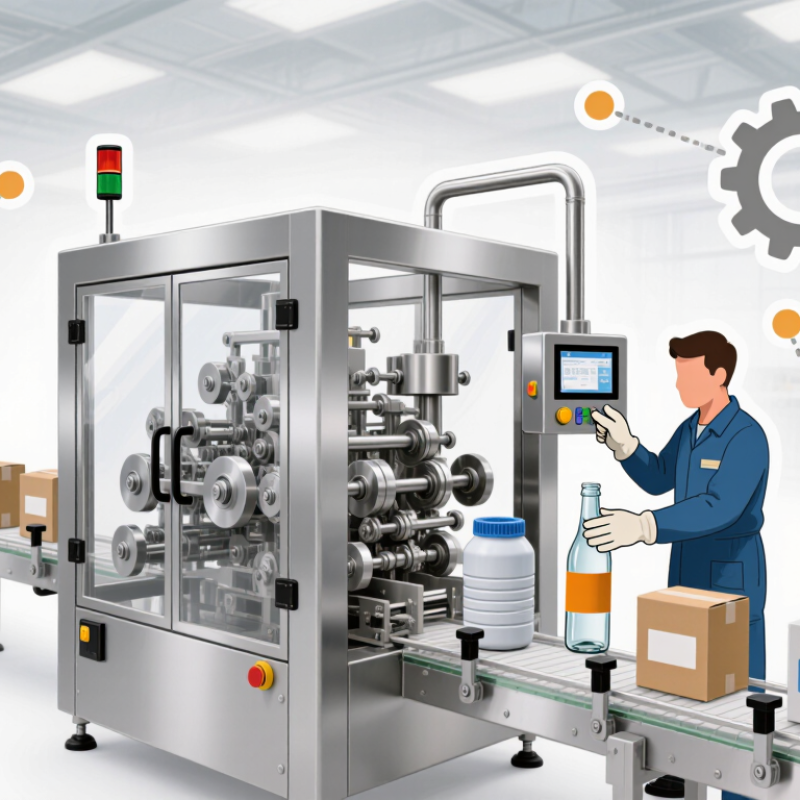
An automatic labeling machine applies labels to products, containers, or packages with limited manual handling. A typical system uses a conveyor, product sensor, label dispenser, drive motor, and control panel. The sensor detects each item. The dispenser then positions the label at a controlled speed and pressure.
Some machines apply front labels, wraparound labels, top labels, or tamper-evident labels. Others combine labeling with printing, coding, or inspection. In practical factory use, container shape matters greatly. A round bottle needs different control from a flat carton. Surface moisture, dust, and label adhesive also affect accuracy.
Speed is only one measure.
The market is expanding. Grand View Research reports that the global packaging machinery market was valued at more than USD 50 billion in 2023, with automation supporting faster production and reduced labor dependence. Smithers’ industry analysis also identifies continued growth in global label demand through 2028, driven by food, beverage, healthcare, and logistics packaging. These reports describe broad market trends, not guaranteed machine performance.
Experienced buyers should examine label tolerance, changeover time, reject handling, and maintenance access. A specification claiming 120 products per minute may apply only to one container size and stable conditions. Real production can be slower. That gap deserves testing before purchase. A reliable evaluation uses the buyer’s actual products, labels, adhesive, and line speed. The best automatic labeling machine is not always the fastest model. It is the one that labels consistently, safely, and economically across daily operating conditions.
2026 Best Automatic Labeling Machine for Global Buyers
How Automatic Labeling Machines Work
An automatic labeling machine combines product detection, label feeding, and accurate application. Products move along a conveyor at a controlled speed. A sensor detects each container and sends a signal to the control system. The label roll then unwinds through guide rollers. A motor adjusts the label position before an applicator presses it onto the product. Common applicators include wipe-on pads, air blowers, and tamp heads. Each option suits different surfaces and packaging shapes. Flat boxes need different handling from round bottles.
In real production, accuracy depends on more than machine speed. Label material, container moisture, conveyor vibration, and product spacing all affect results. Experienced operators usually test several settings before approving a production run. A setting that works today may fail after changing the container supplier. That is an easy detail to underestimate. Machines with adjustable sensors, clear controls, and accessible parts are easier to maintain. Buyers should also check labeling tolerance, speed range, power requirements, and service documentation.
Tips: Keep the label roll aligned and remove dust from sensor surfaces. Test products at normal operating speed, not only by hand. Record successful settings for each package type. Leave room for adjustment. Even a well-built machine can produce crooked labels when packaging changes. Regular cleaning and short inspections often prevent larger stoppages.
Automatic labeling machines use a conveyor to position products, sensors to detect their arrival, and a control system to synchronize label feeding, dispensing, and pressure application. The label is separated from its liner at a peel plate, applied to the product surface, and pressed down by rollers or brushes.
The chart shows representative commercial operating ranges in units per minute. Actual throughput depends on product geometry, label size, adhesive type, machine configuration, spacing, and inspection requirements.
Choosing an automatic labeling machine starts with the package, not the machine’s speed. In production tests, pressure-sensitive labelers work well for cartons, jars, and smooth plastic containers. They apply labels accurately, even when designs include barcodes or variable data. Wrap-around machines suit cylindrical bottles, cans, and tubes. Their rollers help create a clean finish around curved surfaces. For irregular containers, front-and-back labeling systems can place two labels in one controlled cycle. They require careful container positioning.
Top-and-bottom labeling machines fit boxes, trays, and flat pouches. They are useful when product information must appear on several surfaces. Sleeve labeling systems cover containers with a full film label, but they usually need accurate heat control. This can increase energy use and maintenance work. The best choice depends on container material, label size, adhesive behavior, line speed, and expected changeovers.
Tips: Test real samples before purchasing. Run dusty cartons, cold bottles, and slightly uneven containers. Measure label placement repeatedly. A machine may perform perfectly in a showroom but struggle beside a fast filler. Keep spare sensors and adjustment tools available. I have found that operators often need more training than expected. That weakness should be included in the project plan. Reliable suppliers should provide clear specifications, trial results, service response times, and documented calibration procedures.
Choosing the best automatic labeling machine starts with the product, not the advertised speed. A machine handling round bottles may struggle with flat cartons, soft pouches, or dusty containers. Check the product’s material, shape, size range, and label position before comparing models. Measure real containers, including their seams and surface curves. Small differences matter.
Global buyers should verify electrical standards, available languages, safety documents, and installation requirements. Confirm whether the machine supports local voltage and frequency. Ask for test videos using your actual products and labels.
A reliable supplier should provide clear specifications, spare-parts lists, operator training, and responsive technical support. Remote support helps, but local service access is still important.
Do not judge value by speed alone. Check labeling accuracy, changeover time, sensor stability, and compatibility with existing conveyors or filling lines. A machine running at 120 products per minute may be inefficient if operators need frequent adjustments.
I have seen buyers overlook label adhesive performance in humid warehouses. That mistake becomes expensive.
Request a sample trial under realistic conditions, including temperature, dust, and continuous operation. No machine is perfect. A careful buyer should record failed labels, downtime, and setup errors before approving the purchase.
Installation should begin with the container, not the machine. Measure container diameter, label gap, conveyor height, and line speed before ordering. A two-millimeter mismatch can create wrinkles, skewed labels, and repeated stops. Confirm electrical voltage, air pressure, language settings, and safety requirements with the supplier. Request installation drawings, spare-parts lists, and remote troubleshooting procedures. Do not assume one configuration fits every country.
Maintenance planning matters more than a polished specification sheet. Clean the label sensor daily, inspect rollers weekly, and check belt tension monthly. Keep thermal heads, sensors, rollers, and fuses in local stock when possible.
The U.S. Department of Energy reports that predictive maintenance can reduce maintenance costs by 25–30% and downtime by 35–45%.
Those figures are useful, but real results depend on training, product dust, and operating discipline. We sometimes overestimate automation and underestimate cleaning.
International buyers should compare total ownership cost, not only purchase price. Include freight, customs classification, installation labor, software support, certification documents, and replacement-part delivery time. PMMI industry reports continue to identify labor availability and automation investment as major packaging concerns.
Ask for tested output data using your actual containers and labels. A short factory test can reveal more than a long brochure. Verify warranty coverage, payment terms, inspection procedures, and after-sales response times in writing. Mistakes happen. Clear documentation limits their cost.
"*" indicates required fields