2026 Best Bright Hardening Furnace Suppliers?
Choosing a Bright Hardening Furnace supplier in 2026 is more than comparing prices. Heat-treatment teams need repeatable case depth, controlled atmosphere, and dependable temperature uniformity across production batches. Small differences matter. An uneven load or slow temperature recovery after opening the furnace door can affect hardness results and increase rework. Buyers should compare furnace design, controls, maintenance access, commissioning support, and documented test procedures. Ask how suppliers verify temperature distribution and what records they provide during acceptance testing. A polished specification sheet helps, but it cannot replace evidence from a reference installation processing similar parts at comparable volumes. Details count.
This guide focuses on verifiable capabilities, not claims alone. It considers furnace configuration, working dimensions, loading methods, atmosphere management, energy use, safety interlocks, spare-parts availability, and service response. Not every plant needs the same setup. A job shop processing mixed components may value flexibility, while a high-volume line may prioritize cycle consistency and uptime. Request a clear scope for installation, operator training, and calibration; unclear responsibilities can become costly later. Compare quotations line by line, including assumptions about utilities, tooling, and acceptance criteria. Some questions remain. Published case studies may leave out difficult details, so ask for references and practical lessons learned. The strongest supplier explains trade-offs plainly, supports claims with records, and acknowledges limitations. That honesty is useful.
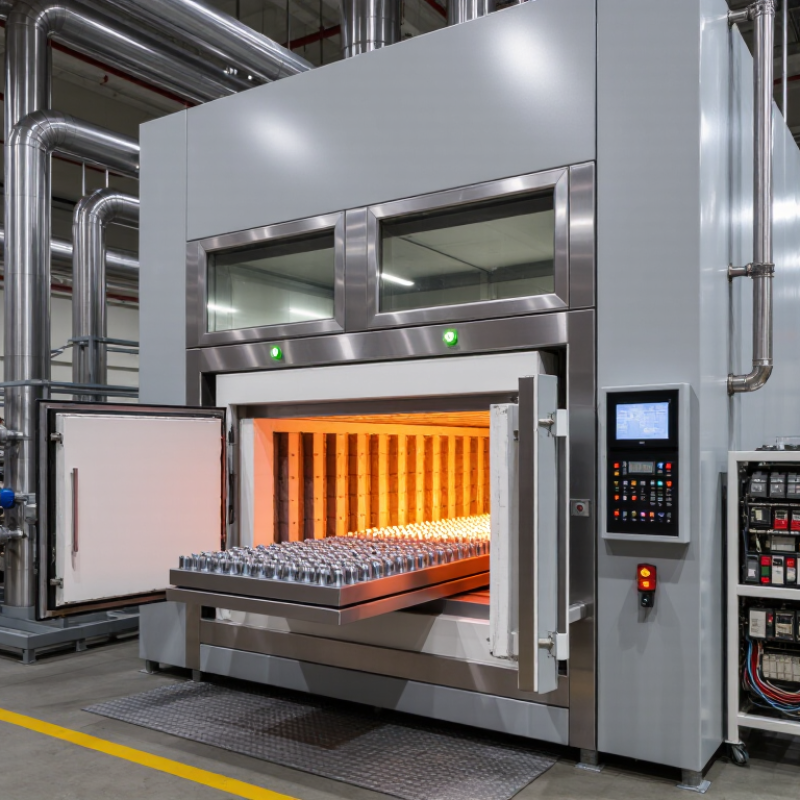
What Is a Bright Hardening Furnace?
A bright hardening furnace heats steel in a carefully controlled atmosphere or vacuum, then supports rapid cooling to develop hardness. The protective environment limits oxidation and carbon loss, helping parts retain a clean surface. “Bright” does not always mean mirror-shiny. Surface appearance depends on the steel, preparation, atmosphere, and heat cycle. That detail matters.
Inside the furnace, temperature uniformity and atmosphere control affect the result. A batch of gears, shafts, or fasteners may need consistent heating throughout, not just a correct reading near the control sensor. After heating, parts are quenched using a process suited to the material and required properties. Buyers comparing suppliers should ask for working-zone dimensions, temperature-uniformity data, atmosphere controls, quench options, and maintenance requirements. Trial runs with representative parts can reveal issues that a brochure will not. A clean-looking part alone is not proof of correct hardness or depth. Testing is still needed, and real production conditions can be less tidy than planned.
How Bright Hardening Furnaces Work
A bright hardening furnace heats steel while limiting contact with oxygen, which helps prevent scale and discoloration. Parts enter a sealed chamber, where a controlled atmosphere or vacuum protects the surface. The furnace raises each part to its specified hardening temperature and holds it long enough for heat to penetrate. The required temperature and soak time depend on the steel grade, part geometry, and target properties. Small details matter.
After heating, parts are quenched in oil, gas, or another suitable medium to form a hard microstructure. Some components then receive tempering to reduce brittleness. Temperature uniformity, atmosphere quality, and quench consistency all affect results; a bright surface alone does not confirm correct hardness. The U.S. Department of Energy’s Improving Process Heating System Performance sourcebook reports that process heating represents roughly 36% of U.S. manufacturing energy use. That figure covers many industries, not bright hardening alone, but it shows why insulation, loading patterns, and heat recovery deserve attention. A misplaced thermocouple or unevenly loaded basket can still undermine an otherwise efficient cycle.
Which Supplier Capabilities Matter Most in 2026?
A capable bright hardening furnace supplier should prove process consistency, not just quote maximum temperature. Ask for temperature-uniformity survey results across the usable work zone, plus repeatability data from representative loads. Small details matter. For bright surfaces, atmosphere monitoring should record oxygen level or dew point, while recipes must match the steel grade and quench method. IEA’s 2023 industry tracking report says industry accounts for about 37% of global energy use. That makes insulation, heat recovery, and measured energy consumption meaningful supplier questions—not optional extras.
Controls and documentation matter just as much. Request sample trend logs showing temperature, atmosphere, alarms, and recipe changes, then check whether operators can retrieve them without specialist software. A factory acceptance test is useful, but it cannot fully reproduce your parts, loading pattern, or site utilities. Plan a site acceptance run with production components and agreed pass criteria. Ask how the supplier handles calibration, commissioning, spare parts, and service response times. Verify safety design against applicable furnace standards, including relevant requirements in ISO 13577. One uncomfortable question remains: are the quoted cycle times based on your actual workload, or an ideal test load? That difference can reshape the investment case.
How to Compare Bright Hardening Furnace Suppliers
How to Compare Bright Hardening Furnace Suppliers
Compare suppliers using the same part geometry, steel grade, batch size, and target hardness. Ask for recorded temperature uniformity, atmosphere composition, carbon-potential control, quench delay, and hardness results—not just brochure specifications. Small details matter. Request raw process logs from a representative production load, including furnace recovery time after loading. The International Energy Agency’s Energy Efficiency 2023 report estimates that industry accounts for about 37% of global energy use. That makes energy consumption worth checking, but compare measured energy per kilogram of acceptable parts, not unlike machines or empty-furnace figures.
Check how the supplier proves repeatability: review calibration records, sensor locations, alarm history, and procedures for handling failed batches. Ask operators to explain routine maintenance and how quickly they can access seals, fans, and control components. Ask for proof. I would not treat one polished test run as proof; it is only a snapshot. Request a second run, or a trial using your own parts, and agree on acceptance limits before testing. Some comparisons remain imperfect because load patterns change heat transfer. Record that uncertainty rather than allowing it to disappear inside a sales claim.
How to Choose a Supplier for Your Production Needs
2026 Best Bright Hardening Furnace Suppliers?
How to Choose a Supplier for Your Production Needs
Choosing a bright hardening furnace supplier starts with your parts, not a product brochure. Share your steel grades, part dimensions, batch size, and target case depth. Ask how the furnace controls temperature uniformity and protective atmosphere during your actual production cycle. Request recent test data, not just a standard specification sheet. A trial using representative parts can reveal uneven color, distortion, or handling problems before installation.
Tips: Ask for a sample cycle report. Check service response times, spare-part availability, operator training, and commissioning support. Get each item in writing.
Compare suppliers on the full operating picture. Review energy use, loading method, control-system records, maintenance access, and expected production rate. Speak with customers running similar parts, and ask what required adjustment after startup. A polished demonstration is useful, but it cannot replace evidence from a comparable workload. Some details may remain uncertain until your own parts are tested; plan time and budget for that learning curve.
2026 Best Bright Hardening Furnace Suppliers? How to Choose a Supplier for Your Production Needs
How to use this chart: The percentages are a suggested evaluation rubric, not supplier ratings or an industry survey. Adjust them to your production requirements, then compare suppliers using documented process capability, atmosphere-control specifications, temperature-uniformity data, throughput guarantees, traceability, service coverage, and total cost of ownership. Confirm critical claims through technical reviews and acceptance testing.