2026 How to Choose Pharmaceutical Grade Activated Carbon
Choosing Pharmaceutical Grade Activated Carbon in 2026 requires more than comparing iodine numbers or price per kilogram. It demands evidence from manufacturing, validation, and supply-chain controls. Pharmaceutical materials face direct scrutiny because a small impurity can affect a finished product.
Grand View Research reported that the global activated carbon market reached approximately USD 5.1 billion in 2023, with continued growth expected through 2030. MarketsandMarkets also identifies pharmaceutical processing, water purification, and food applications as important demand areas. However, market forecasts vary. They should guide research, not replace qualification.
Professor Harry Marsh, a respected activated-carbon researcher, described activated carbon as “a carbonaceous material with a highly developed internal surface.” That internal surface is useful, but it can also retain unwanted metals, solvents, or microorganisms. A reliable Pharmaceutical Grade Activated Carbon supplier should therefore provide traceable raw materials, controlled activation, batch-specific testing, and documented change management.
Look beyond the certificate.
The United States Pharmacopeia, European Pharmacopoeia, and applicable GMP expectations provide practical reference points for identity, purity, and contamination control. Buyers should examine ash content, heavy metals, microbial limits, particle distribution, adsorption performance, and extractables. The exact test panel depends on the intended process and dosage form.
Real experience matters here. Powder behavior can change during transfer. Moisture can alter handling. Packaging can introduce risk. Even a clean-looking black powder needs documented evidence.
No single specification proves suitability. That is an uncomfortable truth. The best choice combines technical data, supplier audits, regulatory awareness, and process-specific trials. In 2026, purchasing Pharmaceutical Grade Activated Carbon should mean selecting predictable performance, not simply selecting the lowest quotation.
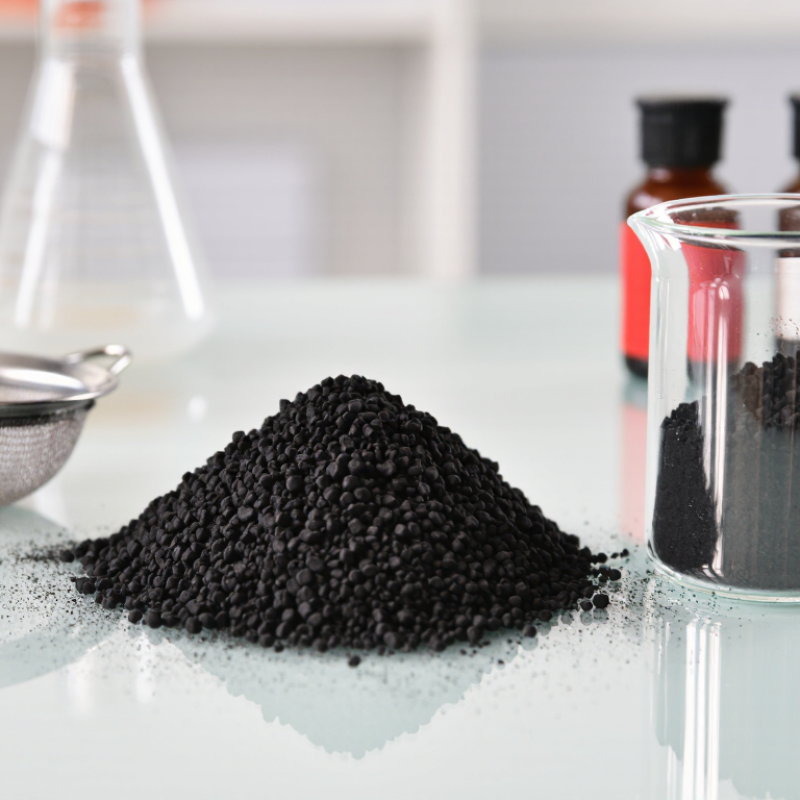
What Is Pharmaceutical-Grade Activated Carbon?
Pharmaceutical-grade activated carbon is not simply clean charcoal. It is a controlled adsorbent manufactured for pharmaceutical processing, purification, or carefully defined medical use. Its quality depends on raw materials, activation conditions, washing, drying, particle size, and packaging. The term sounds precise. It is not always precise.
The United States Pharmacopeia–National Formulary evaluates activated charcoal through identity, adsorption, ash, moisture, and impurity-related tests. These tests matter because excessive ash can introduce inorganic residues. High moisture may reduce storage stability. Fine black powder should not release visible dust into an open process. Under 21 CFR 211.84, incoming components require identity testing before use. That requirement supports traceability, but it does not replace supplier qualification.
WHO Technical Report Series No. 986, Annex 2, emphasizes documented controls, contamination prevention, and batch records in pharmaceutical manufacturing. Therefore, buyers should request a current certificate of analysis, microbiological results, heavy-metal data, particle-size distribution, and change-control history. A specification alone is not enough. I would also compare adsorption performance against the intended process, not only against a catalog number. This is where selection can become imperfect: a material with excellent iodine adsorption may perform poorly with a larger pharmaceutical molecule. Small pilot tests, clean sampling tools, and retained samples can reveal that gap before full-scale use.
Which Quality Standards and Regulatory Requirements Apply?
Choosing pharmaceutical-grade activated carbon in 2026 requires more than checking iodine number or surface area. The applicable standard depends on its intended use, dosage form, and market. USP-NF may apply its Activated Charcoal monograph, while the European Pharmacopoeia uses requirements for Carbo activatus. Japan may require compliance with the Japanese Pharmacopoeia. These standards can differ in ash, moisture, adsorption performance, and impurity limits.
Regulatory control also extends to manufacturing. ICH Q7 expects documented material controls, traceability, change management, and contamination prevention. GMP evidence should include batch records, validated test methods, and a current certificate of analysis. Microbial testing should follow relevant pharmacopeial procedures, such as USP chapters <61> and <62>, when the product risk requires them. Endotoxin testing may also matter for certain applications. It is not automatically required for every carbon product.
Elemental impurities deserve close attention. ICH Q3D(R2) sets oral permitted daily exposures of 5 µg/day for lead, 15 µg/day for inorganic arsenic, 5 µg/day for cadmium, and 30 µg/day for mercury. Test results should be reported with units, detection limits, and the tested batch number. A supplier’s “pharmaceutical grade” statement is not enough. I would request three recent batch reports, raw-material origin, sterilization details, and stability data. This approach is practical, but not perfect. Some buyers still overvalue surface area and overlook extractables, microbial risk, or inconsistent pore distribution. That mistake can survive a simple incoming inspection.
How to Match Activated Carbon with Pharmaceutical Applications
2026 How to Choose Pharmaceutical Grade Activated Carbon
Matching activated carbon with pharmaceutical applications requires more than selecting a high iodine number. Small molecules usually enter micropores, while pigments and larger impurities need greater mesopore access. IUPAC defines micropores as pores below 2 nanometers and mesopores as 2–50 nanometers. This distinction matters during API purification, intermediate treatment, and process-liquid decolorization.
Powdered carbon offers fast contact in stirred vessels. Granular carbon can simplify fixed-bed operation and reduce filtration stress. For dark process liquors, test color removal, adsorption speed, filterability, and product recovery together. A carbon that removes color strongly may also capture valuable active material. That trade-off is often underestimated.
The Activated Carbon Market Size, Share & Trends Analysis Report, 2024, by Grand View Research, estimated the global activated carbon market at about USD 4.7 billion in 2023. This broad market figure does not prove pharmaceutical suitability. Compendial expectations from USP–NF and Ph. Eur. commonly emphasize identity, ash, moisture, extractables, and microbial quality. Confirm each lot with supplier certificates and independent testing.
Acid-washed grades may reduce inorganic residues, but washing can change surface chemistry. Validate the actual grade against the solvent, temperature, pH, and contact time. Some batch data look excellent, yet filtration becomes painfully slow at production scale. That is a warning. Use a small design-of-experiments study, then repeat the test with representative process liquor before approval.
How to Verify Suppliers, Testing, Packaging, and Traceability
2026 How to Choose Pharmaceutical Grade Activated Carbon
Selecting pharmaceutical grade activated carbon requires more than comparing iodine numbers or price. Start by verifying the supplier’s quality system, manufacturing site, and documented experience with pharmaceutical applications. Request current certificates, batch records, safety data, and traceability documents. Check whether testing follows recognized pharmacopeial or validated internal methods. A polished certificate is not enough.
For each lot, review ash, moisture, particle size, adsorption performance, heavy metals, and microbial results when relevant to the intended use. Ask for sample-retention practices and deviation procedures. A reliable supplier should identify the raw material source, processing date, lot number, and testing laboratory. During a site audit, inspect sealed storage areas, cleaning controls, and records linking incoming materials to finished batches. Small gaps matter.
Tips: Compare the certificate with an independent laboratory result. Verify that the lot number matches the drum label and shipping documents. Examine packaging for tears, moisture marks, broken seals, or unclear printing. Use food-contact inner liners only when their suitability is documented. Keep photos and receiving records. I once overlooked label clarity; that created unnecessary questions later. Perfect systems are rare, so document every uncertainty and resolve it before release. Avoid suppliers who resist reasonable technical questions or provide generic results without batch-specific evidence.
2026: How to Choose Pharmaceutical-Grade Activated Carbon
Supplier qualification should confirm GMP controls, a batch-specific certificate of analysis, validated test methods, protective pharmaceutical packaging, and complete lot traceability. The chart shows standard nominal sieve apertures commonly used for particle-size verification under ASTM E11 and ISO 3310-1. These reference points are not product-release limits; acceptance criteria must be confirmed against the applicable monograph and approved specification.
Verification focus: Confirm identity, adsorption performance, ash, moisture, pH, particle-size distribution, microbial quality where applicable, packaging integrity, retest or expiry information, and traceability from raw material through shipment.