
2026 Top Car Surface Materials for Global Buyers?
Choosing the right Car Surface material in 2026 requires more than comparing prices and color samples. Global buyers now examine durability, comfort, sustainability, and supply reliability together. A dashboard may face intense sunlight in Dubai, while a seat cover may endure freezing temperatures in Northern Europe. These conditions change how materials perform.
This guide reviews leading options, including polyurethane leather, PVC, microfiber, woven textiles, recycled polyester, and emerging bio-based alternatives. It considers abrasion resistance, UV stability, surface temperature, stain removal, odor, and touch quality. Laboratory data matters. So does experience from daily vehicle use. A material that looks impressive in a showroom may crack, fade, or feel uncomfortable after months of exposure. That warning is easy to overlook.
Manufacturers should also check supplier consistency, traceability, technical documentation, and responsible production practices. Recycled content can reduce environmental impact, but it does not automatically guarantee better performance. Bio-based materials may sound promising, yet their durability and scaling remain uneven across applications. We should be careful here.
The best choice depends on climate, vehicle segment, production volume, and customer expectations. Premium interiors may prioritize soft touch and visual depth. Commercial fleets may value easy cleaning and long service life. Cost remains important, but a low purchase price can create higher replacement expenses later. No material wins everywhere.
This overview offers a practical starting point for global sourcing decisions. It also acknowledges uncertainty, because new coatings and hybrid structures continue to evolve. Buyers should validate every claim through samples, independent testing, and real-use trials before approving a final Car Surface specification.
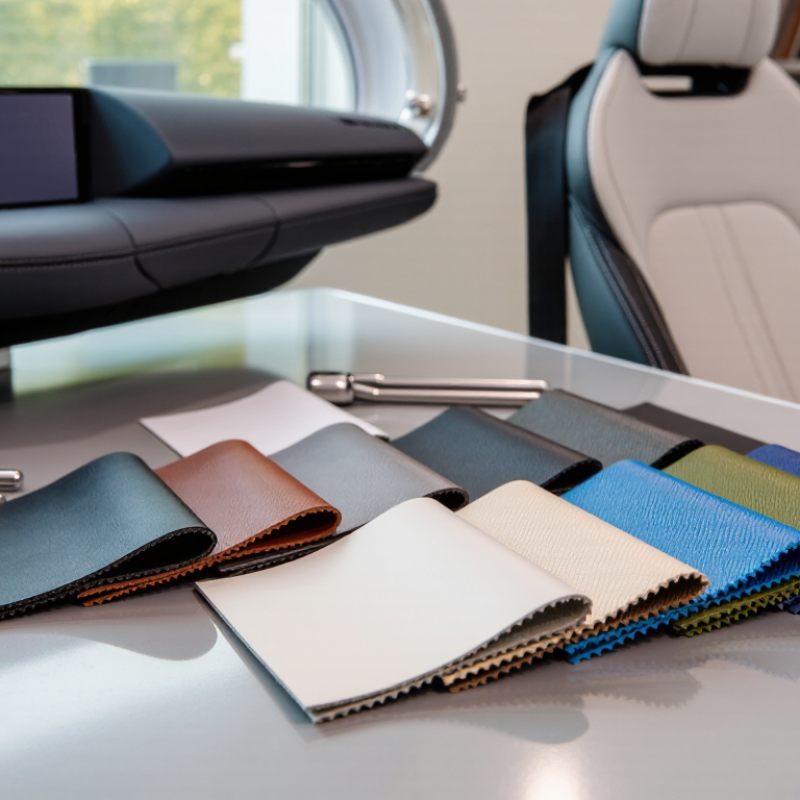
Table of Contents [Hide]
What Are the Main Car Surface Materials in 2026?
What Are the Main Car Surface Materials in 2026?
Car surface materials in 2026 must balance comfort, durability, weight, and environmental pressure. Common choices include genuine leather, polyurethane-coated synthetic leather, PVC, woven textiles, microfiber, plastics, metal, and decorative wood. Textiles are gaining attention because they feel warm, reduce weight, and support recycled content. However, recycled fibers can show uneven textures under strong sunlight. That detail matters.
The International Energy Agency reported over 17 million electric cars sold globally in 2024, exceeding 20% of new-car sales. This shift increases demand for lightweight dashboards, door panels, and seats. The U.S. Department of Energy notes that reducing vehicle weight by 10% can improve fuel economy by about 6% to 8%. Therefore, thin polymers, aluminum trims, and engineered fabrics remain practical options. Yet, lighter is not always better. Some thin surfaces may scratch easily or feel less premium. Buyers should question laboratory claims.
Tips: Inspect samples under daylight and warm cabin conditions. Rub seat material with a rough cloth. Check stitching, odor, gloss, and edge finishing. Ask for abrasion, UV, VOC, and temperature-cycle test results. For humid regions, examine moisture resistance carefully. For cold climates, test flexibility below freezing. A responsible supplier should provide traceable test data, not only attractive photographs. Personally, I would compare touch, repairability, and long-term aging before choosing a surface. Cost still influences decisions, but replacing damaged trim creates hidden waste.
2026 Top Car Surface Materials for Global Buyers
| Material | Typical Vehicle Surface Applications | Key Performance Characteristics | Approx. Density | Main Advantages | Main Limitations | Circularity Considerations |
|---|---|---|---|---|---|---|
| High-Strength Steel | Body panels, doors, roofs, fenders, chassis-visible surfaces | High strength, impact resistance, formability, and mature corrosion-protection systems | Approximately 7.8 g/cm³ | Cost-effective, widely available, repairable, and suitable for large-scale production | Higher mass than most lightweight alternatives; requires effective anti-corrosion treatment | Highly recyclable through established ferrous-metal recovery systems |
| Aluminum Alloys | Exterior panels, hoods, doors, body structures, trim, and wheel surfaces | Low density, corrosion resistance, good thermal conductivity, and high specific strength | Approximately 2.7 g/cm³ | Reduces vehicle mass and supports energy-efficiency targets | Higher material and forming costs; repairs may require specialized processes | Well suited to recycling; alloy separation and contamination control affect recycled quality |
| Polypropylene (PP) | Bumpers, wheel-arch liners, underbody shields, interior panels, and storage components | Low weight, chemical resistance, moisture resistance, and good impact performance | Approximately 0.90–0.91 g/cm³ | Lightweight, economical, easy to mold, and suitable for textured surfaces | Limited stiffness and heat resistance compared with engineering plastics; surface can scratch | Recycling is technically feasible when parts are identified and separated from mixed polymers |
| Acrylonitrile Butadiene Styrene (ABS) | Instrument panels, consoles, bezels, grilles, mirror housings, and interior trim | Good impact strength, dimensional stability, surface quality, and paintability | Approximately 1.03–1.07 g/cm³ | Supports high-quality molded and textured finishes with relatively easy processing | Moderate weathering and ultraviolet resistance unless modified or coated | Can be mechanically recycled, although additives, coatings, and mixed-material assemblies complicate recovery |
| Polycarbonate (PC) | Transparent lenses, lamp covers, glazing components, and protective interior surfaces | High impact resistance, transparency, dimensional stability, and broad service-temperature capability | Approximately 1.20 g/cm³ | Safer and lighter than glass for selected transparent components | Can scratch and yellow under ultraviolet exposure without suitable hard coatings or stabilization | Recycling is possible, but coatings, optical additives, and multi-layer parts require controlled processing |
| Polyurethane (PU) | Seat cushions, armrests, soft-touch surfaces, steering-wheel coverings, and acoustic components | Elasticity, cushioning, abrasion resistance, acoustic absorption, and comfort | Typically 0.20–1.25 g/cm³, depending on foam or solid formulation | Provides comfort and premium tactile performance across flexible and rigid forms | Recycling is more complex than for single-family thermoplastics; aging depends on heat, moisture, and chemicals | Recovery routes include reuse, chemical recycling, and limited mechanical recycling depending on formulation |
| Thermoplastic Olefin (TPO) | Exterior bumpers, claddings, rocker panels, spoilers, and protective trim | Flexible, impact-resistant, moisture-resistant, and suitable for low-gloss textured finishes | Approximately 0.90–0.96 g/cm³ | Combines low weight with durable exterior performance and good processability | May have limited paint adhesion and can show thermal expansion or surface waviness | Recycling potential is favorable when the material is kept clean and separately identified |
| Polyvinyl Chloride (PVC) | Synthetic leather, door skins, wire insulation, sealing profiles, and protective coverings | Good chemical resistance, flexibility, abrasion resistance, and weatherability when stabilized | Approximately 1.20–1.45 g/cm³ | Versatile surface appearance, cost efficiency, and availability in flexible and rigid grades | Environmental management requires attention to additives and chlorine-containing processing emissions | Recycling is possible through dedicated systems, but additives and composite constructions can hinder recovery |
| Glass | Windshields, side windows, rear windows, panoramic roofs, and display covers | High optical clarity, hardness, weather resistance, and stable performance across temperature changes | Approximately 2.4–2.6 g/cm³ | Excellent transparency, scratch resistance, and long-term weathering performance | Higher mass and brittleness than polymer alternatives; laminated structures complicate processing | Glass recovery is established, but laminated interlayers and coatings must be separated for high-quality recycling |
| Natural-Fiber Composites | Door panels, parcel shelves, trunk linings, seat backs, and interior decorative panels | Low density, vibration damping, renewable fiber content, and suitable stiffness for semi-structural interiors | Typically 1.0–1.5 g/cm³, depending on fiber and polymer matrix | Can reduce fossil-based material content and support lightweight interior design | Moisture sensitivity, variable fiber quality, and limited suitability for high-temperature exterior applications | End-of-life recovery depends strongly on the polymer matrix and the ability to separate fibers from composites |
Buyer note: Material selection should be evaluated together with climate exposure, impact requirements, surface finish, regulatory requirements, repairability, supply availability, and end-of-life infrastructure. Density values are typical ranges and vary by grade, additives, reinforcement, and manufacturing process.