
Learn more about how Trevisan’s Horizontal Machining Centers can help you minimize set up time and labor costs.

2026 Top Date Bar Extrusion Line Suppliers for Global Buyers

Choosing a Date Bar Extrusion Line is a practical investment, not just a comparison of brochures. Global buyers need equipment that matches the recipe, target output, available floor space, and local service capacity. A line designed for soft fruit bars may not handle a dense, sticky mixture as smoothly. Ask suppliers how they manage feeding, forming, cutting, and product transfer. Then request specifications and trial data for a product similar to yours.

Look closely at the details. Can operators adjust bar width and thickness without lengthy changeovers? Are food-contact surfaces accessible for cleaning? What spare parts are stocked, and how quickly can technical support respond across time zones? These questions help distinguish a capable manufacturer from a polished sales presentation. Reliability depends on more than machine speed. It also depends on stable operation, clear documentation, operator training, and realistic maintenance requirements. No brochure can prove everything.

This guide to 2026 suppliers gives global buyers a framework for comparing manufacturers, machine configurations, and after-sales support. Supplier claims should be checked against references, demonstrations, and written guarantees. Where possible, test your actual formulation before placing an order. A sample bar can reveal sticking, uneven edges, or texture changes that a specification sheet may miss. The right line is not always the largest or fastest. It is the one that fits your product and production plan. And sometimes, the first estimate is too optimistic. A careful review can save costly revisions later.
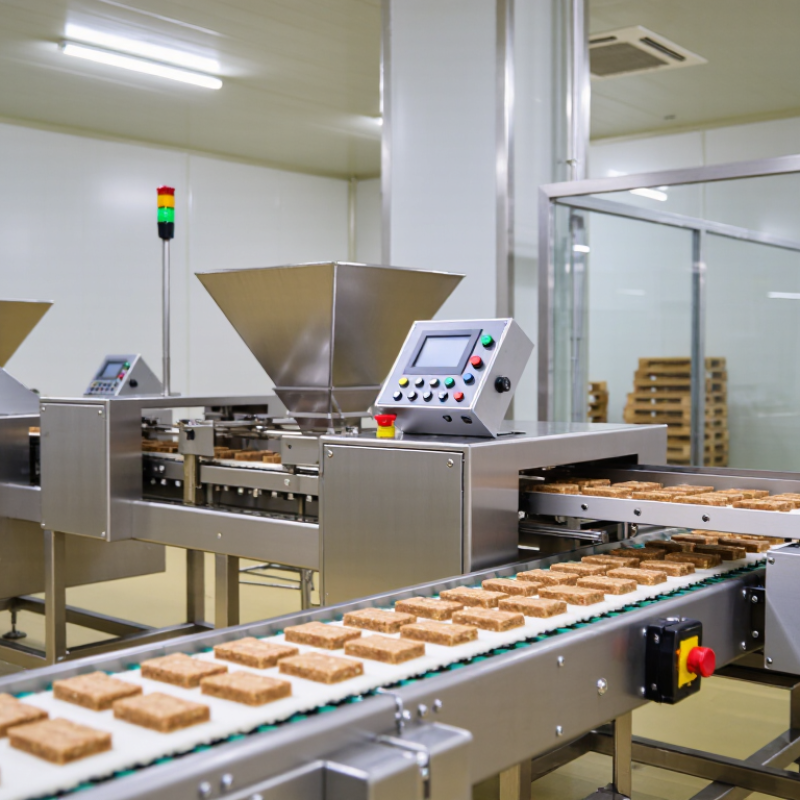
2026 Top Date Bar Extrusion Line Suppliers for Global Buyers

Date Bar Extrusion Lines: Process Stages from Mixing to Cutting

Date bar production starts with ingredient preparation and controlled mixing. Dates may arrive as whole fruit, paste, or chopped pieces, so the line needs a feed system suited to the recipe. Ingredient preparation matters. Removing hard pits and checking for uneven pieces can help protect downstream equipment. Dry ingredients should be added gradually, allowing the mixer to distribute them without creating dusty pockets or dense clumps. The target is a cohesive mass that holds together but still moves smoothly.

After mixing, the mass passes through a hopper and into the extrusion section. A steady feed helps maintain a consistent bar profile; surges can cause changes in width or height. The extruder shapes the mixture through a die, and operators can adjust pressure and feed rate to suit its texture. Too much pressure may compact the product more than intended. Small adjustments count. Actual settings depend on moisture, fruit variety, and added ingredients, so recipe trials are more dependable than assumptions.

The formed sheet or ropes then move through cooling before cutting. Cooling firms the surface, helping the cutter produce cleaner edges with less sticking. Cutting blades should match the desired bar dimensions and be checked for buildup during production. Samples taken across a run can reveal weight or size variation that a single inspection misses. For global buyers, a supplier review should cover changeover procedures, cleaning access, and how operators monitor feed and cut consistency. Those details deserve careful checking; specifications alone do not show how a line behaves with a particular recipe.

Core Line Specifications: Throughput in kg/h, Power in kW, and Bar Dimensions

For global buyers comparing date bar extrusion lines in 2026, start with the product and the numbers. Ask suppliers to state throughput in kg/h under defined test conditions, not just a peak figure. Date paste temperature, moisture, and recipe can change output noticeably. A line rated at 200 kg/h may deliver less with a sticky, dense mixture. Request a trial using a recipe close to your own.

Check installed power in kW and separate it from typical operating demand. Motors, heaters, conveyors, and cooling equipment all affect the total. Confirm the required supply voltage and whether the quoted figure covers the complete line. Bar dimensions matter just as much: specify width, thickness, and cut length, plus the acceptable variation. A narrow thickness tolerance can help with even baking and packaging, but it may require tighter process control. I would not assume the catalogue dimensions tell the whole story.

Tips: Ask for a sample run and record kg/h, power draw, and finished bar measurements. Keep the test settings. Small differences in feed temperature can matter. It is easy to overlook changeover time, too; include it when estimating daily output.

2026 Top Date Bar Extrusion Line Suppliers for Global Buyers

Core line specifications: throughput, installed power, and bar dimensions

Capacity class Indicative bar width Indicative bar thickness
Compact 20–35 mm 10–20 mm
Medium 25–45 mm 12–25 mm
High-capacity 30–60 mm 15–30 mm

These are indicative planning values for generic line capacity classes, not supplier-specific specifications or a ranking. Actual throughput, power demand, and finished dimensions depend on the recipe, moisture, die design, and cooling setup. Confirm operating conditions and guaranteed output with each equipment supplier.

Date-Paste Formulation: Measuring Moisture, Texture, and Extrusion Consistency

Date paste can look uniform in a mixer yet behave differently at the extruder. Measure moisture from several points in each batch, not just the surface. A calibrated moisture analyzer helps compare batches, while water activity can add useful storage context. These readings are not interchangeable. Record the method, sample temperature, and timing so production teams can interpret results consistently.

Texture matters just as much. A paste that is too firm may leave rough edges or strain the feed system; a soft paste can slump after cutting. Check firmness at a consistent temperature, then run a short extrusion trial. Watch the strand for cracks, smearing, and changes in width.

Small differences count. Suppliers serving global buyers should be able to document test conditions and discuss adjustments to mixing, feed rate, and die design. Still, a neat test sample does not guarantee a steady full-scale run. That is worth questioning.

Compare several batches, including one made with typical production variation, before setting process limits. Keep the recipe and measurements together; otherwise, troubleshooting becomes guesswork.

Supplier Evaluation: Comparing Capacity, Changeover Time, and After-Sales Support

2026 Top Date Bar Extrusion Line Suppliers for Global Buyers

Supplier Evaluation: Comparing Capacity, Changeover Time, and After-Sales Support

A date bar line should match the buyer’s real production plan, not just a catalogue figure. Compare quoted capacity with output measured during a sustained run using a similar recipe. Ask what bar size, moisture level, and operating hours the estimate assumes. A machine that runs quickly with one formulation may behave differently with another. Numbers can flatter.

Changeover time matters when a plant makes several bar sizes or recipes each week. Ask suppliers to demonstrate a change from one product setting to another, including die removal, cleaning, and restart checks. Record the minutes and note which tasks need tools or skilled operators. A quick demonstration is useful, but it may not reflect a busy shift. Downtime adds up.

After-sales support should be specific enough to verify. Request written response targets, remote troubleshooting procedures, and a list of commonly stocked spare parts. Confirm whether technicians can guide operators through routine adjustments, and clarify travel costs before purchase. A supplier’s service promise is only as useful as its local coverage and parts access. I would leave room for uncertainty here: response times can vary during peak periods. Ask for references from plants with similar equipment and production schedules.

Food-Safety Verification: HACCP’s 7 Principles and ISO 22000:2018

For global buyers, a date bar extrusion line is more than a forming machine. Its hygienic design, cleanability, and process controls affect food safety every shift. Look closely. Ask suppliers how product-contact belts, hoppers, and dies are cleaned and inspected. A polished surface alone does not prove effective sanitation.

HACCP gives teams a practical sequence for controlling identified hazards. They analyze hazards, identify critical control points, and set measurable critical limits. Operators monitor limits, correct deviations, verify controls, and maintain records. For date bars, teams may assess metal fragments, allergen cross-contact, and microbial risks from ingredients or handling. Not every hazard belongs at a critical control point; prerequisite programs also matter.

ISO 22000:2018 places HACCP within a broader food safety management system. It adds structured communication, leadership responsibilities, prerequisite programs, and continual improvement. During equipment review, request risk assessments, cleaning instructions, material specifications, and evidence supporting claimed controls. Then test changeovers and cleaning access with actual recipes, not showroom samples. One gap deserves honest attention: line performance data may not reflect your plant’s people, water, or shift patterns. Validation should happen under your operating conditions, with records that staff can use.

Scroll to Top
Scroll to Top