
Learn more about how Trevisan’s Horizontal Machining Centers can help you minimize set up time and labor costs.

What Is the Best Emergency Auto Booster for Global Buyers?

Choosing the best Emergency Auto Booster is not simply a matter of finding the highest peak-current number. Global buyers face different vehicles, climates, charging standards, and road conditions. A compact petrol hatchback may start easily with a 1,000-amp model. A large diesel truck may demand stronger capacity, thicker cables, and dependable cold-weather performance. The label matters, but real testing matters more.

John Ibbotson, chief mechanic at Consumer Reports, offers a practical warning: “The bigger the engine, the more power you need.” That principle should guide every comparison. Buyers should check engine size, battery voltage, starting current, cable length, clamp quality, and protection against reverse polarity. A clear screen and a bright work light can also help beside a dark roadside. Small details become important then.

An Emergency Auto Booster should remain usable after months in a glove compartment. Look for a stated operating-temperature range, durable casing, secure storage, and a charging method compatible with local outlets. USB-C charging may be convenient, but included adapters still vary between markets. Certification claims should be verified through reputable documentation, not attractive packaging.

There is no perfect universal choice. Some models advertise impressive numbers but provide limited evidence from independent testing. Others are heavier, yet more dependable in freezing weather. This guide compares practical performance, safety features, portability, and long-term value for international buyers. It cannot replace the vehicle manufacturer’s instructions. It may also overlook regional service differences. That is worth remembering before purchase.
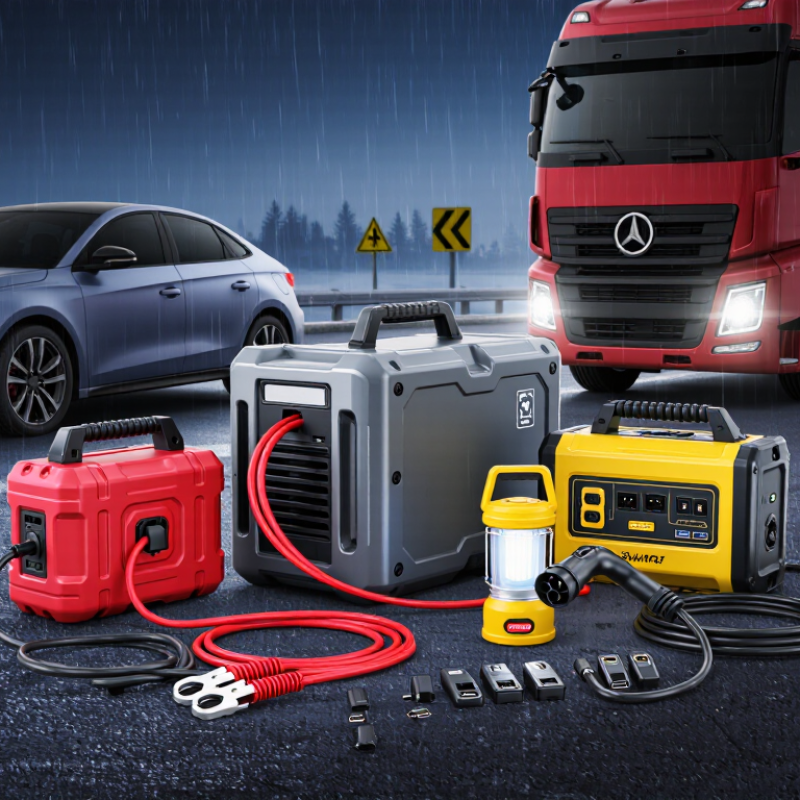
What Is the Best Emergency Auto Booster for Global Buyers?

Definition and Purpose of an Emergency Auto Booster

An emergency auto booster is a portable power source for restarting a vehicle with a discharged 12-volt battery. It usually contains a lithium battery pack, jumper cables, clamps, and safety controls. Its purpose is temporary engine starting, not full battery charging. In practical use, a driver connects the clamps, checks polarity, and turns the ignition for a few seconds. The device should then be recharged.

The need is measurable.

ADAC’s 2024 breakdown statistics reported starter-battery problems in about 44% of roadside failures. That figure does not predict every vehicle, but it shows why compact emergency power matters. A suitable booster should match the vehicle’s engine size, battery voltage, and operating climate. Diesel engines and cold weather demand greater starting power. Peak current figures can mislead. I would not trust a large number alone.

Look for reverse-polarity, short-circuit, and over-temperature protection. Cable length also matters beside a poorly positioned battery. Safety evaluation under standards such as UL 2743 can provide useful evidence, although certification does not guarantee perfect performance. Global buyers should check charging compatibility, storage temperature, plug requirements, and local transport rules. A 12-volt booster cannot safely replace a 24-volt system. That mistake is easy to make. A clear manual, durable clamps, and verified test data often matter more than a dramatic package claim.

Key Features to Compare for Global Vehicle Compatibility

Global buyers need to compare compatibility before chasing the highest advertised current.

S&P Global Mobility reported that the average U.S. light vehicle age reached 12.6 years in 2024. Older cars may have weak batteries, corroded terminals, or unusual battery locations.

A suitable emergency booster should support the vehicle’s battery voltage, engine size, and fuel type. Petrol engines usually need less starting current than diesel engines. Peak amperage can look impressive, but tested cranking performance matters more.

Check polarity protection, short-circuit protection, and reverse-connection alerts. These features reduce mistakes in rain, darkness, or roadside stress. Cable length also matters when the battery sits under a seat or inside the trunk.

Look for insulated clamps, clear charge indicators, and a working temperature range suited to the destination. The International Energy Agency’s Global EV Outlook 2024 recorded almost 14 million electric-car sales in 2023. However, a portable booster normally supports only an EV’s 12-volt auxiliary battery, not its high-voltage traction system.

A universal model does not truly exist.

I still find this easy to overlook. Buyers should verify the vehicle manual, battery chemistry, and local charging standard before purchase.

Lithium units are compact, yet storage heat can reduce reliability. A unit tested under recognized electrical-safety standards offers stronger evidence than a large number printed on its box. Real roadside tests, warranty terms, and independent laboratory data deserve more attention than marketing claims.

How to Choose the Right Booster for Different Emergencies

Choosing the best emergency auto booster starts with the failure you expect to face. A small petrol car may need a compact unit with reliable starting current. For a larger diesel engine, choose higher cold-cranking performance and thicker cables. Bigger is not always better.

Cold weather reduces battery strength quickly. Look for a booster tested for low temperatures, with a clear operating range. In hot regions, heat-resistant housing and overheat protection matter more. A motorcycle needs lower output and smaller clamps. Using an oversized unit may damage sensitive electrical systems if used incorrectly.

Check the vehicle voltage before connecting anything. Most passenger cars use 12 volts, but commercial vehicles may differ. Reverse-polarity, short-circuit, and overload protection should be essential. Read the vehicle manual and the booster instructions carefully. Never connect a swollen, cracked, or leaking battery. That detail is easy to ignore.

For roadside emergencies, choose built-in lighting, a readable charge display, and cables long enough for awkward parking positions. A sealed case helps protect the device from rain and dust. USB charging is useful, but it does not replace starting power. Buyers in different countries should verify plug types, transport rules, warranty support, and recognized safety testing.

I once focused too much on peak current figures. The unit looked impressive, but its clamps felt weak in real use. Practical design matters. Test the charge level every few months, because an emergency device can quietly lose power in storage.

What Is the Best Emergency Auto Booster for Global Buyers? - How to Choose the Right Booster for Different Emergencies

Emergency Scenario Suitable Vehicle / Use Recommended Peak Current Suggested Battery Capacity Important Features Typical Recharge Time Buying Priority
Occasional flat battery Small petrol cars, compact sedans, motorcycles 400–800 A 6,000–10,000 mAh Reverse-polarity protection, LED flashlight, insulated clamps About 2–4 hours Compact size and simple operation
Regular family-car backup Most 4-cylinder and medium-size petrol vehicles 800–1,200 A 10,000–15,000 mAh Over-current protection, USB-C input, battery-status indicator About 3–5 hours Balance of power, portability, and price
Large petrol engine Large SUVs, vans, pickup trucks, engines above approximately 4.0 L 1,200–2,000 A 15,000–20,000 mAh Heavy-duty clamps, high-temperature cables, multiple restart cycles About 4–6 hours Verified output and cable durability
Diesel engine starting Diesel cars, vans, light commercial vehicles 1,500–2,500 A 15,000–25,000 mAh High cranking output, low-temperature capability, thermal protection About 4–8 hours Actual starting performance rather than advertised peak current alone
Cold-weather emergency Vehicles used in areas near or below 0°C Add approximately 25–50% capacity above the normal requirement 15,000–25,000 mAh Low-temperature operating specification, insulated leads, charge retention About 4–8 hours Cold-weather test data and storage instructions
Repeated roadside assistance Fleet operators, workshops, roadside service vehicles 2,000–3,000 A 20,000–30,000 mAh High cycle life, replaceable cables, duty-cycle information, rugged housing About 5–10 hours Reliability, serviceability, and documented testing
Long-term vehicle storage Spare vehicle, seasonal vehicle, emergency kit 600–1,200 A 10,000–20,000 mAh Low self-discharge, clear remaining-charge display, periodic recharge reminder About 3–6 hours Shelf-life guidance and battery maintenance
Wet or dusty environments Outdoor driving, construction areas, rural roads Select according to the vehicle; commonly 800–2,000 A 10,000–20,000 mAh Clearly stated ingress protection, sealed ports, nonslip housing, protective case About 3–8 hours Environmental protection and safe storage
Selection note: Required starting power depends on engine size, fuel type, battery condition, ambient temperature, and cable quality. Peak-current figures are not standardized across manufacturers, so buyers should also check independently tested starting-current performance, operating-temperature limits, safety protections, and compatibility with the vehicle’s battery system.

Safety Standards, Certifications, and International Use

For global buyers, the best emergency auto booster is not the one with the largest peak-current number. It is the one with verifiable safety evidence. AAA’s 2023 Year in Review reported nearly 32 million roadside assistance calls, with dead batteries among the most common causes. That demand makes certification more important than aggressive advertising.

Look for testing aligned with UL 2743 for portable power packs and IEC 62133-2 for rechargeable lithium cells. UN 38.3 compliance is also essential for international battery transport. A CE or UKCA mark helps with market access, but it is not always proof of independent product safety testing. Check the certificate number, issuing laboratory, battery chemistry, and testing scope. A printed logo alone proves little.

Practical protection matters. Choose reverse-polarity detection, short-circuit protection, over-temperature control, and insulated clamps. The booster should match a 12-volt system and provide suitable cranking current for the engine. Diesel engines may need substantially more current, especially below freezing. IP ratings can help against dust and splashes, but they do not guarantee safe operation in heavy rain. That distinction is easy to miss. Battery capacity also falls in cold conditions, as noted in international battery performance research from the International Energy Agency’s Global EV Outlook 2024. Still, that report focuses mainly on electric vehicles, not jump starters. Buyers should treat broad battery data cautiously and request model-specific test results.

Proper Operation, Maintenance, and Storage Guidelines

What Is the Best Emergency Auto Booster for Global Buyers?

A dependable emergency auto booster is useful only when operated correctly. Check the vehicle’s voltage and the booster’s rated output before connecting anything. Read the manual carefully, even if the controls look familiar. Turn off the ignition, lights, radio, and other electrical loads. Keep the booster on a stable, dry surface.

Connect the positive clamp to the positive battery terminal. Attach the negative clamp to an approved metal grounding point, when the vehicle instructions allow it. Keep clamps apart during connection. Never use a booster with cracked insulation, swollen cells, leaking parts, or unusual heat. Stop immediately if you notice smoke, a sharp odor, or repeated sparking. Safety glasses are sensible. Gloves can help, too.

Maintenance affects reliability more than appearance. Recharge the unit after every emergency use, following the supplied charging instructions. Global buyers should confirm charger voltage, plug compatibility, and local electrical requirements. Do not charge a wet, damaged, or frozen device. Store it in a cool, dry place, away from direct sunlight, fuel, and loose metal objects. Inspect the cable and clamps every few months. A forgotten booster may show a full display but still perform poorly under load. That mistake is easy to make. Periodic testing is wiser than trusting one indicator. During long storage, check the charge level according to the manual and keep the device protected from extreme heat and cold.

What Is the Best Emergency Auto Booster for Global Buyers?

A reliable emergency auto booster should provide sufficient starting power, clear polarity protection, safe cable connections, and dependable charge retention during storage. The chart uses a 12V lead-acid battery reference to show the approximate relationship between resting voltage and state of charge. For lithium-powered booster packs, always follow the product manual because voltage ranges differ.

Before use, inspect the cables and clamps, confirm the vehicle voltage, connect positive to positive and negative to the recommended ground point, and disconnect the booster after the engine starts. Recharge the unit after every jump-start and store it in a dry location away from extreme heat, freezing temperatures, and moisture.

Scroll to Top
Scroll to Top