
Learn more about how Trevisan’s Horizontal Machining Centers can help you minimize set up time and labor costs.

Best Grinding Steel Ball Manufacturer in China?

Choosing the best Grinding Steel Ball manufacturer in China takes more than comparing prices or reading a polished product page. The right supplier should understand where the balls will work, whether in mining, cement production, or another demanding grinding operation. Different mills place different demands on ball size, hardness, toughness, and wear resistance. One specification rarely suits every site.

Details matter. Ask how steel composition is controlled, how heat treatment is monitored, and how hardness is checked across production batches. Request clear test records, dimensional tolerances, and information about traceability. A dependable manufacturer should explain its process in practical terms, not rely only on broad claims. Look for answers that connect product data to actual operating conditions.

There is no universal winner. Not even close. A ball that performs well in one mill may wear differently in another, depending on ore, mill speed, and operating practices. Supplier comparisons should therefore consider trials, service support, delivery reliability, and the cost of replacement—not just the quoted price. Be cautious with promises of unusually long service life unless the conditions and evidence are clearly stated. I would also treat a single test result as a starting point, not a guarantee. Real production can be less tidy than a brochure suggests. This guide outlines practical questions for assessing Chinese manufacturers and choosing a Grinding Steel Ball supplier whose capabilities match your needs.
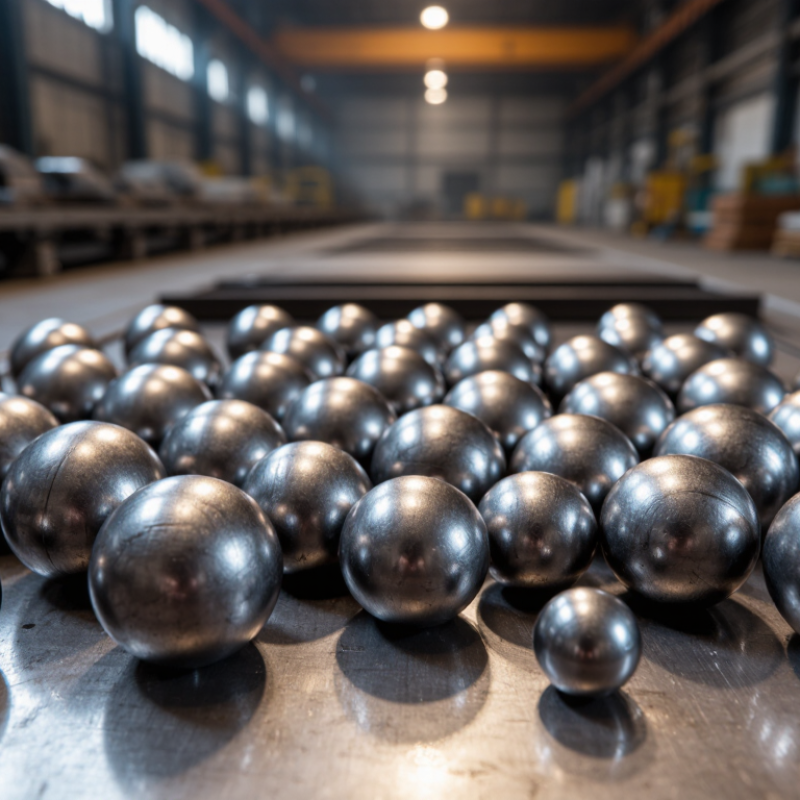
Best Grinding Steel Ball Manufacturer in China?

What Grinding Steel Balls Are and Where They Are Used

Grinding steel balls are hardened spheres used inside rotating mills to break ore through impact and abrasion. As the mill turns, balls lift and fall, striking rock chunks and reducing them to smaller particles. Their diameter, hardness, and wear rate affect grinding performance. A worn ball is not just a smaller ball; its changing shape can alter how the charge moves. Small details matter.

Mining is a major use, especially in processing copper, gold, and iron ores. The USGS Mineral Commodity Summaries 2024 estimated global copper mine production at about 22 million metric tons in 2023. That figure does not measure grinding-ball consumption, but it shows the scale of material entering mineral-processing circuits. Steel balls are also used in cement and some coal-grinding operations. In practice, selection depends on ore hardness, mill design, and operating conditions—not one universal specification. The answer is not always obvious. A ball that lasts longer may still perform poorly if it is too hard or mismatched to the mill. Operators should review wear patterns and product size together; focusing on ball life alone can miss the real issue.

How Grinding Steel Balls Are Manufactured in China

Best Grinding Steel Ball Manufacturer in China?

How Grinding Steel Balls Are Manufactured in China

Grinding steel balls are made through several routes, including hot rolling, forging, and casting. The method depends on ball size, steel grade, and the mill’s working conditions. In many production lines, steel rods are cut and heated before forming. Red-hot pieces pass through rollers or forging equipment, then cool into rough spheres. The process is fast, but temperature control matters. Too much variation can affect the ball’s internal structure.

Heat treatment gives the balls much of their wear resistance. Workers heat them to a specified range, then quench them in water or oil. Tempering follows to reduce brittleness and balance hardness with toughness. Small details matter. A ball may look sound outside yet contain internal defects. That is why reliable plants check samples for hardness, dimensions, surface cracks, and impact performance. Chemical composition is also verified against the required steel grade.

Finished balls are sorted by diameter and inspected before packing. Some manufacturers use automated gauges; others still rely partly on manual checks, which can introduce inconsistency. Buyers should ask how samples are taken and how test results are recorded. A hardness number alone does not describe service life. Ore type, mill speed, and operating conditions also influence wear. Even well-controlled production has limits, and specifications sometimes need adjustment after real mill trials.

Quality Standards for Evaluating Chinese Manufacturers

A dependable grinding steel ball manufacturer should show lot-level evidence, not just a polished certificate. The World Steel Association’s World Steel in Figures 2024 reports that China produced 1,019.1 million tonnes of crude steel in 2023, about 54% of global output. That scale shows manufacturing capacity, not grinding-ball quality. The distinction matters.

Ask for chemical-composition records, heat-treatment charts, and hardness results from balls sampled across one production lot. ISO 6506-1 describes Brinell hardness testing; request readings at both the surface and core, not one convenient spot. For wear comparisons, require the test method, sample size, and operating conditions. ASTM G65 measures dry-sand abrasion, but it does not reproduce every mill environment. A high hardness number alone can mislead. Impact resistance and breakage data matter too, especially where balls face repeated collisions. I would still question any supplier’s “best” claim without seeing repeat tests and clear traceability. Small records matter. Ask how rejected batches are handled, and whether reported results came from routine production or a specially prepared sample.

Best Grinding Steel Ball Manufacturer in China? – Quality Standards for Evaluating Chinese Manufacturers

Evaluation Dimension What to Check Reliable Evidence Warning Signs
Quality management system Check whether production controls, inspection records, corrective actions, and document control are established and regularly maintained. A current, independently verifiable ISO 9001:2015 certificate covering the relevant manufacturing site and scope, supported by actual quality records. A certificate that cannot be verified, does not cover the production site, or is presented as proof that every product automatically meets a particular specification.
Product specification and traceability Confirm that the purchase specification identifies the media type, nominal diameter, permitted tolerances, material requirements, inspection plan, and batch identification method. Agreed technical data sheets, purchase specifications, batch numbers, and inspection documents that link the delivered product to its production and test records. Vague descriptions such as “high quality” without defined acceptance criteria, or test documents that cannot be linked to the supplied batch.
Chemical composition Review the material analysis against the composition limits agreed for the selected forged or cast product and application. Batch-specific chemical analysis reports showing measured results, test method, sample identification, and the applicable specification limits. Generic certificates reused across batches, missing sample identification, or composition claims with no stated limits or test results.
Hardness and uniformity Evaluate hardness using an agreed test method and sampling plan. Check variation within a ball and between samples, not only a single reported value. Recorded hardness results with the scale, test locations, sample size, and acceptance range defined in the contract or technical specification. A hardness figure with no test method, locations, or sampling details. There is no single universal hardness requirement suitable for every mill and operating condition.
Microstructure and heat treatment For heat-treated products, assess whether the structure and treatment are appropriate to the specified material and intended service conditions. Metallographic examination records and documented heat-treatment controls, when these are included in the product specification or inspection plan. Claims about a particular structure or heat-treatment process without supporting records or without tying the claim to the supplied product.
Impact toughness and breakage resistance Determine whether impact or breakage testing is required for the application, and agree on the test method, sample preparation, and acceptance criteria in advance. Test reports that state the method, conditions, sample count, and results. Independent laboratory testing may be appropriate for qualification or disputes. Unqualified “unbreakable” claims or test results that omit test conditions and cannot be compared with the buyer’s requirements.
Wear performance Compare wear results only under controlled, comparable conditions. Results can vary with ore, mill type, operating conditions, ball size, and test method. A documented laboratory or plant trial with the operating conditions, measurement method, duration, and calculation basis clearly stated. Wear-rate claims without test conditions, or direct comparisons between results obtained using different methods or operating environments.
Dimensions and surface condition Check diameter, dimensional variation, and visible defects against the agreed product specification and inspection plan. Inspection records showing the measurement method, sample size, and results, together with agreed criteria for surface defects. Undocumented tolerances or acceptance decisions based only on photographs or a visual review of a small number of samples.
Laboratory competence Assess whether testing is performed by a competent in-house or external laboratory using suitable methods and calibrated equipment. Equipment calibration records and, where applicable, an ISO/IEC 17025:2017 accreditation scope that covers the relevant test and measurement. Assuming a laboratory is accredited for every test simply because it holds an accreditation certificate; verify the specific scope.
Production capability and consistency Review the processes and controls relevant to the offered product, along with how nonconforming material is identified and controlled. Process-control records, inspection plans, nonconformance procedures, and consistent batch documentation for comparable product orders. Capacity claims without supporting production records, or an inability to explain how product variations and rejected batches are managed.
Packaging, shipment, and documentation Confirm packaging protects the media during handling and transit, and agree on marking, packing lists, and required quality documents. Written packaging and marking requirements, shipment records, and batch-linked certificates supplied with or before delivery. Unclear responsibility for transport damage, inconsistent batch markings, or missing documentation at dispatch.
Environmental and worker-safety systems Where relevant to procurement policy, review management systems and site practices separately from product conformity. Current, independently verifiable ISO 14001:2015 or ISO 45001:2018 certification for the relevant site and scope, if required by the buyer. Treating environmental or occupational-safety certification as proof of grinding-media performance or material quality.

Note: Grinding-media requirements depend on the product type, mill, ore, and operating conditions. Agree on measurable acceptance criteria and test methods before ordering; no single certificate or hardness value establishes a universally “best” manufacturer.

How to Compare Grinding Steel Ball Manufacturers

Best Grinding Steel Ball Manufacturer in China?
How to Compare Grinding Steel Ball Manufacturers

Comparing grinding steel ball manufacturers takes more than checking price. Start with the ball’s intended mill, ore conditions, and impact load. Then compare steel composition, hardness, and size tolerance. These factors affect wear, breakage, and milling consistency. Ask how hardness is tested across each ball, not only at the surface. A single impressive test result may not represent an entire production batch.

Tips: Request recent inspection records and a representative sample. Ask for the test method, sampling frequency, and acceptable tolerance. Check whether the supplier can explain differences between product grades in practical terms. Small details matter. Compare delivery schedules and packaging, too; damaged or delayed shipments can disrupt operations.

Where possible, evaluate samples under comparable operating conditions and track wear over time. Keep the test period and mill settings consistent. A polished certificate is useful, but it cannot predict every shipment’s performance. Some comparisons will still be imperfect, especially when ore conditions change. Record those limits rather than treating one result as a final verdict. Reliable manufacturers should answer technical questions clearly and provide traceable quality information.

How to Compare Grinding Steel Ball Manufacturers

Suggested evaluation weights for comparing suppliers of grinding steel balls.

These percentages are a suggested decision framework, not measured market data. Compare suppliers using documented quality consistency, wear-test results, technical support, delivery performance, inspection records, and total cost for your operating conditions.

Choosing a Manufacturer for Your Application

Choosing a grinding steel ball manufacturer starts with the mill, not a catalogue. A ball suited to a small laboratory mill may wear too quickly in a large production drum. Describe your ore hardness, feed size, mill speed, and whether impact or abrasion dominates. These details help suppliers recommend ball diameter, alloy composition, and heat-treatment range. Small details matter. Request data from comparable applications, including consumption rates and breakage observations. Claims alone are not enough. Ask for evidence.

A reliable evaluation checks more than a polished quotation. Review chemistry reports, hardness results, batch traceability, and the supplier’s inspection process. Ask how samples are taken and whether hardness is checked across the ball, not just at its surface. If possible, run a controlled trial and record wear, breakage, and changes in mill output. Compare results over a useful operating period; one shift rarely reveals the full wear pattern. Price still matters, though frequent replacement can erase a small saving. A choice may remain uncertain when ore changes seasonally or production records are incomplete. State those gaps openly and agree on measurable review points before ordering.

Scroll to Top
Scroll to Top