
Learn more about how Trevisan’s Horizontal Machining Centers can help you minimize set up time and labor costs.

What Is the Best High Speed Pick and Place Robot in 2026?

Choosing the best high speed pick and place robot in 2026 is not a race for the biggest number on a brochure. A production line reveals the real test: can the robot place small parts accurately, cycle after cycle, without disrupting upstream or downstream equipment? George Devol, widely regarded as a pioneer of industrial robotics, described robots’ purpose as taking on work that is “dangerous, tedious, or distasteful.” That principle still matters on a packaging line where repetitive handling can slow the entire process.

A useful comparison starts with the application. Check payload, reach, cycle time, placement accuracy, and the shape and surface of each item. A lightweight carton and a slippery food pouch create different gripping challenges. Also inspect the vision system, end-of-arm tooling, controls, and integration requirements. A fast arm alone cannot guarantee a fast line. Small details matter.

This guide examines what leading systems offer and how to match them to real production needs. It considers operating speed alongside uptime, changeover time, maintenance access, and support. No single model is best for every factory; even strong specifications can disappoint when the layout or product mix changes. That is an easy point to overlook. The comparison aims to make those trade-offs visible, so buyers can shortlist a high speed pick and place robot based on measurable tasks rather than marketing claims. The right choice should perform reliably under your actual conditions, not just in a polished demonstration.
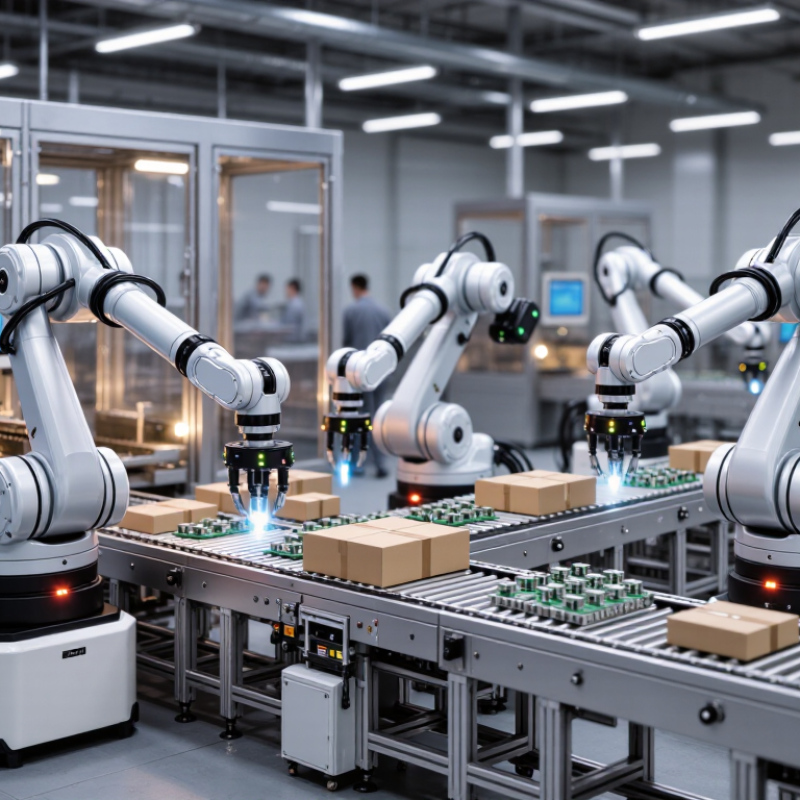
What Is the Best High Speed Pick and Place Robot in 2026?

What Defines a High-Speed Pick-and-Place Robot in 2026?

In 2026, “high speed” is not a single number on a robot’s specification sheet. It means completing repeatable pick-and-place cycles quickly under stated conditions: payload, reach, path, gripping time, and product spacing. A robot moving an empty gripper through a short path may look fast, yet slow down when handling heavier parts or tracking a moving belt. Speed is not enough. Compare complete cycles, not isolated arm movements.

The International Federation of Robotics’ World Robotics 2024 report recorded 541,302 industrial robot installations in 2023, with 4.28 million operating worldwide. Its 2023 report counted 553,052 installations in 2022. These figures show broad adoption, not a universal speed benchmark.

That distinction matters. In a real cell, vision processing, conveyor synchronization, settling, and missed picks all affect sustained output. Look for cycle-time results with test conditions disclosed, plus payload and repeatability data.

Check performance over a full shift, too; heat, maintenance, and product variation can expose gaps a short demo misses.

I would still question any headline picks-per-minute figure without its test setup. A transparent, slightly slower result is often more useful than an impressive number without context.

How Are Robot Speed, Accuracy, and Payload Measured?

A “fast” pick-and-place robot should be judged by a measured task cycle, not its advertised peak speed. Record the time from gripping a part to placing it and returning for the next pick. Keep the part, grip force, travel distance, and motion profile consistent. Small changes matter. A lighter test piece may produce an impressive number that does not match production.

ISO 9283 defines tests for industrial robot performance, including pose accuracy, repeatability, and path accuracy. Accuracy measures closeness to a commanded position; repeatability measures how closely the robot returns to the same position. They are not interchangeable.

The International Federation of Robotics reported about 4.28 million industrial robots operating worldwide at the end of 2023 in World Robotics 2024. That is useful adoption context, not a speed ranking.

Payload should include the gripper, workpiece, and attached tooling, while reach and wrist moments can affect performance. Ask suppliers for cycle-test conditions and measured results. A clean laboratory cycle can still disappoint on a crowded line. The test setup deserves scrutiny.

Which Robot Designs Suit Different Pick-and-Place Tasks?

A high-speed pick-and-place robot should match the part, motion, and workspace—not just a headline cycle time. Delta robots suit lightweight items moving quickly between nearby points, such as small components on a conveyor. Their parallel arms can deliver rapid, repeatable motion, but payload, reach, and tool weight all affect performance. They may be a poor fit when parts need heavy gripping or complex orientation.

Small parts matter.

SCARA robots often suit assembly and transfer tasks on a flat work surface. They can move quickly between fixed locations while controlling vertical placement, making them useful for trays, packaging, and component insertion. Cartesian robots fit long, straight travel paths and predictable layouts; their simple axes can make access and maintenance easier. Articulated robots provide more approach angles for awkward parts, though added flexibility does not automatically mean faster cycles.

One uncomfortable truth: the fastest arm on paper can lose time waiting for parts or correcting poor presentation. Compare complete cycle times with the actual gripper, vision system, and feeder. I would also question whether a layout change could remove unnecessary motion before selecting a more complex robot.

How Do Leading High-Speed Robots Compare?

In 2026, the best high-speed pick-and-place robot depends on the part, layout, and required cycle time. Delta robots often suit lightweight items moving across a broad work area. Fast articulated or SCARA robots can be a better fit when reach, orientation, or heavier payloads matter. A headline speed alone proves little.

Compare robots using the same test conditions: payload, reach, path, and pick-and-place pattern. Check cycle time, repeatability, acceleration, and recovery after a stop. ISO 9283 defines methods for evaluating industrial robot performance, including pose accuracy and repeatability. That matters. A robot may move quickly but still miss a narrow tray pocket when its load or motion path changes.

The International Federation of Robotics’ World Robotics 2024 report recorded 541,302 new industrial robot installations in 2023 and 4,281,585 robots in operation worldwide. Those figures show broad adoption, not which robot is fastest. A fair comparison is still messy: published cycle times may use different payloads and test setups. Ask for a live trial using your actual parts, gripper, and conveyor spacing. Then measure good picks per hour, not just the best-case cycle time. Expect some variation. Real production rarely behaves like a clean demo.

How to Choose the Best Robot for a Production Line?

Choosing a high-speed pick-and-place robot starts with the production task, not the headline cycle time. Record the required output per minute, product dimensions, and the distance between pickup and placement points. Include the gripper and product in the payload calculation. A robot rated for fast movement may slow down when carrying an awkward load or following a longer path. Speed is not everything.

Check reach and repeatability against the actual workstation layout. A robot that barely reaches a tray edge may need awkward motion, adding time and increasing collision risk. Test with real products, lighting, and packaging materials. Small misses add up. If vision is needed, confirm that it identifies parts reliably when they rotate, overlap, or arrive slightly off position.

Ask suppliers for cycle-time data using your complete pick-and-place sequence, not an unloaded demonstration. Check how easily operators can change recipes, clear faults, and replace common wear parts. Review guarding, access for maintenance, and integration with conveyors or upstream equipment. A short pilot run can expose issues that a simulation misses, though pilot results may not match every shift. Track mispicks, downtime, and changeover time over several production runs before selecting a system.

Scroll to Top
Scroll to Top