
Global buyers need more than a low quote when sourcing laminated glazing. Laminated Safety Glass uses bonded glass layers and an interlayer to help hold fragments together after breakage. Its performance depends on the specified build, materials, and manufacturing quality. A clear brief helps suppliers respond accurately. Small details matter.
This guide introduces seven suppliers for buyers comparing product options and service capabilities. It considers glass configurations, custom sizes, quality controls, technical support, and export experience. Buyers can compare stated capabilities, then request product data and relevant test reports. Ask each supplier about minimum order quantities, sample availability, packaging, and shipping terms. Check sample labels against the accompanying documents. Documentation matters.
Supplier capability, lead times, and communication can vary by project and destination. No single supplier suits every application, and a shortlist is only a starting point. One specification can still be missed when teams focus only on price. Treat each company’s published claims as information to verify, not a guarantee of project suitability. Confirm dimensions, thickness, interlayer type, edge requirements, and acceptance criteria before ordering. With these checks, the supplier comparison becomes more practical—and less dependent on polished sales language.
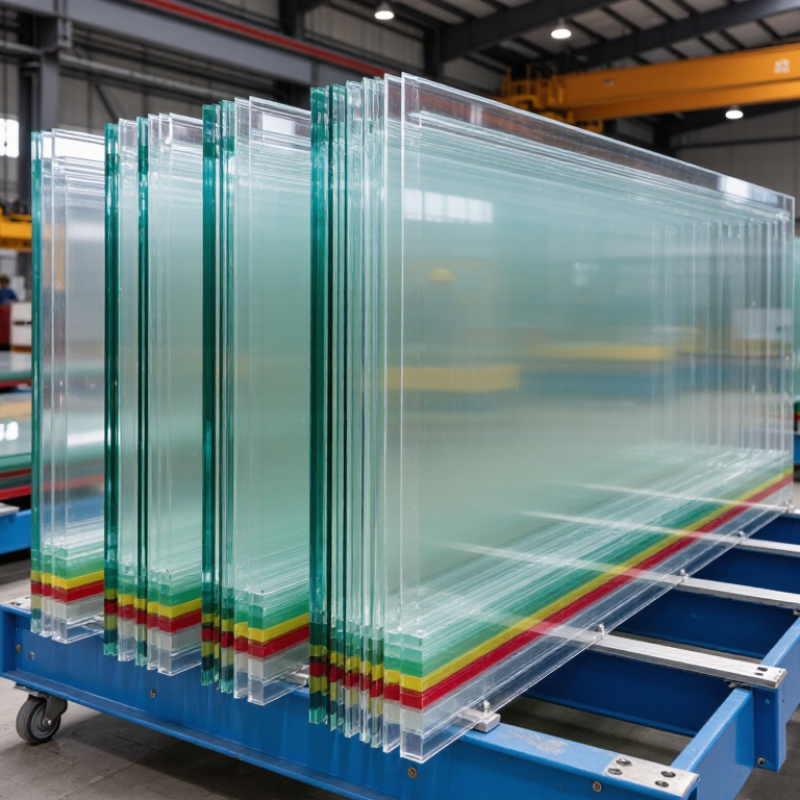
Laminated safety glass is made by bonding two or more glass sheets around a polymer interlayer, often polyvinyl butyral. Heat and pressure help create a single pane. When struck, the glass may crack, but many fragments remain attached to the interlayer. That can help preserve a barrier and reduce flying shards. It does not make the pane unbreakable. Edge damage and poor installation can also weaken performance.
In vehicles, laminated glass is widely used for windshields, where keeping broken glass together matters during a crash. NHTSA’s 2023 Traffic Safety Facts reported 40,901 roadway deaths in the United States. That figure is not a measure of glass performance, but it shows the serious setting in which glazing must work. Laminated glass also appears in doors, skylights, railings, and building façades, where people may contact glass or pass beneath it.
For façades, safety is only one design concern. The 2023 Global Status Report for Buildings and Construction from UNEP and GlobalABC estimates that buildings and construction account for 37% of energy- and process-related carbon dioxide emissions worldwide. Laminated glass alone does not solve energy loss; coatings, pane spacing, and frame design matter too. A practical detail is easy to overlook: the correct glass can still disappoint when its support and edge protection are poorly specified.
Choosing a laminated safety glass supplier starts with evidence, not polished sales language. Ask for current test reports matching the glass build, interlayer, thickness, and intended application. A certificate for a different configuration is not enough. Check whether the test methods and acceptance criteria fit the destination market, then confirm details with a qualified local specifier. Small details matter.
Review manufacturing controls, too. Reliable suppliers should explain how they manage cleanliness, autoclave cycles, edge quality, and visual inspection. Request samples with the same build as your planned order. Inspect for bubbles, inclusions, distortion, and uneven edges under consistent lighting. One sample cannot prove every batch, but it may reveal unclear tolerances or weak communication. Ask how defects are recorded and resolved.
Global delivery adds another test. Confirm crate design, moisture protection, loading plans, lead times, and damage-claim procedures. Put dimensions, tolerances, packing marks, and revisions in writing. A low quote may omit special packing or inspection costs. I would compare total landed cost and response quality, not just price. Even a capable factory can miss a detail; pause when answers stay vague.
Seven supplier profiles merit comparison for international buyers: regional glass fabricators, architectural processors, façade specialists, security-glazing manufacturers, custom laminators, export-focused producers, and integrated glass suppliers. These describe capabilities, not company rankings. Check each supplier’s production capacity, interlayer options, edge finishing, and ability to provide consistent quality across repeat orders.
Performance matters beyond breakage resistance. The IEA’s 2023 buildings analysis reports that buildings account for about 30% of global final energy consumption and 26% of energy-related emissions. UNEP and GlobalABC’s 2023 report estimates 34% of global energy demand and 37% of energy and process-related emissions for buildings and construction. The figures use different scopes, but both underline why buyers should review the complete glazing specification, not just glass thickness.
Ask shortlisted suppliers for recent test reports, product traceability, sample panels, and written tolerances for dimensions and optical quality. Confirm packing methods with a real shipping route in mind: corner protection, moisture barriers, and crate handling can determine whether glass arrives intact. Request references for comparable climates and project types. A polished catalogue is not proof of dependable delivery. Nor is the lowest quote always the best value; yet, buyers sometimes over-specify too. Compare like-for-like technical details, lead times, replacement procedures, and after-sales support before placing an order.
Anonymous sourcing profiles for comparing supplier capabilities—not a ranking of named companies. Product availability, test results, and certifications vary by manufacturer and configuration.
| Supplier profile | Typical product focus | Common interlayer options | Relevant buyer checks | Best-fit projects |
|---|---|---|---|---|
| 1. Architectural façade specialist | Laminated flat glass for façades, windows, and overhead glazing | PVB or ionoplast, depending on design requirements | Confirm glass make-up, edgework, dimensions, and applicable product-standard documentation, such as EN 14449 or ASTM C1172 | Commercial buildings and architectural glazing |
| 2. Safety-glazing processor | Laminated glazing intended to retain glass fragments after breakage | Usually PVB; interlayer choice depends on application | Check impact classification and evidence against the destination market’s requirements, such as ANSI Z97.1 or CPSC 16 CFR 1201 where applicable | Doors, partitions, storefronts, and other safety-glazing locations |
| 3. Acoustic-glazing specialist | Laminated glass configurations designed to help reduce sound transmission | Acoustic PVB or other specified interlayers | Request test data for the complete glazing build-up; performance depends on glass thickness, interlayer, airspace, and frame system | Transport corridors, offices, and noise-sensitive buildings |
| 4. Security-glazing fabricator | Multi-ply laminated glass assemblies for specified security applications | PVB, ionoplast, or other interlayers selected for the tested assembly | Verify the exact assembly, test method, threat level, framing, and installation conditions; do not rely on glass thickness alone | Banks, public facilities, and controlled-access buildings |
| 5. Impact-resistant glazing supplier | Laminated glazing used in impact-resistant window and door systems | PVB or ionoplast, as specified for the system | For windborne-debris projects, check test evidence for the complete fenestration assembly under applicable requirements, such as ASTM E1886 and ASTM E1996 | Projects subject to hurricane or severe-wind requirements |
| 6. Decorative and color-laminated glass processor | Colored, patterned, or decorative laminated glass for interior and exterior use | Clear or colored PVB; other interlayers may be available by specification | Approve color samples and check optical quality, edge appearance, light transmission, and suitability for the intended exposure | Partitions, balustrades, canopies, and design-led façades |
| 7. Custom-size and export-oriented processor | Made-to-order laminated panels, including cut-to-size and processed glass | Interlayer selected to suit the specified product and end use | Confirm tolerances, packaging, shipping protection, documentation, lead time, and destination-country compliance before ordering | International projects with custom dimensions or coordinated deliveries |
Note: Standards and building-code requirements depend on product type, application, and destination market. Confirm the current applicable requirements with the project designer and local authority.
Global buyers should compare laminated safety glass suppliers on verified product performance, not catalogue claims alone. UNEP and the Global Alliance for Buildings and Construction reported that buildings and construction used 34% of global energy demand and generated 37% of energy- and process-related carbon emissions in 2022. That context makes documented solar, thermal, and optical performance relevant when glass is specified for building projects.
Ask suppliers for test reports tied to the exact glass build-up, including glass thickness, interlayer type, and finished dimensions. Check conformity against applicable product standards, such as EN 14449 or ASTM C1172, and confirm whether testing covers impact behavior, adhesion, and visual quality. ISO 9001 can support confidence in quality management, but it does not certify a particular pane’s safety performance. Details matter.
Service deserves equal scrutiny. Request a sample showing edge finish, haze, and optical distortion under real lighting; then compare it with the approved specification. Ask how batches are traced, how breakage is handled, and whether technical staff can review drawings before production. A low quote may omit packaging or export documentation. Paperwork can still mislead. I would also check lead-time records and replacement procedures, because a technically sound supplier may struggle with urgent, multi-site orders. No checklist removes every risk, but clear evidence makes comparison fairer.
Start with the project’s actual demands: human impact, overhead glazing, wind loads, noise, or solar gain. Ask suppliers which test standard applies, such as EN 12600 or ANSI Z97.1, and request complete, current reports. Check that each tested assembly matches the quotation: glass thickness, interlayer type, edge finish, and dimensions. A certificate for a similar product is not enough. Verify the laboratory’s ISO/IEC 17025 accreditation and, where possible, confirm the report number with the lab.
Small details count.
Review how the supplier controls production, identifies batches, protects edges, and packs glass for transport. Request a sample, drawings, tolerances, and written procedures for handling breakage or delayed shipments. For energy-sensitive projects, ask for verified U-factor and solar heat gain data, not broad claims.
The IEA’s 2023 Global Status Report for Buildings and Construction reports that buildings used about 30% of global final energy in 2022. That makes performance documentation worth checking alongside safety tests.
No checklist catches every site condition; confirm specifications with the project’s designer before ordering, and record any unresolved assumptions.
"*" indicates required fields