
For global buyers, choosing the right Package Drop Tester in 2026 requires more than comparing prices and product photos. A reliable tester should reproduce controlled drops, record impact height, and support repeatable testing for cartons, parcels, and protective packaging. It should also match your package dimensions, product weight, laboratory space, and testing frequency.
Small details matter. A stable platform, clear controls, secure release mechanism, and accurate height adjustment can affect every result. Buyers should examine calibration records, safety features, spare-part access, and technical support before placing an order. Compatibility with recognized procedures, including applicable ISTA, ASTM, or ISO methods, should be confirmed with the supplier. Requirements can differ by product category and destination market.
Look beyond the brochure.
In real use, operators may test a sealed carton at different orientations, inspect corner damage, and compare results across several batches. The best Package Drop Tester is not always the most expensive model. It is the one that delivers consistent performance, practical operation, and dependable documentation over time. However, some buying guides oversimplify this decision. They may ignore installation limits, regional service delays, or the cost of calibration.
That deserves careful thought.
This guide compares key specifications, application scenarios, safety considerations, and supplier reliability for international buyers. It also highlights questions that are easy to miss during purchasing. No single machine fits every laboratory. A thoughtful selection process helps reduce testing errors, protect products, and support more confident packaging decisions in 2026.
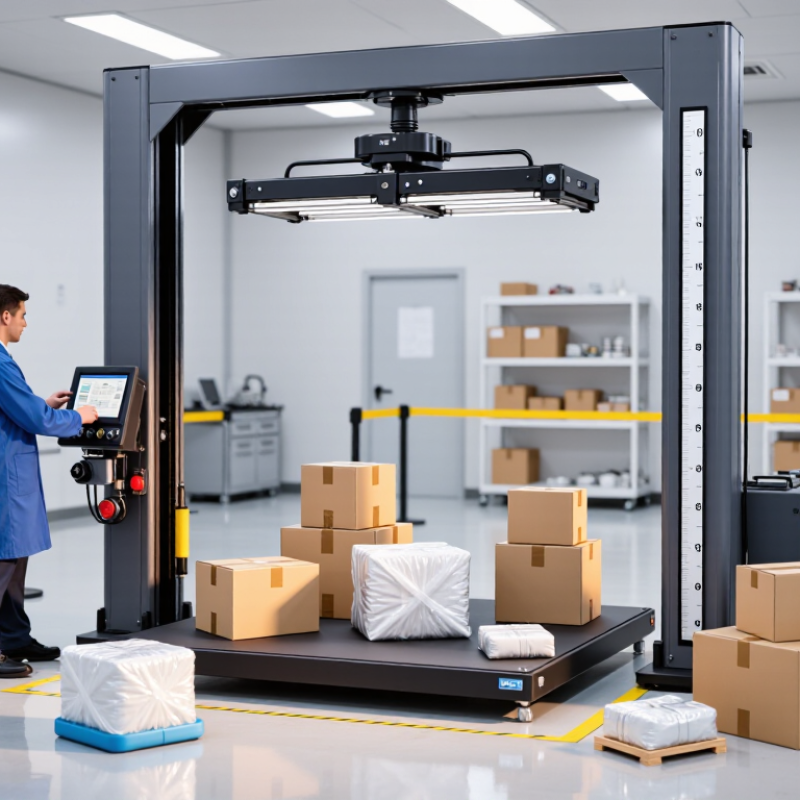
A package drop tester is not simply a machine that raises and releases a carton. It is a controlled tool for evaluating transport damage. ASTM D5276 describes free-fall drops of loaded containers, while ISO 2248 specifies vertical impact testing for complete, filled transport packages. Both methods require careful control of drop height, package orientation, conditioning, and inspection.
A reliable tester should provide a stable lifting system and a clear release mechanism. The package must fall without rotation or contact with the equipment. For example, a test may place a carton on its base, edge, or corner over a steel impact surface.
Drop height should match the selected procedure and package condition. Record package weight, dimensions, conditioning time, impact sequence, and visible damage.
Small details matter. A crushed corner can change the result.
ASTM D5276 is useful when users need a defined free-fall procedure for loaded containers. ISO 2248 helps laboratories describe vertical impact testing with internationally recognized terminology. They are related, but not interchangeable in every project.
Testers should support repeatable height adjustment, safe operation, accurate measurement, and suitable floor strength. A common mistake is choosing a machine by maximum load alone. That assumption can fail.
Package shape, center of gravity, cushioning material, and operator handling also influence results. In practice, a lower-cost tester may appear adequate, yet poor release control can produce inconsistent impacts. Review the complete test plan before purchasing.
2026 Best Package Drop Tester for Global Buyers?
A reliable drop tester should translate ISTA 3A drop sequences into measurable controls. Height is not a single universal value. It changes with package weight, handling category, and test sequence. The tester should program face, edge, and corner impacts separately. It should also record drop height, impact velocity, and test count.
The impact surface matters. A rigid steel plate creates a sharper shock than a slightly compliant floor. ASTM D5276 supports controlled free-fall testing, while ISTA 3A requires sequence-based evaluation under realistic distribution conditions. Select equipment with automatic release, stable guidance, and verified calibration. Manual release can introduce small timing errors. Those errors seem minor, but they can affect repeatability.
Parcel demand adds pressure. The 2023 Global Parcel Shipping Index recorded 161.1 billion parcels worldwide in 2022. It also reported a one percent volume decline, showing that growth is not always linear. More shipments still mean more opportunities for corner damage, crushed cartons, and hidden product failures. A tester should therefore support repeatable conditioning and quick sequence changes. Check whether its platform suits your largest package. Check again.
A clean laboratory drop is not a perfect delivery simulation. Humidity, pallet stacking, and conveyor impacts may change the result. I would treat ISTA 3A as a structured baseline, not absolute truth. Record every height, surface condition, orientation, and failure observation for defensible comparisons.
Map ISTA 3A Drop Sequences to Height, Surface, and Impact Controls
The chart uses the conventional ISTA 3A free-fall height schedule in inches by gross package-weight band. Actual testing should follow the current applicable ISTA 3A procedure and the package format category, including small, flat, or elongated packages where relevant.
A practical package drop tester should match the damage risks seen in transport. For many export cartons, a 0.3–1.5 m drop range covers routine handling and harsher warehouse accidents. The lower setting helps reveal weak seals and loose inner cushioning. The 1.5 m setting exposes crushed corners, broken inserts, and shifting products.
Load capacity matters just as much. A 60–100 kg rating supports small parcels, heavy cartons, and palletized test samples. Buyers should check whether the rated load includes the fixture and impact plate. That detail is easy to miss. A strong frame, stable lifting system, and clear height scale improve repeatability. Emergency stops and guarding also protect operators during repeated testing.
In my testing experience, simple controls are often more useful than crowded displays. Measure the actual drop height, not only the programmed value. Confirm the machine’s calibration records before comparing results between facilities. Relevant packaging procedures should guide drop sequences, sample conditioning, and inspection criteria. A wider specification range is not automatically better. It may increase cost without improving your test plan. I would also question unusually high load claims unless the seller provides test data, maintenance guidance, and realistic cycle limits. Small differences matter.
For 2026 global buyers, the best package drop tester is not simply the tallest or fastest machine. It must produce trustworthy evidence. Experienced laboratories check drop height, release timing, impact surface, and package orientation. A digital height display is useful, but independent verification matters more. Ask for calibration records with traceable references.
Repeatability deserves close attention. Run the same packaged load several times and compare impact results, damage patterns, and height readings. Small differences can expose loose fixtures, uneven floors, or inconsistent release mechanisms. I have seen operators blame packaging when the tester itself created variable impacts. That mistake is expensive.
Safety evidence should include guarding, emergency stops, interlocks, and clear operating instructions. Inspectors may also request risk assessments, electrical test reports, and maintenance logs. Compliance evidence must match the destination market, not rely on one universal certificate. Confirm applicable machinery, electrical, and workplace requirements with qualified local specialists. Keep serial numbers, calibration dates, test photos, and signed reports together. Make the record easy to audit.
Do not ignore conditioning. Temperature and humidity can change carton strength, cushioning, and sealing performance. Record these conditions beside every test result. A reliable report should show the test method, sample identity, drop sequence, anomalies, and operator details. Perfect repeatability is unlikely. That limitation should be documented, not hidden. A scratched platform or tired sensor can quietly weaken otherwise credible evidence.
| Assessment Dimension | Purchasing Benchmark or Verifiable Data | Why It Matters | Evidence to Request from the Supplier | Assessment Level |
|---|---|---|---|---|
| Applicable drop-test methods | Support for ISO 2248 and ASTM D5276 procedures. For parcel-distribution testing, the equipment should also accommodate the sequence and conditioning requirements specified by the selected ISTA test protocol. | Different standards define different test arrangements, orientations, drop sequences, and package conditions. A machine should not be judged only by its maximum drop height. | Model-specific compliance matrix showing which clauses are supported and which steps require manual operation. | Required |
| Drop-height range | A practical laboratory range is approximately 300–1,500 mm, with a clearly defined reference point, such as the lowest package point or package center of gravity. | The usable range must cover the heights required by the buyer’s internal specifications and the relevant distribution-test method. | Calibrated height scale, stated measurement reference, setting resolution, and actual operating range. | Recommended benchmark |
| Height-setting accuracy | Target accuracy should be stated numerically, for example ±1% of the set height or ±2 mm, whichever limit is applicable to the selected test procedure. | An undefined “high-precision” claim cannot demonstrate that the selected drop height is achieved consistently. | Calibration certificate, measurement uncertainty, calibration method, and acceptance limits for the height system. | Required |
| Release repeatability | Repeated releases should occur without visible pre-release sliding, rotation, or restraint. The supplier should publish a repeatability result using the same package mass, fixture, height, and orientation. | Release variation can change impact energy and package damage results, reducing test-to-test comparability. | Repeatability test report containing sample size, measured release conditions, spread of results, and test setup photographs. | Required |
| Test load capacity | The rated capacity must exceed the heaviest package to be tested, including any fixture or support load. A procurement specification should state both maximum mass and permitted package dimensions. | Exceeding the rated load may affect release performance, structural safety, and calibration validity. | Load rating, load-distribution limits, package-size envelope, and overload protection information. | Required |
| Impact surface | The impact surface should be rigid, level, securely anchored, and suitable for the selected method. Its material, thickness, flatness, and installation requirements should be documented. | Surface flexibility, movement, or unevenness can alter impact response and make results difficult to reproduce. | Impact-table drawings, material specification, flatness tolerance, anchoring instructions, and installation acceptance record. | Required |
| Package orientation control | The fixture should allow repeatable face, edge, and corner positioning without damaging the test package before release. | Orientation is a major factor in drop-test results. A repeatable fixture reduces operator-dependent variation. | Fixture drawings, adjustment procedure, orientation markings, and photographs of typical package setups. | Recommended benchmark |
| Control and data recording | The system should record at least test number, programmed height, package mass, orientation, operator, date, and result status. If sensors are used, the sampling rate and calibration traceability should be specified. | Traceable records support investigations, supplier qualification, and comparison between laboratories. | Example test report, export format, audit-trail description, software version record, and data-backup procedure. | Recommended benchmark |
| Safety controls | Minimum safeguards should include an emergency stop, guarded hazardous areas where applicable, controlled release, stable anchoring, pinch-point warnings, and a documented risk assessment. | Drop testers store mechanical energy and can create crush, pinch, impact, and falling-object hazards. | Risk assessment, safety-circuit description, emergency-stop verification, user manual, warning labels, and maintenance instructions. | Required |
| Electrical and machinery documentation | For international deployment, request documentation appropriate to the installation market, including electrical ratings, wiring diagrams, protective-earth requirements, and applicable machinery or electrical conformity evidence. | Documentation requirements vary by destination and voltage system. A generic declaration without technical support may be insufficient for site acceptance. | Declaration of conformity where applicable, electrical schematic, component list, protective-device specification, and factory acceptance checklist. | Required |
| Calibration and traceability | Height measurement, load measurement where fitted, and other critical instruments should be calibrated at defined intervals using standards traceable to a recognized national or international metrology system. | Calibration traceability is necessary when results are used for quality release, claims investigations, or customer audits. | Initial calibration certificate, recommended calibration interval, uncertainty statement, calibration points, and recalibration procedure. | Required |
| Environmental operating conditions | The supplier should define operating temperature, humidity, altitude, floor requirements, compressed-air requirements if applicable, and power supply tolerances. | Environmental differences between countries can affect electronics, pneumatic components, package conditioning, and installation reliability. | Installation specification, utility requirements, environmental limits, and site-preparation checklist. | Recommended benchmark |
| Global serviceability | Replacement parts should have identifiable part numbers, and the supplier should provide preventive-maintenance intervals, troubleshooting procedures, and remote or local technical support arrangements. | Downtime and unavailable parts can undermine the value of a technically capable machine. | Parts list, maintenance schedule, response-time commitment, training plan, and service escalation process. | Recommended benchmark |
| Factory acceptance testing | Acceptance should include dimensional inspection, unloaded functional checks, repeated release checks, safety-device verification, and a representative loaded test using an agreed protocol. | A documented FAT separates verified performance from catalogue claims before international shipment. | Signed FAT protocol, raw measurement records, deviation log, corrective-action record, and final acceptance certificate. | Required |
| Buyer decision rule | Select the equipment only when the required test method, capacity, accuracy, repeatability, safety controls, calibration evidence, and destination-market documentation are all verified. | The most suitable tester is the one that produces defensible and repeatable evidence, not simply the one with the highest advertised height or lowest purchase price. | Completed technical questionnaire, compliance dossier, sample test report, calibration records, and signed acceptance criteria. | Decision framework |
2026 Best Package Drop Tester for Global Buyers?
Choosing a package drop tester starts with the cartons you actually test. Measure the largest package, smallest sample, and heaviest load before comparing machines. A compact tester may suit parcels under 30 kilograms, while industrial models handle larger crates and higher drop heights. Fit matters. Check platform dimensions, height adjustment, impact surface, and operator clearance. A package should land without touching the frame or nearby equipment.
Test standards must match your market and product risks. Confirm support for relevant ISTA, ASTM, or ISO procedures, including face, edge, and corner drops. Ask whether the controller records drop height, sequence, and test results. Calibration records should be traceable and easy to retrieve. Reliable equipment also needs a rigid structure, guarded moving parts, and a repeatable release mechanism. Small details matter.
Service support can decide the real purchase value. Request installation guidance, spare-part availability, response times, and remote troubleshooting terms. Check whether manuals are clear for operators who speak different languages. Calculate total cost beyond the quotation: freight, customs handling, installation, calibration, electricity, maintenance, and downtime. The lowest price is not always economical. In practice, buyers sometimes underestimate service delays and overestimate testing speed. I would leave room for that mistake when setting the budget. A short demonstration using your own carton is more useful than a polished specification sheet.
"*" indicates required fields