What Is the Best House Solar Power System?
Choosing the best House Solar Power System starts with your home, not a product advertisement. Roof direction, shade, local weather, electricity use, and available space all affect performance. A system that works beautifully on a sunny ranch may perform poorly beside tall buildings. That difference matters.
In practical planning, examine your electricity bills across every season. Note the evening demand, air conditioner load, and future appliances. A qualified solar professional can compare panel output, inverter efficiency, battery capacity, installation quality, and warranty terms. Independent certifications and clear manufacturer support also deserve attention. Do not judge equipment by wattage alone. A larger panel array may still disappoint if shading remains unresolved.
Battery storage changes the decision. It can support evening use and provide limited backup during outages, but its value depends on usage patterns and local utility rules. Ask how the system behaves on cloudy days. Ask who services it after installation. These questions expose weak proposals.
No system is perfect. Even careful estimates can miss unusual weather or changing household habits. I would treat promised savings as a range, rather than a guarantee. A reliable comparison should show assumptions, maintenance needs, degradation, and expected payback clearly. It should also include realistic installation details, such as roof access, cable routing, and space around the inverter. The best choice is not always the cheapest or most powerful. It is the system that fits your home, budget, resilience goals, and long-term expectations. This guide explains how to evaluate those choices with practical evidence and measured judgment.
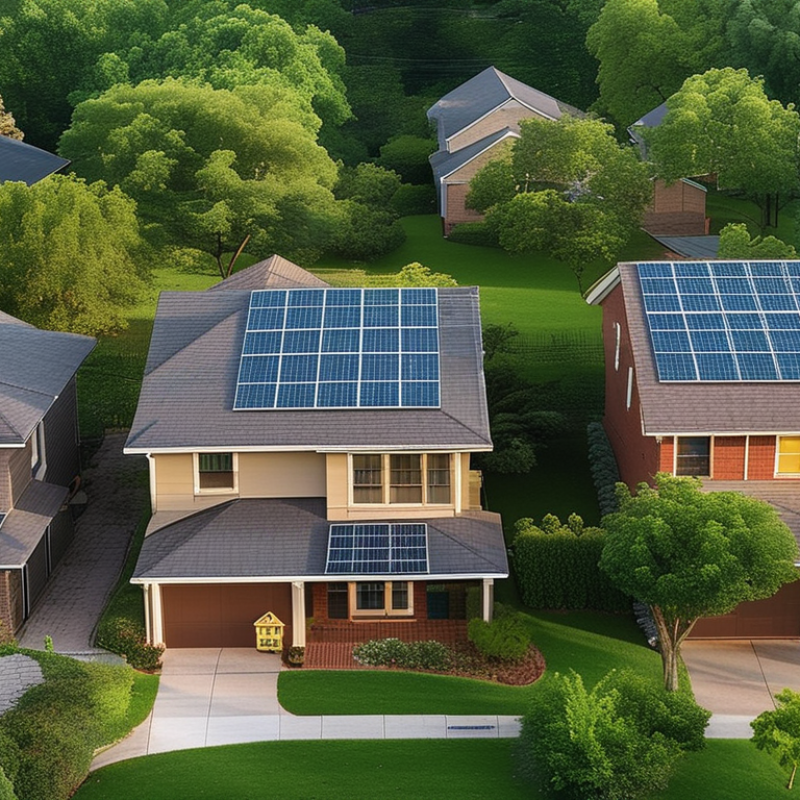
Measure Home Demand and Solar Yield with NREL PVWatts Data
Choosing the best house solar power system starts with measured demand, not panel count. NREL’s PVWatts Calculator estimates monthly and annual solar production using location, system size, tilt, azimuth, and losses. Enter the roof’s actual orientation. A south-facing assumption can mislead. One roof plane may receive morning shade from a nearby tree. PVWatts cannot see that tree unless shading losses are adjusted.
Pull twelve months of electricity bills before modeling. Record kilowatt-hours, billing periods, and unusual events. A heat pump, electric vehicle, or winter heater can distort one month. Compare household demand with solar output when possible. Midday production may exceed consumption, while evening demand remains high. This matters more than annual totals.
NREL’s results should be tested with conservative assumptions. Run scenarios using 10% to 20% system losses, then compare monthly production. The estimate may look precise. It is still an estimate. Snow, dust, inverter clipping, and equipment aging reduce practical output. IRENA reported global solar capacity reached about 1.42 terawatts by the end of 2023. The IEA PVPS Trends 2024 report also recorded strong global deployment, but local conditions vary sharply. That growth does not guarantee high yield on a shaded roof. Keep the model transparent: roof area, tilt, shading, losses, and annual demand. Recheck it after one season of meter data. My first estimate may be wrong. That is useful evidence.
Compare Grid-Tied, Hybrid, and Off-Grid System Architectures
What Is the Best House Solar Power System?
The best house solar power system depends on reliability, budget, and grid access. A practical site assessment starts with roof direction, shading, annual electricity use, and local outage patterns. Grid-tied systems are usually the simplest choice. They use solar power directly and export excess electricity to the grid. However, they normally shut down during blackouts for safety. IEA’s Renewables 2024 report expects solar photovoltaic capacity to provide about 80% of global renewable capacity growth through 2030. Grid connection will remain important.
Hybrid systems add batteries to a grid-tied design. They can store midday energy for evening cooking, cooling, or emergency lighting. A properly sized battery may protect essential circuits, but it cannot always run every appliance. NREL’s U.S. Solar Photovoltaic System and Energy Storage Cost Benchmarks show that storage adds a substantial cost layer beyond standard residential solar. This trade-off is easy to underestimate. In many homes, critical-load backup is more practical than whole-house backup.
Off-grid systems suit remote properties without dependable grid service. They require larger batteries, backup generation, careful load management, and enough solar capacity for cloudy periods. Berkeley Lab’s Tracking the Sun report placed the median U.S. residential solar price near 3.1 dollars per watt in 2023, before optional storage and off-grid equipment. That comparison can mislead. Remote installation costs may rise sharply. Oversizing everything is not always wise. Before choosing an architecture, test winter energy demand, battery replacement costs, and the consequences of several cloudy days.
Size PV Capacity Using PVWatts’ 14% Default System-Loss Assumption
What Is the Best House Solar Power System?
The best house solar system starts with realistic energy modeling, not the largest roof array. The National Renewable Energy Laboratory’s PVWatts calculator applies a default 14% system-loss assumption. This accounts for wiring, mismatch, soiling, inverter effects, availability, and other normal losses. Treat it as a planning baseline, not a guarantee.
Use this simple calculation: annual electricity demand ÷ local annual solar yield ÷ 0.86. A home using 9,000 kWh yearly, with a projected yield of 1,300 kWh per installed kilowatt, needs about 8.0 kW of PV capacity. Without the loss adjustment, the estimate falls near 6.9 kW. That difference can leave a household short during cloudy months. Small details matter. A chimney shadow at 3 p.m. can reduce several panels’ output.
The IEA PVPS Trends 2024 report recorded global solar capacity above 1.6 terawatts by the end of 2023, showing how rapidly deployment is expanding. Yet household design remains local. Roof direction, tilt, temperature, snow, and summer cooling demand change the result. I would also compare modeled output with twelve months of utility bills. Imperfect records are common. That is worth admitting. A conservative design may perform better than an optimistic spreadsheet, especially when future electricity use is uncertain.
Choose Batteries by 85–95% Round-Trip Efficiency and Warranty Life
What Is the Best House Solar Power System?
Choose Batteries by 85–95% Round-Trip Efficiency and Warranty Life
A strong home solar system is not defined by panel output alone. Battery efficiency determines how much stored electricity reaches your lights, refrigerator, and heat pump. The U.S. National Renewable Energy Laboratory’s 2024 Annual Technology Baseline models lithium-ion storage at about 85% round-trip efficiency. In practical terms, storing 10 kilowatt-hours may deliver only 8.5 kilowatt-hours later.
Look for a published efficiency range between 85% and 95%, measured under realistic operating conditions. Ask whether the figure includes inverter losses, standby consumption, and partial loads. A laboratory rating can look impressive. Your garage may tell a different story. During winter, low temperatures and limited solar production can reduce usable performance.
Warranty life deserves equal attention. Compare the warranty period, cycle limit, annual throughput, and promised end-of-warranty capacity. Many residential batteries offer around 10 years of coverage, but the details vary sharply. The International Energy Agency reported that battery storage deployment continued expanding rapidly in 2023, increasing the importance of degradation data and system durability. A battery retaining 70% capacity after ten years may still work well, but it will not meet today’s energy needs as comfortably.
I would calculate payback using usable, not advertised, capacity. Then I would test several years of cloudy-weather data. That step is easy to skip. It should not be. A slightly less efficient battery with clearer warranty terms may prove more reliable than a cheaper system with optimistic specifications.
Check Safety, Installation, and Costs Against NEC 2023 and NREL Data
What Is the Best House Solar Power System?
The best house solar system is not always the largest array. It should match your roof, electricity use, and local grid rules. Safety starts with a site inspection by qualified solar and electrical professionals. Under NEC 2023, residential systems may require proper disconnects, circuit protection, grounding, labeling, and rapid shutdown equipment. Battery installations also need careful attention to NEC 2023 requirements for energy storage systems. Local amendments can change the final design.
Installation quality affects both safety and savings. An experienced installer should inspect roof structure, shading, wiring routes, and service-panel capacity. Roof age matters. Replacing panels later can become expensive. NREL solar-resource data can estimate expected production for a location, while NREL cost benchmarks help compare equipment, labor, permitting, and balance-of-system expenses. Actual results still depend on weather, orientation, snow, and household behavior.
Request a written design with production estimates and line-item costs. Include permits, inspections, interconnection fees, monitoring, and possible electrical upgrades. Ask who handles NEC compliance and final approval. A low quote may exclude necessary work. I would not trust a projection that promises perfect annual output. A spreadsheet can miss afternoon shade from one growing tree. My own review would include a little uncertainty, because real roofs rarely behave like laboratory models.
Residential Solar PV Cost by System Size
Estimated installed costs use the U.S. residential PV-only benchmark of $2.68 per watt DC reported for Q1 2023. Values are calculated before incentives, financing, regional labor differences, permitting fees, and battery storage. Under NEC 2023, PV output circuits are generally sized using 125% of the maximum circuit current, and building-mounted PV systems must meet rapid-shutdown limits of 30 V outside the array boundary and 80 V within the array boundary within 30 seconds of initiation. Local code adoption and authority requirements should be verified before installation.
Source: NREL, U.S. Solar Photovoltaic System and Energy Storage Cost Benchmarks, Q1 2023; NEC 2023 Articles 690.8 and 690.12.