
A Modern High Gloss Black Coffee Table can anchor a living room, but its mirror-like finish rewards careful shopping. It also shows dust, fingerprints, and fine scratches more readily than matte surfaces. Before comparing styles, measure your seating area. Leave roughly 16 to 18 inches between the table and sofa, then check whether its height suits your cushions.
Design offers a useful reminder. Furniture designer Charles Eames said, “The details are not the details. They make the design.” For this purchase, those details include the finish, edge treatment, base, and hardware. Look closely at product photos, but don’t rely on images alone. Ask whether the surface is lacquered, laminated, or another material, and request care instructions. Check dimensions, weight capacity, assembly requirements, and the seller’s return terms. A glossy photograph cannot confirm a sturdy frame.
Compare the table with your room’s lighting, too. A black surface can reflect a bright window or lamp across its top. That may feel dramatic—or distracting. Measure twice. Read the specifications. If possible, inspect a finish sample before ordering. Some listings leave construction details unclear, and that deserves a second look. A lower price can be tempting, but it may not explain the table’s materials or long-term care needs. Use this guide to weigh appearance, practical fit, and reliable product information before choosing a piece that works beyond the first impression.
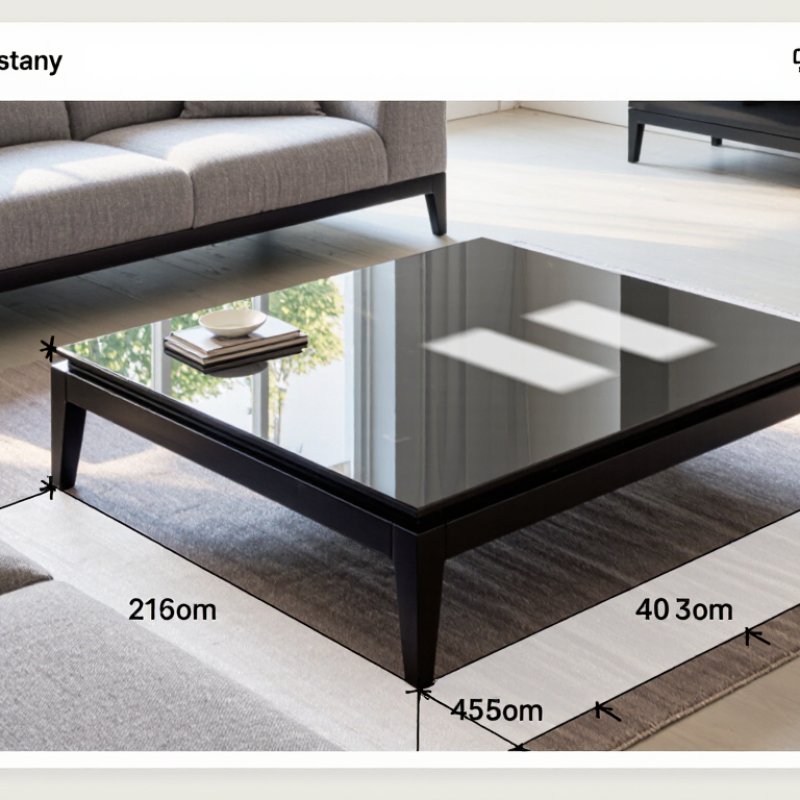
Before choosing a modern high-gloss black coffee table, measure the room, not just the empty space between the sofa and television. Leave roughly 18 inches between the table and seating for comfortable movement. A table near two-thirds of the sofa’s length often feels balanced, while a lower seat may call for a shorter table. Measure twice. Black lacquer reflects windows and lamps, so check the finish in both daylight and evening light. A glossy surface can make a compact room feel crisp, but fingerprints and dust show quickly.
Set a spending limit that includes delivery and care products, then compare materials and construction—not appearance alone. The 2024 U.S. Houzz & Home Study reported a $24,000 median spend on home renovations in 2023; that figure is not a coffee-table price, but it shows why furnishing budgets need clear boundaries. Decide what matters most: a durable top, rounded corners, or storage for remotes and magazines. A glassy finish can look striking in a showroom and feel too reflective at home. Even a careful layout sketch can miss that. Test your measurements with a cardboard outline before buying.
A modern high-gloss black coffee table can look sleek under store lighting, but home lighting may reveal every fingerprint. Compare the finish in daylight and warm evening light. A lacquered surface often gives a deep, mirror-like shine, while glossy laminate can be easier to maintain and less costly. Acrylic finishes may look vivid, though scratches can be noticeable. Check the edges. Uneven seams or chipped corners can signal weak finishing.
Look beyond the shine to the core material. Smooth, dense engineered wood commonly supports an even finish, but inspect how well its edges are sealed. Solid wood adds natural character, yet seasonal movement can affect a rigid glossy coating. Glass tops brighten a room and reflect light, but they show smudges quickly. None is perfect. Ask how the surface should be cleaned, and avoid assuming that “high gloss” means scratch-proof.
Choose a design that suits how you actually use the room. A round table softens tight walkways, while a rectangular top offers more space for books or serving dishes. Slim legs leave more visible floor area; a pedestal base can feel substantial but may crowd knees. Measure the sofa height and walking clearance before ordering. A dramatic black finish can anchor pale furniture, though in a dim room it may feel heavier than expected. That trade-off is easy to miss in a photograph.
Measure the seating area before comparing table styles. Note the sofa’s length, seat height, and distance from the sofa to nearby chairs. A coffee table often works best when its height is level with the seat or one to two inches lower. Keep roughly 14 to 18 inches between the table edge and sofa, so drinks stay within reach without blocking knees. Leave a clear walking route where possible. Tight rooms may need less space, but test the path before buying.
Use painter’s tape to mark the table’s full footprint on the floor. Walk around it and pull out drawers, if included. Aim for a table about two-thirds the sofa’s length, then adjust for the room rather than treating that proportion as a rule. A high-gloss black surface can feel visually bold and reflect windows or lamps, so its size may seem more prominent than a matte finish. I have underestimated that effect before. Check the listed dimensions, including legs and any overhanging top, and compare them with your taped outline. A small mismatch matters. Measure twice, especially in a narrow room.
A modern high-gloss black coffee table should look sleek without feeling flimsy. Check the frame, joints, and underside, not just the reflective top. Press gently near each corner; wobble can reveal weak connections. Ask whether the finish is lacquer, laminate, or another coating, and inspect a sample under daylight for scratches and uneven reflections. The U.S. EPA’s formaldehyde emission limits for composite wood range from 0.05 ppm for hardwood plywood to 0.11 ppm for medium-density fiberboard. Request documentation for panels used in the table, especially if it will sit in a small, poorly ventilated room. Small detail, big difference.
Measure the space with drawers or doors fully open. A low table can still create a sharp hazard: look for rounded edges, smooth drawer stops, and a stable base that resists tipping when a child leans on it. For test benchmarks, BIFMA’s X5.5 standard covers durability and stability testing for desk and table products; ask sellers whether comparable testing was performed, since not every coffee table falls within its scope. Then compare price against construction, finish warranty, storage hardware, and delivery costs—not appearance alone. A very glossy surface shows fingerprints quickly. I would check a dark sample with a fingertip before buying; showroom lighting can hide them.
A glossy black coffee table can look striking online, but the seller’s policies matter just as much as its finish. Check the return window and when it begins: order date or delivery date. Look for restocking fees, return-shipping costs, and rules about original packaging. Keep the details in writing. A policy hidden in a help page is easy to forget, so save a copy with your order confirmation.
Read the delivery terms carefully. “Delivery” may mean a box left at the curb, not placement in your living room. Confirm whether the service includes stairs, assembly, or removal of packaging. Ask what to do if the tabletop arrives chipped or a corner is crushed. Photograph the packaging and table before signing, if the carrier allows inspection. Small details matter here.
Warranty coverage deserves a close read, too. Check how long it covers the frame, finish, and hardware; these may have different terms. Look for exclusions involving scratches, cleaning products, or normal wear. I would not assume a glossy surface is easy to maintain just because it looks smooth in photos. Ask how to file a claim and which proof is required. A clear answer is reassuring; a vague one is a reason to pause.
"*" indicates required fields