
Learn more about how Trevisan’s Horizontal Machining Centers can help you minimize set up time and labor costs.

China Best CNC Multifunctional Side Hole Drill Supplier?

Choosing China’s best CNC Multifunctional Side Hole Drill supplier requires more than comparing online prices. A reliable evaluation starts with machine performance, build quality, and verified production experience. This equipment must create accurate side holes for cabinet panels, furniture components, and other engineered wood products. Small errors can affect assembly, edge alignment, and final appearance.

Look for suppliers with documented factory capabilities and practical installation experience. Ask for drilling samples using your actual panel materials. Check spindle stability, servo positioning, tool-change performance, dust extraction, and software compatibility. A clear test video helps, but it cannot replace an on-site inspection or independent verification. Request technical drawings, warranty terms, spare-parts availability, and operator training details. These documents reveal how seriously a supplier supports customers after delivery.

The best choice depends on your workflow, not only the machine’s advertised functions. A high-speed model may be unsuitable for a small workshop with limited maintenance skills. Conversely, a basic machine may restrict a growing production line. That difference is often overlooked. Supplier authority should come from transparent specifications, experienced engineers, traceable references, and consistent communication. Ask difficult questions. Measure actual results.

This guide examines leading Chinese manufacturers through those practical criteria. It considers accuracy, customization, safety features, service responsiveness, and long-term operating value. Some supplier information may change over time, so buyers should verify current certifications and factory conditions. No comparison is perfect. Careful testing remains essential before signing a purchase agreement.
China Best CNC Multifunctional Side Hole Drill Supplier?

What Is a CNC Multifunctional Side Hole Drill?

China Best CNC Multifunctional Side Hole Drill Supplier?

What Is a CNC Multifunctional Side Hole Drill?

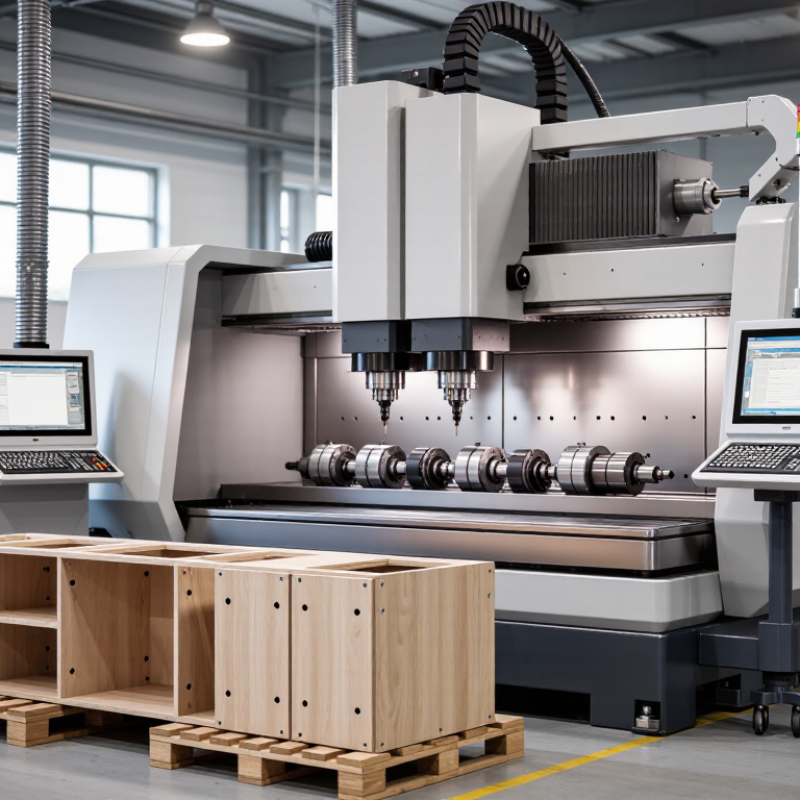
A CNC multifunctional side hole drill is a computer-controlled machine for horizontal drilling on panel edges and side surfaces. Its spindle approaches the workpiece from the side, rather than only from above. This helps create dowel holes, shelf-pin holes, grooves, and connector openings with consistent spacing. Many configurations also combine vertical drilling, routing, and slotting operations. The exact meaning is not perfectly uniform across suppliers.

In practical production, an operator places a cabinet panel against adjustable supports and loads the drilling program. Sensors check the panel position before the spindle starts. A servo-driven axis then moves the tool to programmed coordinates. This reduces repeated measuring with a tape or ruler. It also limits manual handling between operations, although poor calibration can still produce misaligned holes. That weakness deserves attention.

MarketsandMarkets estimated the global CNC machine market at about 88.5 billion US dollars in 2023, with growth toward 113.4 billion dollars by 2028. This trend reflects rising demand for automated, repeatable machining. For buyers, useful checks include spindle runout, positioning accuracy, dust extraction, tool-change time, and control-system compatibility. A supplier should provide test samples, maintenance records, and measurable accuracy data. One showroom demonstration is not enough. Testing real panels, edge distances, and daily production cycles gives more reliable evidence.

What Is a CNC Multifunctional Side Hole Drill?

A CNC multifunctional side hole drill is an automated woodworking machine designed to drill horizontal holes and perform related machining operations on furniture panels. The chart shows representative reference dimensions commonly associated with this type of equipment; actual specifications vary by machine configuration.

The values are expressed in millimetres and represent typical reference capacities rather than data from any specific company or brand.

Key Features of Chinese Side Hole Drilling Machines

Key Features of Chinese Side Hole Drilling Machines

What makes a Chinese side hole drilling machine reliable in daily production? Its value begins with mechanical stability, accurate positioning, and practical control. A reinforced frame helps reduce vibration during deep side drilling. Servo-driven axes can position holes with repeatable accuracy, often within 0.1 millimeters, depending on the material and setup. That detail matters.

Automatic clamping keeps panels steady before the spindle starts. This reduces movement, surface damage, and uneven hole depth. Many machines support multiple drilling heads or adjustable spindle layouts. Operators can process several hole patterns without changing the whole fixture. Some systems also read CAD/CAM files, which saves manual measurement time. However, software compatibility should be tested before purchase. It is not always seamless.

Dust extraction ports, enclosed working zones, and emergency stops improve workshop safety and cleanliness. A clear touch-screen interface helps new operators learn basic settings faster. I also inspect spindle cooling, tool-change access, lubrication points, and electrical cabinet layout. Small design choices often decide maintenance speed. A machine may look impressive in a demonstration, yet perform differently under continuous production.

Reliable suppliers should provide sample drilling, accuracy records, installation guidance, and spare-part information. Ask how the machine behaves with plywood, solid wood, or laminated panels. Request actual cycle times, not optimistic estimates. Calibration may still be needed after shipping or floor installation. That is normal, but it should be documented. A careful supplier explains limits instead of promising perfect results.

How to Evaluate a Chinese CNC Side Hole Drill Supplier

China Best CNC Multifunctional Side Hole Drill Supplier?

How to Evaluate a Chinese CNC Side Hole Drill Supplier

China’s manufacturing scale is impressive, but scale does not guarantee drilling accuracy. The International Federation of Robotics reported 276,288 industrial robot installations in China during 2023. The 2024 World Machine Tool Survey also identified China as the largest machine-tool consumer. These figures show strong capacity, not automatic reliability. Evaluate each supplier through measurable evidence.

Ask for spindle runout data, drilling tolerance, fixture repeatability, and cycle-time records. A serious supplier should provide factory acceptance testing, calibration documents, and sample holes from your material. Check whether the machine supports your panel thickness, drilling depth, dust collection, and control software. ISO 230 testing methods can help verify positioning accuracy. Request raw test records, not only polished videos. I have seen attractive samples hide weak clamping performance.

Tips

Visit the factory if possible. Watch one complete drilling cycle. Measure hole position with your own gauge. Inspect wiring, safety guarding, spare-part lists, and operator training. Confirm response times for remote support and technician visits. Compare at least three quotations using identical specifications. A lower price may reflect simpler sensors or limited service. That is not always bad, but it needs careful review. No checklist is perfect. Even experienced buyers can miss maintenance costs.

China Best CNC Multifunctional Side Hole Drill Supplier? - How to Evaluate a Chinese CNC Side Hole Drill Supplier

Evaluation Dimension Practical Benchmark What to Verify from the Supplier Recommended Assessment
Machine Configuration Multi-axis CNC control with horizontal or side-drilling capability; automatic tool positioning is preferred for repeat production. Machine layout, number of controlled axes, drilling directions, tool-change method, and compatibility with the intended panel or component size. High priority when one machine must complete multiple drilling operations without manual repositioning.
Spindle Speed and Power A typical woodworking drilling spindle may operate around 18,000–24,000 rpm; power should match the material, drill diameter, and duty cycle. Rated power, rated speed, cooling method, spindle manufacturer, runout specification, and continuous-load test results. Do not compare rpm alone; verify torque, stability, and performance with the actual material.
Drilling Accuracy For production equipment, positioning accuracy and repeatability should be stated separately; a buyer should request measured results rather than an unsupported general claim. Factory inspection report, test-piece results, measurement method, tolerance definition, and repeatability after extended operation. Require a sample test using the buyer’s drawing, material, drill size, and tolerance.
Workpiece Compatibility The machine should clearly state maximum workpiece length, width, thickness, minimum part size, and permissible weight. Working envelope, clamping method, reference positioning, vacuum or mechanical fixtures, and handling requirements. Reject suppliers that provide only external machine dimensions without usable working dimensions.
Material Range Common applications include solid wood, plywood, MDF, particleboard, laminates, and selected plastics; metal drilling requires a machine configured for that duty. Approved materials, maximum drilling diameter and depth, recommended feeds and speeds, and sample results for each target material. Ensure the supplier does not generalize woodworking performance to metal or other specialized materials.
Control System and Software The control system should support job storage, parameter editing, alarm diagnostics, coordinate setting, and secure backup of programs. Control-system model, file formats, language options, remote-support capability, software updates, and operator training. Give additional weight to systems that are easy to operate and do not depend on one individual technician.
Safety and Compliance The machine should include guarding, emergency stops, electrical protection, warning labels, and documented operating instructions. Risk assessment, electrical diagrams, safety-circuit description, declaration or certification applicable to the destination market, and inspection records. Verify compliance for the importing country instead of accepting an unspecified “CE” or “ISO” statement.
Factory Quality Control A reliable manufacturer should document incoming inspection, assembly checks, electrical testing, geometric inspection, and final run testing. Quality-control procedures, calibration records, nonconformity handling, traceability of key components, and final inspection checklist. A factory audit or independent pre-shipment inspection provides stronger evidence than catalog photographs.
Customization Capability Useful options may include custom fixtures, drilling patterns, voltage configuration, dust extraction interfaces, barcode or production-line integration, and special tooling. Engineering drawings, change-control process, prototype or sample policy, tooling availability, and customization lead time. Confirm all modifications in the technical agreement and quotation before placing the order.
Installation and Training Documentation should cover installation, leveling, electrical connection, tooling, calibration, maintenance, and operator training. Scope of installation, training duration, training language, travel costs, commissioning procedure, and acceptance criteria. A written commissioning plan reduces disputes over whether the machine is ready for production.
After-Sales Service The supplier should define response time, spare-parts availability, remote troubleshooting, repair responsibility, and escalation procedures. Service terms, support channels, spare-parts list, troubleshooting records, service staff coverage, and references from comparable installations. Assess support in the buyer’s time zone and language, not only the quoted machine price.
Warranty Terms Warranty duration and exclusions vary by contract; coverage should explicitly identify mechanical, electrical, control, and consumable components. Warranty period, parts and labor coverage, freight responsibility, exclusions, claim process, and remedy for repeated failure. Use the signed warranty document rather than a sales message or verbal promise.
Delivery and Acceptance Lead time should include engineering approval, production, internal testing, packing, shipping, customs, installation, and final acceptance. Production schedule, factory acceptance test, packing standard, shipping documents, delivery terms, and objective acceptance tests. Link the final payment to documented acceptance results where commercially feasible.
Total Cost of Ownership The purchase price is only one cost; include tooling, fixtures, freight, duties, installation, training, electricity, maintenance, software, spare parts, and downtime. Itemized quotation, utility requirements, recommended replacement parts, maintenance intervals, consumable costs, and estimated service expenses. Select the supplier offering the best verified production value, not necessarily the lowest initial quotation.

Note: Performance figures should be confirmed through a buyer-specific sample test and a signed technical specification. Actual results depend on material, tooling, drilling pattern, feed rate, operator skill, and machine configuration.

Manufacturing Quality, Certifications, and Customization Options

China Best CNC Multifunctional Side Hole Drill Supplier?

Manufacturing quality begins with repeatable evidence, not polished photographs. Ask for spindle runout records, drilling accuracy tests, and material traceability. A reliable factory should inspect castings, guide rails, motors, and electrical cabinets before assembly. It should also perform a documented factory acceptance test. Check actual samples. A clean hole at one speed proves little.

The IFR World Robotics 2024 report recorded 541,302 industrial robot installations worldwide in 2023. This reflects stronger pressure for automation, consistency, and shorter production cycles. A multifunctional side hole drill should support stable positioning, adjustable drilling depth, and controlled feed rates. Custom options may include hole diameter, drilling angle, workpiece dimensions, dust extraction, and PLC communication. However, every option can increase maintenance risk. That point is often overlooked.

Certifications require careful reading. ISO’s 2022 Survey reported more than 1.26 million ISO 9001 certificates worldwide. ISO 9001 can indicate a controlled quality system, but it does not guarantee perfect machine performance. Verify the certificate scope, issuing body, and validity. For European shipments, confirm applicable CE documentation and technical files. Request electrical safety tests, risk assessments, and operating manuals. Factory audits add useful evidence. Still, audits can miss night-shift problems. Trial production, measured inspection reports, spare-parts lists, and operator training reveal more. A supplier becomes credible when it accepts these checks without avoiding uncomfortable questions.

Applications, Pricing, and After-Sales Support in China

China Best CNC Multifunctional Side Hole Drill Supplier?

CNC multifunctional side hole drills serve cabinet, furniture, aluminum profile, and light engineering workshops. They combine drilling, grooving, and positioning in one work cycle. This reduces manual transfers and alignment errors. The International Federation of Robotics reported 276,288 industrial robot installations in China during 2023. That figure reflects stronger factory automation demand, but automation alone does not guarantee useful output.

Typical Chinese quotations range from RMB 80,000 to RMB 300,000. Configuration changes the price sharply. Spindle power, drilling heads, vacuum tables, software, and loading systems matter most. Industry reports from MarketsandMarkets forecast continued growth in the global CNC machine market through 2028. Buyers should still request cycle-time tests using their own panels. A polished sample can hide inconvenient setup time.

After-sales support deserves equal attention. Ask for electrical diagrams, spare-parts lists, remote diagnostics, and operator training before payment. A capable supplier should explain positioning accuracy, dust extraction, lubrication, and maintenance intervals in measurable terms. Confirm response times in writing. Local Chinese service teams may reduce downtime, while overseas customers need clear video support and stocked wear parts. The strongest supplier is not always the cheapest. I would compare three quotations, inspect factory testing records, and allow room for doubt when specifications sound perfect.

Scroll to Top
Scroll to Top