
Learn more about how Trevisan’s Horizontal Machining Centers can help you minimize set up time and labor costs.

China Top 10 Horizontal Drill Guide Manufacturers for Buyers

A Horizontal Drill Guide can look like a simple steel fixture, yet small errors matter. A misaligned bore, loose clamp, or poorly finished bushing can waste time on the shop floor. Buyers comparing China’s leading manufacturers should look beyond catalog photos. Ask for material specifications, machining tolerances, inspection records, and samples that match the intended drilling setup.

Grand View Research estimated the global horizontal directional drilling market at about USD 8 billion in 2023. That figure describes the wider HDD market, not the drill-guide segment alone. Still, it signals the scale of work where reliable drilling equipment matters. For buyers, the practical question is narrower: can a supplier hold alignment across repeated cycles, and can it document how each guide is checked?

Dr. Mohammad Najafi, a trenchless-technology researcher, has written extensively about how ground conditions affect construction methods. A useful takeaway from his work is that equipment choices must fit the site, not just the specification sheet. That principle applies to guide selection, too. Check the drill diameter, working angle, wear surfaces, and fixture compatibility. Then ask about lead times and replacement parts. A polished sample is not proof of consistent production. This guide compares ten Chinese manufacturers, while recognizing that supplier claims still need verification.
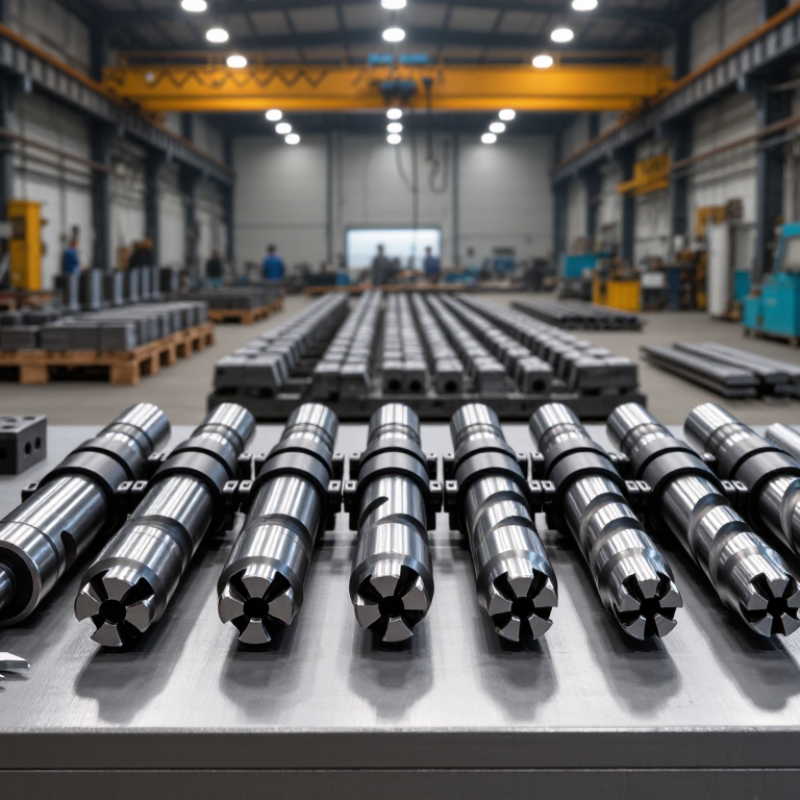
China Top 10 Horizontal Drill Guide Manufacturers for Buyers

What Horizontal Drill Guides Are and How They Work

A horizontal drill guide holds a drill along a controlled, sideways path, useful for making holes in a board’s edge or end. The guide’s base rests against the workpiece, while a sleeve or bushing helps keep the bit aligned. Some guides use a fixed angle; others allow adjustment. The design matters. A loose-fitting bit can wobble, and a guide that shifts under pressure can leave a crooked hole.

To use one, mark the hole center and secure the workpiece so it cannot roll or slide. Set the guide against a flat reference surface, then check that the bit matches the guide opening. Start the drill slowly and apply steady pressure. Small parts matter. A test hole in scrap can reveal whether the setup is square before you drill the finished piece. Even a careful setup is not foolproof: wood grain, uneven edges, and a dull bit can pull the drill off course. That part is easy to underestimate. For repeat work, consistent clamping and checking the first hole often matter as much as the guide itself.

China’s Horizontal Drill Guide Manufacturing Landscape

China’s horizontal drill guide manufacturing landscape is shaped by a broad industrial base, but public statistics rarely isolate this product category. The National Bureau of Statistics’ 2023 Statistical Communiqué reported that manufacturing value added accounted for 26.2% of GDP. Equipment manufacturing value added grew 6.8% that year. This context helps explain the availability of machining, heat-treatment, and inspection capabilities across China.

At factory level, guide quality depends on practical details: bore alignment, surface finish, material consistency, and resistance to vibration. A small deviation can cause drill-rod wear or unstable tracking. Buyers should request dimensional inspection records and test results tied to the actual production batch. Ask how suppliers control heat treatment and verify straightness, not just what tolerances appear on a catalogue.

There is a data gap. National statistics do not provide a dependable count of dedicated horizontal drill guide producers or their output. Broad manufacturing growth cannot prove that every supplier has specialist experience. That distinction matters. Compare samples under realistic load and operating conditions; paperwork alone may not reveal uneven wear or poor fit. Some shops may also outsource critical processes, so clarify which steps are completed in-house.

Profiles of 10 Chinese Horizontal Drill Guide Manufacturers

Profiles of ten Chinese horizontal drill guide manufacturers are most useful when they show measurable capability, not broad claims. Compare guide diameter ranges, concentricity, surface finish, material, and heat-treatment options. Ask for inspection records and a sample part. Fit matters. A guide that looks clean may still produce excess runout under load. Supplier profiles should also note machining equipment, quality checks, export experience, and response times. Treat rankings cautiously; public information rarely reveals process consistency across production batches.

China Machine Tool & Tool Builders’ Association reported approximately RMB 1.09 trillion in operating revenue for the wider machine-tool industry in its 2023 industry statistics. This is useful context, not a market-size estimate for drill guides. For each manufacturer, request tolerances tied to a drawing, plus measurement methods and acceptance criteria. ISO 230-1 provides a reference for assessing machine-tool geometric accuracy, though it does not certify a drill guide itself. Measure twice. Catalogues can omit the awkward details, and this comparison may still miss differences in inspection practice. Verify claims with samples and current documentation before choosing a supplier.

China Top 10 Horizontal Drill Guide Manufacturers for Buyers - Profiles of 10 Chinese Horizontal Drill Guide Manufacturers

No. Profile Dimension Technical Information What Buyers Should Verify
1 Intended Application Drill guides are used to help locate and support a drill bit or tool along a planned drilling axis. Requirements vary by workpiece, machine setup, and drilling operation. Confirm the guide is designed for the intended material, workpiece geometry, and drilling process.
2 Guide Type Common guide arrangements include bushings, sleeves, plates, and fixtures. A guide may be fixed or removable, depending on the application. Ask for drawings showing the guide arrangement, mounting method, and tool entry path.
3 Tool Compatibility The guide opening must be compatible with the drill, cutter, or other tool being used. Clearance and alignment affect how the tool enters the work area. Compare the guide bore and tool dimensions using a dimensioned drawing; confirm the intended fit and tolerances.
4 Alignment and Mounting Mounting features and reference surfaces help position a guide relative to the machine, fixture, or workpiece. Alignment requirements depend on the operation. Request mounting-interface details and the method used to establish the guide axis.
5 Guide Material Material selection affects strength, wear behavior, corrosion resistance, and suitability for the operating environment. The appropriate material depends on the tool and application. Obtain the material specification and confirm it matches the expected loads, contact conditions, and environment.
6 Wear and Replacement Guide surfaces can wear through repeated tool contact. Replaceable bushings or inserts can allow a worn guiding element to be changed without replacing the entire fixture. Check whether wear components are replaceable and request their part drawings and replacement procedure.
7 Workpiece and Guide Geometry Guide length, opening position, and contact surfaces should suit the workpiece shape and the required drilling location. Geometry is commonly specified on engineering drawings. Review a dimensioned drawing against the actual workpiece and machine setup before ordering.
8 Chip and Coolant Clearance Drilling produces chips, and some operations use cutting fluid. Guide and fixture geometry should not obstruct chip removal or the intended coolant path. Confirm chip-clearance space and coolant access for the selected tool and drilling direction.
9 Manufacturing and Inspection Dimensional inspection can be used to check critical features such as bore size, position, flatness, and mounting dimensions. Inspection requirements should be defined for the part. Request an inspection report or agreed acceptance criteria for critical dimensions.
10 Drawings and Order Documentation A complete order specification can include a revision-controlled drawing, material requirements, surface treatment requirements, tolerances, and packaging instructions. Confirm the drawing revision, inspection scope, labeling, and delivery requirements before production.

How the Manufacturers Differ in Products and Capabilities

Horizontal drill guide manufacturers differ in machine scale, steering precision, and the support they provide after delivery. Compact rigs may suit narrow streets and short utility crossings, while larger systems offer greater pullback capacity for longer or wider installations. EPA’s 2023 Drinking Water Infrastructure Needs Survey estimates that the United States needs $625 billion in drinking-water infrastructure investment over 20 years. This signals sustained demand, but it does not mean every project needs a larger rig.

Compare more than headline power. Check torque and pullback ratings, rod strength, locating-system compatibility, fluid delivery, and how quickly the manufacturer can supply wear parts. Ask for operating ranges, not just peak figures. A machine’s listed capacity can look impressive, yet soil conditions, bore length, and crew experience affect actual performance. That distinction is easy to overlook. Service access and operator training matter too, especially when a project schedule leaves little room for downtime.

Tips: Match the rig to your typical bore, then verify its limits against your toughest expected job. Request a sample maintenance schedule and parts lead times. If figures are unclear, pause and ask for clarification; a polished brochure is not a field test.

Key Factors for Choosing a Horizontal Drill Guide Supplier

When comparing horizontal drill guide suppliers, look beyond catalog dimensions. Ask for the guide’s concentricity, bushing hardness, material specification, and inspection method. A small alignment error can shift a hole visibly across a wooden panel or metal plate. Request a sample and test it with your own drill, bit, and workpiece. Check whether the guide stays square under ordinary hand pressure. It should.

Quality documents help, but they do not replace product checks. The ISO Survey of Management System Standard Certifications reported more than 1.26 million valid ISO 9001 certificates worldwide in 2022. Treat certification as evidence of a quality-management system, not proof that every guide meets your tolerance. Ask for inspection records, batch traceability, and clear responses to drawing changes. Also confirm replacement-bushing availability and realistic lead times. A low quote may hide costly delays.

Tips: Send a drawing with critical dimensions marked. Ask how the supplier measures runout, and request the result in writing. Compare samples from more than one batch when consistency matters. One detail is easy to overlook: a guide can fit perfectly in a showroom test, then loosen after repeated use. Check the fit after several drilling cycles, too.

Scroll to Top
Scroll to Top