Learn more about how Trevisan’s Horizontal Machining Centers can help you minimize set up time and labor costs.

How to Choose the Best Yogurt Packing Machine?

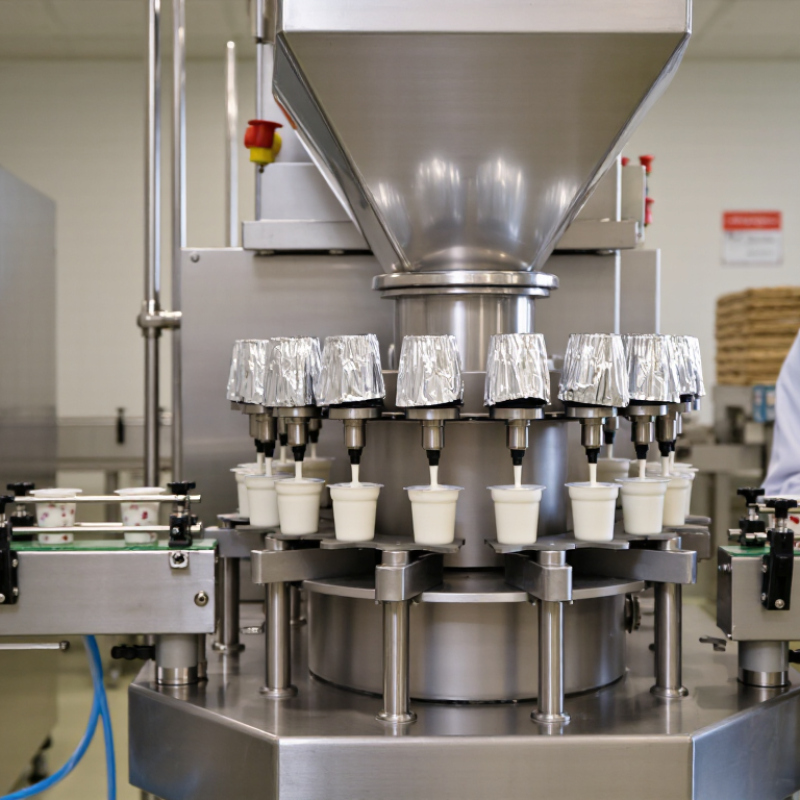
Choosing the right Yogurt Packing Machine affects product safety, filling accuracy, production speed, and daily operating costs. A machine may look impressive in a showroom, yet perform poorly with thick yogurt, fruit pieces, or unstable cup materials. The real test begins on the factory floor.

Food-packaging authority Dr. Gordon L. Robertson has emphasized, “Packaging must protect food, preserve quality, and communicate value.” This principle applies directly to yogurt production. The machine should create clean, consistent seals while protecting yogurt from contamination and temperature abuse. Operators should inspect the filling nozzle, sealing station, conveyor, and cleaning system before making a purchase.

Small details matter. Can the machine fill 100-gram cups accurately? Does it handle foil lids without wrinkles? Can the product-contact parts be removed quickly for sanitation? A reliable CIP design may save hours every week. Servo-driven dosing can reduce waste, but only when calibration remains stable.

Speed is not everything. A fast machine with frequent stoppages can become an expensive disappointment. Consider cup dimensions, yogurt viscosity, fruit inclusions, film type, and expected production volume. Ask the supplier for test runs using your actual yogurt recipe and packaging materials.

No machine is perfect. Some assumptions may fail during seasonal demand or recipe changes. That is why spare-parts access, technician training, warranty coverage, and local service deserve serious attention. The best Yogurt Packing Machine is not simply the fastest option. It is the one that delivers safe, consistent, maintainable performance in your specific production environment.

How to Choose the Best Yogurt Packing Machine?

Set Pack Size and Output Targets: 50–500 g; 30–120 Cups/Min

How to Choose the Best Yogurt Packing Machine?

Start with the pack size range. A suitable yogurt packing machine should handle cups from 50 to 500 grams without unstable filling. Small portions need precise dosing, while larger cups demand stronger product control. Check the filler’s adjustment method and test several weights before purchase. Small errors matter. A two-gram difference can affect inventory, nutrition labeling, and customer confidence.

Set a realistic output target of 30–120 cups per minute. Do not rely only on the highest advertised speed. Actual production may slow when yogurt contains fruit pieces, has high viscosity, or requires frequent cup changes. During testing, measure filled cups per minute, sealing quality, and rejected units. A machine producing 90 good cups is more useful than one producing 120 inconsistent cups.

Match the machine with your yogurt formula and workspace. Product temperature, air content, and viscosity can change filling accuracy. Ask for trials using your actual cups, lids, and recipe. Confirm whether operators can adjust 50-gram and 500-gram settings quickly. Cleaning access also deserves attention, especially around valves and product pipes. One practical weakness is often overlooked: a machine may meet its speed target but create too much waste during startup. Check that loss carefully before approving the equipment.

Require ±1% Filling Accuracy and Validate Viscosity Compatibility

How to Choose the Best Yogurt Packing Machine?

A yogurt filler should achieve ±1% accuracy under real production conditions, not only during a factory demonstration. Start by defining the target weight, temperature, and allowable variation. The 2022 FDA Food Code recommends holding cold food at 5°C or below, so filling tests should reflect chilled yogurt conditions. Temperature changes can alter viscosity and flow resistance. A machine that performs well at 20°C may struggle at 5°C.

Validate viscosity compatibility before purchasing. Codex Standard CXS 243-2003 lists 2.7% as the minimum milk-protein level for fermented milks, but recipes can vary greatly in thickness. Fruit pieces, stabilizers, and high-protein formulas may require different pump designs. Test the actual product through the intended piston, servo, or peristaltic system. Record pressure, filling time, dripping, and nozzle recovery. Then weigh at least 30 consecutive cups. Thirty is not perfect, but it can expose unstable dosing.

Checkweighing is valuable. It reveals trends that a single sample hides. The UNEP Food Waste Index Report 2024 estimated 1.05 billion tonnes of food waste in 2022. Excess yogurt in every cup becomes expensive waste. I would not trust a brochure claiming ±1% without batch data, temperature records, and viscosity measurements. Even my test plan might be too small for a high-speed line. Retest after product changes, because a smoother yogurt is not always an easier yogurt to fill.

How to Choose the Best Yogurt Packing Machine?

Require ±1% filling accuracy and validate viscosity compatibility before selecting a yogurt packing machine.

The chart shows representative validation results for a 500 g yogurt fill at different apparent viscosities. A machine meets the ±1% requirement when the absolute filling deviation remains at or below 1.0%. The 20,000 mPa·s result exceeds the limit and should trigger further testing or machine adjustment.

Compare Sealing, Lidding, and Leak-Test Performance for Yogurt

Choosing a yogurt packing machine starts with the product, not the machine brochure.

In production trials, sealing performance often reveals the first weakness. Yogurt can leave a thin film on the cup rim. That residue may create microchannels beneath the lid. A reliable machine should control temperature, pressure, and dwell time separately. Check seal width across the entire rim. Look for wrinkles, lifted corners, and uneven compression. Small defects matter.

Lidding performance deserves a practical test.

Run plain yogurt, fruit-filled yogurt, and thicker cultured products. Their flow patterns can differ sharply. The lid should sit flat without stretching or trapped air. A clean peel is useful, but it must not sacrifice seal strength. Ask operators to inspect cups during changeovers. Their observations often expose problems that laboratory samples miss. Still, visual inspection alone is insufficient. Use peel tests, burst tests, and dye penetration checks under controlled conditions. Test after transport simulation, too.

Leak testing completes the comparison.

Vacuum decay, pressure decay, or water-bath methods may suit different cup formats. Select a method that detects tiny leaks without damaging good packs. Record results by cavity, temperature, and production speed. This traceability supports maintenance decisions and technical discussions. I would not choose the fastest machine immediately. Speed can hide unstable sealing. A slower trial may be more revealing. Recheck performance after cleaning, film changes, and several hours of operation. No test is perfect. The best choice balances seal quality, lid handling, leak detection, operator control, and repeatability.

Check CIP, 3-A Sanitary Standards, EHEDG, and ISO 22000 Compliance

How to Choose the Best Yogurt Packing Machine?

Global milk production reached about 930 million tonnes in 2022, according to FAO’s Food Outlook 2023. This scale makes hygienic yogurt packing essential. A machine should support validated clean-in-place cycles, not merely advertise CIP compatibility. Check spray-ball coverage, return-flow visibility, drainability, and product-contact welds. Small dead legs can retain yogurt and encourage microbial growth.

Review 3-A Sanitary Standards for hygienic construction and cleanable product zones. Confirm that seals, valves, fillers, and transfer lines match the required application. EHEDG guidance adds practical design expectations, including smooth surfaces, accessible joints, and minimal contamination risks. Ask for current documentation, not a sales statement. A certificate without the correct machine configuration may provide false confidence.

ISO 22000 concerns the site’s food-safety management system, rather than machine design alone. The ISO Survey has recorded more than 50,000 ISO 22000 certificates worldwide, showing the system’s broad industry adoption. Confirm whether the supplier can provide traceability documents, cleaning validation records, allergen controls, and change-management procedures. Watch the details.

During factory acceptance testing, observe a complete CIP cycle. Measure temperature, chemical concentration, flow, and final rinse quality. Request hygienic-design drawings and maintenance instructions. I would also inspect a filler after repeated production runs, because polished surfaces can still hide poor access. No checklist is perfect. Your yogurt formula, package size, and cleaning chemistry may expose weaknesses that a certificate does not reveal.

How to Choose the Best Yogurt Packing Machine? - Check CIP, 3-A Sanitary Standards, EHEDG, and ISO 22000 Compliance

Evaluation Dimension Recommended Requirement Why It Matters for Yogurt Packing How to Verify Before Purchase Priority
CIP Capability Documented clean-in-place design for product-contact circuits, including defined cleaning steps, flow paths, drainage, and inspection points. Yogurt residues can adhere to filling valves, manifolds, pipes, and tanks. Effective CIP reduces manual cleaning, allergen carryover, and microbiological risk. Request the CIP sequence, temperature and time ranges, detergent compatibility information, spray-device details, and cleaning-validation records. Critical
3-A Sanitary Standards Applicable 3-A sanitary design requirements or verified conformance for relevant food-processing and filling components. 3-A requirements emphasize hygienic construction, cleanability, suitable materials, product-contact surfaces, and protection against contamination. Check the exact standard scope, current documentation, material declarations, weld records, surface-finish specifications, and any applicable certification or symbol authorization. Critical
EHEDG Design Principles Hygienic design aligned with EHEDG principles, supported by relevant component or equipment evaluation where available. EHEDG guidance addresses hygienic equipment design, cleanability, dead spaces, drainage, seals, welds, and contamination prevention. Ask for the applicable guideline references, hygienic design drawings, cleanability-test information, and evidence that the complete machine—not only individual parts—has been assessed. Critical
ISO 22000 Support Machine documentation and hygienic controls that can be incorporated into an ISO 22000 food-safety management system. ISO 22000 applies to the food-safety management system of an organization; it is not normally a machine certification. The machine should support hazard control, traceability, sanitation, and verification. Request risk assessments, sanitation procedures, maintenance instructions, calibration records, change-control documents, and traceability options. Confirm that the supplier does not describe ISO 22000 as a machine certificate. Critical
Product-Contact Materials Food-contact materials suitable for acidic dairy products, cleaning chemicals, operating temperatures, and the intended packaging process. Yogurt is acidic and may be exposed to repeated cleaning cycles. Incompatible materials can corrode, crack, shed particles, or affect product safety. Obtain material certificates, elastomer specifications, chemical-resistance data, food-contact declarations, and a complete product-contact material list. Critical
Surface Finish and Weld Quality Smooth, hygienic product-contact surfaces with continuous, cleanable welds and no pits, cracks, exposed threads, or unnecessary crevices. Rough or damaged surfaces can retain yogurt proteins and support biofilm formation, making cleaning and inspection more difficult. Review surface-finish specifications, weld procedures, borescope or visual-inspection requirements, and sample welds from the proposed machine. High
Filling Accuracy Validated fill-weight or fill-volume performance at the required yogurt viscosity, temperature, and production speed. Consistent filling controls legal quantity compliance, product giveaway, package appearance, and downstream sealing performance. Conduct a factory acceptance test using the actual yogurt formulation or a validated equivalent. Record average fill, standard deviation, reject rate, and line speed. High
Sealing and Leak Integrity Controlled sealing temperature, pressure, dwell time, and alignment, with routine leak or seal-integrity testing. A weak or contaminated seal can cause leakage, shortened shelf life, transport damage, and post-process contamination. Check seal inspection methods, reject controls, changeover settings, package-material compatibility, and test results using the intended cups and lidding material. High
Temperature and Product Handling Gentle product transfer with controlled temperature exposure and minimal shear appropriate for the yogurt culture and formulation. Excessive shear, foaming, or temperature fluctuation may alter viscosity, texture, fill accuracy, and consumer appearance. Run trials with the actual product. Measure product temperature, viscosity before and after filling, foam level, and visual consistency. High
Changeover and Allergen Control Tool-free or low-tool changeover where practical, clear product-contact part identification, and documented cleaning between recipes. Fruit, flavor, nut, and other ingredient changes can create allergen or flavor carryover risks if parts are difficult to remove and inspect. Review changeover time, removable-part drawings, cleaning access, allergen-control procedures, and verification-swab requirements. High
Drainability and Hygienic Layout Self-draining product lines and cleaning circuits, sloped horizontal runs where required, accessible inspection points, and protected utilities. Trapped water or product can support microbial growth and make sanitation validation unreliable. Inspect 3D layouts and piping isometrics. Confirm low-point drains, valve orientation, hose routing, utility separation, and access for visual inspection. High
Controls, Data, and Traceability User access control, recipe management, alarm history, production records, and data export suitable for internal traceability procedures. Reliable records support deviation investigation, corrective action, batch traceability, and verification within a food-safety management system. Check available data fields, retention period, audit-trail functions, backup method, network interfaces, and integration with the plant’s traceability system. High
Cleaning Validation and Verification A documented protocol using visual inspection and appropriate chemical or microbiological verification methods for the user’s process. A programmed CIP cycle alone does not prove that the equipment is hygienically clean under actual operating conditions. Define acceptance criteria, sampling locations, worst-case soils, test frequency, corrective actions, and revalidation triggers before commissioning. Critical
Safety and Regulatory Documentation Complete operating, sanitation, maintenance, spare-parts, electrical, pneumatic, and risk-assessment documentation applicable to the installation location. Clear documentation supports safe operation, audits, preventive maintenance, training, and consistent sanitation performance. Use a document checklist covering manuals, drawings, certificates, software backups, training records, calibration instructions, and installation requirements. High
Acceptance-Test Performance Pass a documented factory and site acceptance test covering speed, fill accuracy, seal integrity, cleaning performance, changeover, safety functions, and product quality. Testing with real operating conditions confirms that hygienic design and production claims work together as an integrated system. Define measurable pass/fail criteria, sample sizes, test duration, permitted reject rate, corrective-action deadlines, and final approval responsibilities in the purchase contract. Critical
Selection Note: CIP, 3-A, EHEDG, and ISO 22000 address different aspects of hygienic manufacturing. Confirm the exact scope of each claim and evaluate the complete yogurt packing line through documented design review, factory testing, site testing, and cleaning validation.

Calculate OEE Against the 85% Benchmark, TCO, and Payback Period

How to Choose the Best Yogurt Packing Machine?

Choose by measured output, not brochure speed. Yogurt creates practical problems. Splashing can affect seals, while fruit pieces may slow dosing. During factory trials, record planned production time, stop time, actual speed, and rejected cups.

OEE equals availability, performance, and quality multiplied together. For example, 90% availability, 94% performance, and 99% quality produce 83.8% OEE. This misses the 85% benchmark slightly. That difference matters across long production runs. However, 85% is a useful reference, not a universal promise. Product viscosity, cleaning schedules, and operator training can change the result. Measure several shifts. One good afternoon proves little.

Calculate total cost of ownership before selecting equipment. Include the purchase price, installation, energy, compressed air, labor, tooling, film, spare parts, sanitation, and waste. Waste disposal matters too. Ask for realistic consumption data under your cup size and filling weight. A lower-priced machine may create higher costs through frequent seal failures or difficult changeovers. Check service access and replacement-part lead times. I would also test cleaning time, because estimates are often too optimistic.

Payback period equals total investment divided by annual net benefit. The benefit may include added saleable cups, reduced labor, lower waste, and fewer stoppages. Use conservative figures. If a machine costs $180,000 and generates $60,000 in annual net benefit, payback is three years. One warning: payback can hide maintenance risks. Review TCO over five to ten years, then challenge every assumption with production records.

Scroll to Top
Scroll to Top