How to Choose the Best Laboratory Sample Pulverizer for Your Needs?
Choosing the right laboratory sample pulverizer is crucial for effective sample preparation. A good pulverizer can enhance the quality of your results. However, many options are available, which can make the decision daunting.
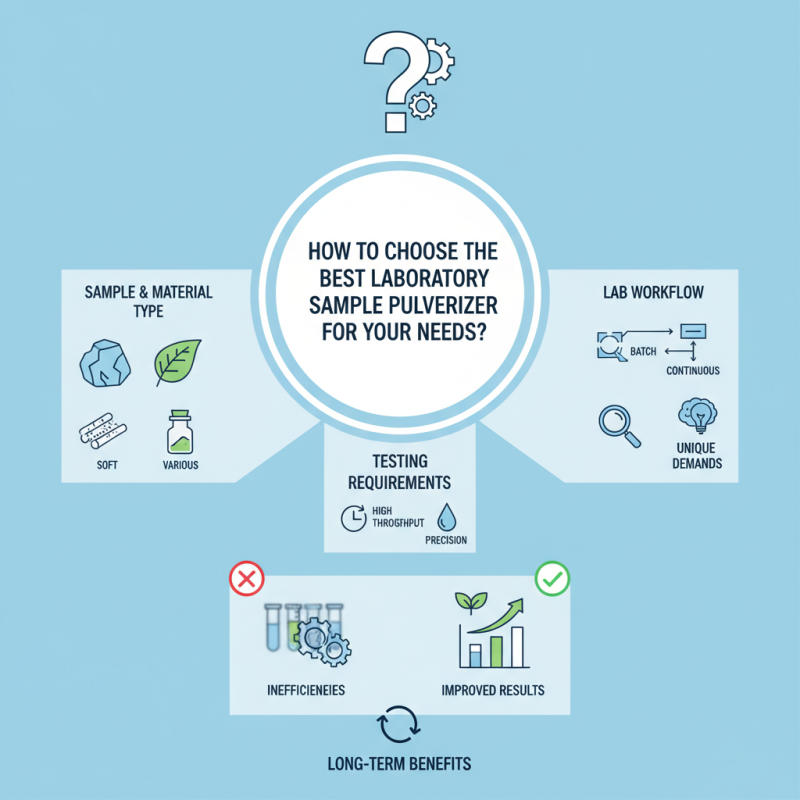
When selecting a laboratory sample pulverizer, consider factors such as sample type, material, and testing requirements. Different models cater to various materials, ranging from soft to hard substances. Understanding these specifics is essential to identify the best fit for your needs.
It’s also important to reflect on your workflow. Does your lab require high throughput, or do you need precision for small batches? Each laboratory has unique demands that influence the choice of equipment. Remember, not addressing these factors can lead to inefficiencies or compromised results. Investing time in this decision can pay off in the long run.
Factors to Consider When Selecting a Laboratory Sample Pulverizer
Choosing the right laboratory sample pulverizer is crucial for your research and analysis. Consider the material type. Different materials require specific pulverizing methods. Some pulverizers are suitable for hard materials, while others work best with softer samples. Understanding your sample’s properties will save you time and resources.
Another factor is particle size. Research shows that a finer particle size can improve the homogeneity and reproducibility of analyses. A study from the American Laboratory highlights that 70% of laboratory errors stem from improper sample preparation. Optimize your pulverization process by selecting equipment that can achieve the desired particle size.
Power and throughput are also essential. A high-powered pulverizer can reduce processing time but may lead to heating issues. You must balance speed and consistency. Additionally, user-friendly features are worth considering. Complex machines can lead to errors or operational challenges. Reflect on the ease of use; it can significantly impact your workflow efficiency.
Types of Laboratory Sample Pulverizers and Their Applications
Laboratory sample pulverizers come in various types, each suited for specific applications. The most common types are ball mills, disc mills, and hammer mills. Ball mills use grinding balls to crush samples. They are ideal for fine powder production and mixing materials. Disc mills, on the other hand, use two discs to pulverize samples. They are efficient for brittle materials. Hammer mills utilize high-speed rotating hammers for rapid size reduction. This makes them suitable for large sample volumes.
Selecting the right pulverizer impacts the homogeneity of the sample. A study revealed that particles reduced to sizes smaller than 100 microns show improved consistency in analyses. Not all pulverizers are meant for every type of material. Some may not achieve the desired grind size, causing potential errors in results. Assessing material hardness and required particle size helps in choosing appropriately.
Tips: Always consider the material properties. Some materials can cause excessive wear on the pulverizer. Regular maintenance is crucial to ensure longevity. Test a small batch first to gauge effectiveness. Keep in mind that some pulverizers may not give a uniform end product, requiring additional processing. Reflect on the sample preparation needs and how equipment selection aligns.
Laboratory Sample Pulverizer Types and Their Usage
Key Features to Look for in a Quality Pulverizer
When choosing a laboratory sample pulverizer, understanding key features is essential. A quality pulverizer should offer durability, efficiency, and ease of use. The construction material plays a crucial role. Stainless steel or high-quality alloys are preferable. These materials ensure longevity and reduce contamination risks.
The size of the pulverizer is also significant. It directly affects sample throughput. A smaller machine may suffice for limited samples. However, for larger labs, high-capacity models are necessary. Look for machines with adjustable settings. This allows you to control the particle size to meet specific requirements.
Tips: Consider noise level when selecting a pulverizer. High noise can impact lab conditions and staff comfort. Also, check for maintenance ease. Frequent breakdowns can slow down productivity.
Power consumption is another aspect to assess. Some machines consume excessive energy. Efficient models can save costs over time. Research indicates that energy-efficient pulverizers can reduce operational costs by up to 30%. This is especially crucial in large-scale operations. Always verify the warranty. A good warranty often reflects the manufacturer’s confidence in their product.
Understanding Material Compatibility for Sample Pulverization
Selecting a laboratory sample pulverizer requires a keen eye for material compatibility. Understanding the materials you intend to process is essential. Different powders, such as minerals or organic substances, behave uniquely during pulverization. The hardness, moisture content, and particle size of these materials influence the effectiveness of the pulverizing process. For instance, brittle materials may shatter easily, while tougher ones may not yield as easily.
It is crucial to identify the right pulverizer based on the sample characteristics. In some cases, the choice might lead to suboptimal outcomes, like uneven grinding or excessive heat generation. These issues can affect the final sample’s quality. Furthermore, not every pulverizer suits every material; an inappropriate match might lead to contamination or damage. Choose wisely and consider performing small tests with your materials before making a larger investment. Reflecting on the performance of different pulverizers can provide valuable insights into matching equipment with specific needs.
Budget Considerations: Choosing a Pulverizer That Fits Your Needs
When selecting a laboratory sample pulverizer, budget plays a crucial role. The need for effective sample preparation has been documented in industry reports, showing that equipment can range significantly in price. Low-cost pulverizers may lack durability and precision. According to a recent survey, 30% of laboratories reported needing to replace their budget pulverizers within two years due to inadequate performance.
The average cost of a reliable pulverizer falls between $1,000 and $5,000. For some labs, spending less could lead to compromised analysis quality. Quality control is essential. A poorly functioning pulverizer can result in sample contamination or inconsistent results. In a study, 25% of users indicated dissatisfaction with their budget choices, highlighting the risk of cutting corners.
It's essential to evaluate features and maintain balance with budget constraints. Some high-end models offer advanced automation features, which may justify the cost. However, these may not be necessary for all labs. The decision should reflect not just initial costs but long-term reliability and performance. Budget limitations should not overshadow the importance of reliable results.