How to Choose POY Spinning and Winding Equipment
Choosing POY Spinning And Winding equipment is a process decision, not a catalogue exercise. The right line must match the polymer, filament count, target denier, and planned production rate. A mismatch can show up as uneven yarn, unstable winding, or unnecessary downtime. Sometimes, the problem is less obvious: a machine meets its rated speed, yet the package quality disappoints.
Textile expert Dr. S. K. Mukhopadhyay has written about man-made fibres and textile technology. No verified quotation from him specifically about POY equipment is available here, so this guide does not assign him invented words. Instead, its working principle is: “Choose the line for stable yarn quality, not speed alone.” Treat that as an editorial summary, not a direct quotation. It captures a practical point. A clean-looking package is not enough.
Compare spinning positions, quench-air control, godet design, winding tension, package format, and automation. Ask suppliers for operating data from comparable yarn specifications, not only headline capacity. Check how quickly operators can change a package, access a thread path, and diagnose a broken filament. Small details matter. A misplaced guide or inconsistent airflow can affect a long production run.
There is no universal best configuration. Budget, floor space, energy use, maintenance support, and future product changes all shape the choice. Be cautious with impressive claims; some figures need context. The sections ahead provide a grounded framework for evaluating POY Spinning And Winding systems, comparing trade-offs, and asking better questions before purchase.
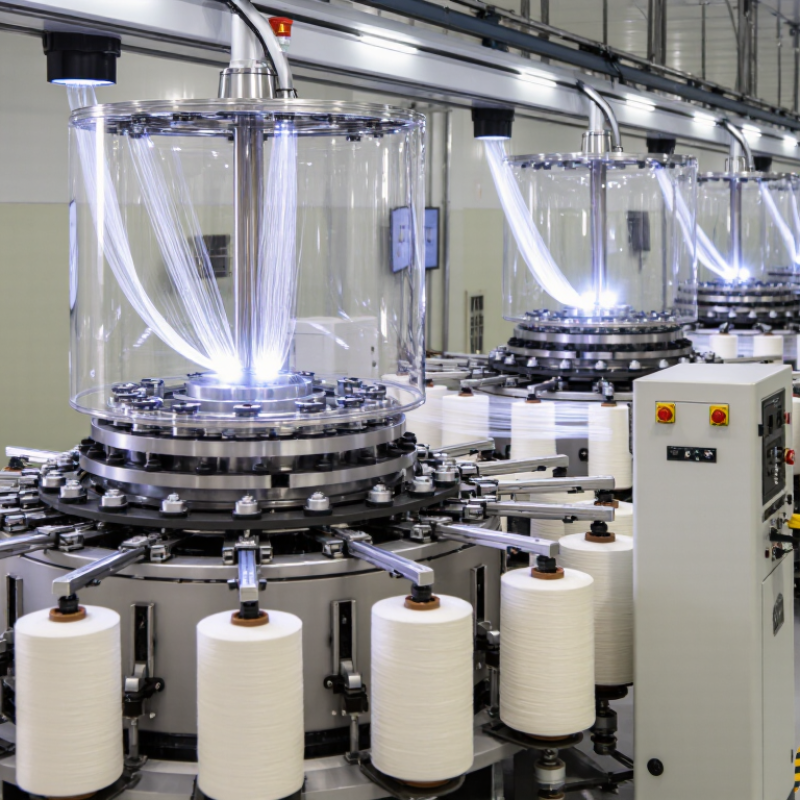
Define POY Product Specs: Denier, Filament Count, and Polymer Type
Before choosing POY spinning and winding equipment, define the yarn you need to make. Total denier describes yarn fineness, while filament count shows how many individual filaments form the yarn. Divide total denier by filament count to estimate denier per filament. For example, a 150-denier, 48-filament yarn averages about 3.1 denier per filament. That figure helps guide spinneret selection and gives a useful reference when checking yarn uniformity.
Small differences matter. Specify the polymer, too: PET, nylon, and polypropylene each behave differently during melting, extrusion, and cooling. PET typically needs careful drying before processing; nylon is also sensitive to moisture, so handling conditions deserve attention. Confirm the grade’s processing data rather than relying on the polymer name alone. Melt viscosity and thermal stability can affect throughput, filament formation, and the winding window. Match the winding system’s speed, tension control, and package build to the intended POY and downstream texturing process. A package that looks neat may still unwind poorly. I would review trial yarn and package samples before locking in settings. Specifications can be incomplete, and real production sometimes exposes what the paperwork missed.
Size PET Extrusion Capacity for Typical 280–295°C Melt Processing
How to Choose POY Spinning and Winding Equipment
For PET POY, size extrusion capacity around the intended output, not the machine’s headline rating. Typical melt processing falls near 280–295°C, but the workable window depends on polymer grade, moisture, residence time, and line design. Confirm conditions with resin data and trial results. Temperature alone cannot predict stable spinning.
Estimate production from total denier, filament ends, and winding speed. A useful conversion is: kg/h = denier × ends × m/min ÷ 150,000. For example, 150 denier across 96 ends at 3,000 m/min requires about 288 kg/h of polymer output. Allow practical operating headroom, then check whether the extruder, melt pump, filter, and spinning packs can sustain that rate together. A large extruder paired with restrictive downstream components may not deliver useful capacity.
Check usable throughput at the required melt temperature, not only the nominal maximum. Review pressure stability, filter-change intervals, and melt residence time; excessive heat exposure can harm PET quality. Winder speed and package build also affect the line’s real production rate. A neat spreadsheet can still mislead. Pilot data may reveal uneven ends or pressure drift that the calculation misses. Revisit the sizing assumptions when changing denier, filament count, or resin grade.
How to Choose POY Spinning and Winding Equipment
Illustrative PET extrusion capacity sizing for typical 280–295°C melt processing
Example estimates assume 150-denier yarn at 3,000 m/min. Yarn output is calculated from denier, line speed, and number of ends; suggested nominal capacity adds approximately 10% planning headroom. Actual sizing depends on the yarn specification, process efficiency, and equipment configuration.
Choose Quench and Spin-Finish Systems for Consistent Filament Quality
POY consistency starts before the winder.
A quench system should deliver even airflow across the filament bundle, not merely a stable average temperature. Check air velocity, temperature, and filter condition at several positions along the spin line. Small faults travel. A blocked filter or uneven air curtain can create differences in filament cooling, which later show up as uneven dye uptake or breaks. Spin-finish delivery deserves the same scrutiny. Calibrate metering pumps, inspect applicator surfaces, and verify finish coverage across the bundle.
The Textile Exchange Materials Market Report 2024 estimates that global fiber production reached 124 million tonnes in 2023, with polyester making up 57 percent. That scale makes repeatable process control valuable, though the report does not prescribe equipment settings.
When comparing systems, ask suppliers for measured airflow profiles and finish-add-on consistency under your own operating conditions. Track yarn tension, filament breaks, and package hardness during trials. Keep records before and after filter changes; restart behavior can differ from steady production. There is no universal setpoint. One line may need a gentler airflow adjustment, while another responds better to tighter finish metering.
A clean-looking filament sheet can still hide variation. That is not enough. Confirm results across multiple positions and winding packages, then adjust one variable at a time.
Compare POY Winders Rated for Typical 2,500–3,500 m/min Speeds
When comparing POY winders rated for 2,500–3,500 m/min, check how each model performs across the full range, not only at its top speed. A higher rating does not guarantee better package quality or usable output. Stable yarn tension, precise traverse, and consistent winding matter at production speed. Ask for test data using yarn specifications and package sizes close to your own.
Small details matter. Look at package density, edge shape, and build consistency after a sustained run. Confirm that the winder can handle your filament count, denier, and planned package weight. Review doffing time, threading access, and routine maintenance requirements, too. These affect uptime. A speed trial should include checks for yarn breaks and package defects, not just a dashboard reading. Results can vary with the spinning line and operating conditions, so treat supplier figures as a starting point.
Tips: Request a side-by-side trial at your target speed. Inspect packages from the beginning and end of the run. Check the yarn path. A little variation can be easy to miss, and I would not rely on a brief demonstration alone.
Check Package Size, Tension Control, Automation, and Line Compatibility
How to Choose POY Spinning and Winding Equipment
Package size affects more than storage. Confirm the bobbin’s diameter, width, core, and target weight against downstream creels and transport limits. A full package should unwind without rubbing nearby guides. Small details matter. Check yarn tension across startup, steady running, and doffing—not just at nominal speed. Load-cell feedback and coordinated godet speeds can help limit variation, but settings still need validation with the intended polymer and yarn specification. Textile Exchange’s Materials Market Report 2024 estimates global fiber production reached 124 million tonnes in 2023, with polyester representing 57%. That scale makes dependable output important, though the figure alone cannot determine the right machine for a specific line.
Automation should fit the plant’s real workflow. Automatic doffing, end-break detection, and recipe storage may reduce routine handling, but unclear alarms or difficult changeovers can erase those gains. Check what operators must still adjust by hand. Check the edges. Line compatibility deserves equal attention: compare the winder’s speed range, yarn path, controls, footprint, and utility needs with the existing spinning position. Confirm data and control interfaces before installation, and review access for cleaning and maintenance. A polished specification sheet can still mislead if trials use different yarn, package weights, or operating speeds. Ask for a test under representative conditions, then record tension variation, package build, and changeover time. That evidence is more useful than a broad promise of productivity.