How to Choose the Right Metal Push Button Switch?
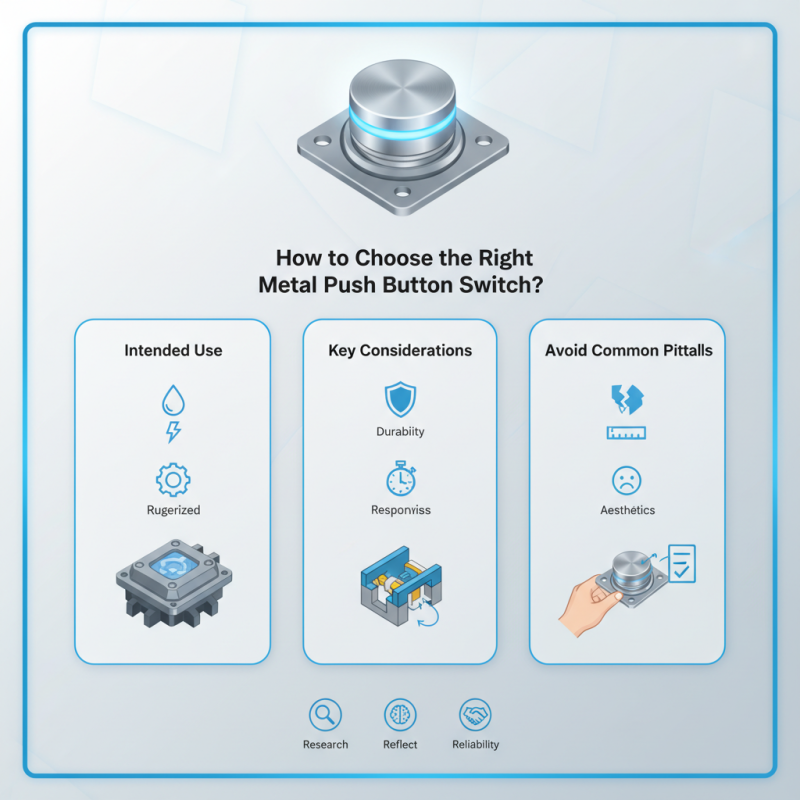
Choosing the right Metal Push Button Switch can significantly impact your project’s success. These components play a key role in operating devices. They must not only fit the design but also meet functional requirements. An ill-suited switch can lead to failure or poor performance.
When considering a Metal Push Button Switch, think about its intended use. Will it be exposed to harsh environments or regular wear? Materials, ratings, and features vary. Learning about these aspects can prevent costly mistakes later. Users sometimes overlook key specifications, which can lead to frustration.
It's essential to evaluate not just aesthetics, but also durability and responsiveness. A switch may look appealing but fail in everyday tasks. Understanding the balance between form and function will ensure reliability. Take time to reflect on your choices. This attention to detail will pay off in the long run.
Understanding Metal Push Button Switch Types and Their Applications
When selecting a metal push button switch, understanding the various types and their applications is crucial. Metal push button switches come in multiple forms, including illuminated, momentary, and latching types. Each variety serves different purposes in industrial, automotive, and consumer electronics. A recent industry report highlighted that illuminated switches are preferred in environments requiring visibility and accessibility, with a 30% rise in demand observed in user-interface applications.
Despite their diverse applications, choosing the right switch isn’t always straightforward. Incorrect specifications can lead to operational failures. For instance, a momentary switch may not hold its position in a machinery control system. On the other hand, a latching switch could unintentionally remain active, causing unintended consequences. Ultimately, understanding their functional differences and environments is key.
Tips: Assess the electrical ratings before purchasing. Verify compatibility with your system. Take time to consider potential environmental factors such as moisture and vibration. A detailed analysis helps in making informed choices that enhance the reliability of your designs. Regular consultations with experts in the field can further guide your decisions based on the latest industry standards.
Key Specifications to Consider When Choosing a Metal Push Button Switch
When selecting a metal push button switch, understanding its key specifications is crucial. Focus on aspects such as voltage rating, current rating, and the type of circuitry. These details affect functionality and safety. For instance, ensure the voltage rating aligns with your application’s needs. Mismatched specifications can lead to system failure.
Consider the switch's physical characteristics. Look for durable materials that can withstand harsh environments. The IP rating indicates how resistant the switch is to dust and water. A higher IP rating can be essential in industrial settings.
**Tip:** Use switches with tactile feedback for better user experience. This feature provides a noticeable response, improving operational efficiency. Also, consider the mounting style. A switch that fits well in your design is vital for ease of use.
Another consideration is the installation process. Some switches require more complex wiring. Understanding your team's skill level can prevent difficulties later. Lastly, check for certifications like UL or CE. These ensure the product meets safety standards.
**Tip:** Conduct a small-scale test before full implementation. This helps identify issues early without risking significant resources. A hands-on approach can reveal unforeseen complications.
Evaluating Environmental Conditions for Metal Push Button Switch Selection
When selecting a metal push button switch, evaluating environmental conditions is crucial. The switch must endure temperature extremes, humidity, and contaminants. Industries often report that switches not rated for specific environments fail prematurely. According to a study by the International Electrotechnical Commission (IEC), about 30% of electrical failures stem from inadequate environmental considerations.
Consider the operating temperature range. Many metal push button switches can handle temperatures from -40°C to 85°C. This adaptability is vital for outdoor applications. Humidity can also impact performance. High humidity levels can cause corrosion or electrical short-circuits. The NEMA rated switches offer additional protection against weather-related issues. These ratings help ensure longevity in various environments.
Dust and moisture can infiltrate poorly sealed switches. Dust ingress can lead to increased wear and compromised function. A switch with an IP67 rating can withstand dust and temporary submersion in water. However, many users overlook these ratings, assuming all switches are equally robust. Inadequate understanding of environmental impact could lead to increased downtime and maintenance costs. Selecting the right switch means balancing functionality with a thorough assessment of the environment.
Assessing Durability and Longevity in Metal Push Button Switches
When choosing a metal push button switch, assessing durability and longevity is crucial. These switches often face harsh conditions—extreme temperatures, moisture, and heavy usage. A durable switch should withstand these factors over time, maintaining functionality. Look for materials like stainless steel, which resist corrosion and wear.
Testing methods can also indicate longevity. Some manufacturers use life cycle tests or simulate environmental stress. These processes reveal how a switch performs under real-life conditions. Though not foolproof, such evaluations can provide insight into a switch's expected lifespan.
Even with thorough assessments, some switches may still fail earlier than expected. Design flaws or manufacturing inconsistencies can lead to premature breakdowns. Observing usage patterns can inform future selections, leading to better choices. Learn from past experiences to enhance future decision-making regarding switch selection.
How to Choose the Right Metal Push Button Switch?
| Feature | Description | Durability Rating (Cycles) | Operating Temperature (°C) | IP Rating |
| Mechanical Actuation | Switch requires a physical push to operate. | 1,000,000 | -20 to 85 | IP65 |
| Tactile Feedback | Provides a noticeable click when pressed. | 500,000 | -10 to 70 | IP67 |
| LED Indicator | Built-in LED for visual status indication. | 250,000 | -20 to 60 | IP54 |
| Momentary Action | Switch returns to original position once released. | 1,000,000 | -25 to 70 | IP68 |
| Sealed Design | Designed to resist dust and moisture. | 500,000 | -20 to 80 | IP69K |
Comparing Manufacturer Standards and Certifications for Quality Assurance
Choosing the right metal push button switch involves understanding various manufacturer standards and certifications. These certifications ensure that the products meet quality and safety requirements. Look for compliance with international standards like ISO or IEC. This can give you confidence in the durability and performance of the switch.
In your search, consider the certifications relevant to your specific application. Not every switch will meet the same criteria. For instance, some may focus on environmental durability, while others prioritize electrical safety. Be mindful of the certifications listed. If they seem vague or incomplete, it could be a warning sign.
Tips: Always request certification documentation if it isn’t readily available. This transparency is a good indicator of reliability. Verify the manufacturer's reputation online. Ratings and reviews can reveal past performance issues or outstanding quality. Keep an open mind; some lesser-known manufacturers may offer superior products.
Comparison of Metal Push Button Switch Standards and Certifications