
Learn more about how Trevisan’s Horizontal Machining Centers can help you minimize set up time and labor costs.

How to Choose the Best China Indoor Isolating Switch?

Choosing the right Indoor Isolating Switch begins with understanding the site, not browsing the lowest price. Indoor substations vary in voltage, fault level, humidity, maintenance access, and operating frequency. A switch suitable for a clean factory room may perform poorly in a dusty plant. Small differences matter.

This guide examines rated voltage, current capacity, insulation level, short-circuit withstand, mechanical endurance, and interlocking design. It also considers enclosure materials, contact reliability, installation space, and the visibility of the isolation position. Look for clear nameplates and traceable test documentation. Ask whether the manufacturer follows relevant IEC or local utility requirements. Certification alone is not enough.

The operating handle should feel firm, not rough. Cable terminals need enough room for safe tightening and inspection. In a crowded panel, a technically excellent switch may still create maintenance problems. That detail is easy to miss. Cost should include installation, inspection, spare parts, and expected service life. A cheaper model can become expensive after repeated outages.

No selection method is perfect. Actual conditions may differ from the drawings. Engineers should verify system data with qualified professionals before ordering. Compare manufacturer instructions with site procedures. Review protection coordination and isolation clearances carefully. This approach supports a safer, more dependable choice and reduces avoidable replacement work. The best Indoor Isolating Switch is not simply the strongest product. It is the one that matches the system, environment, people, and maintenance plan.
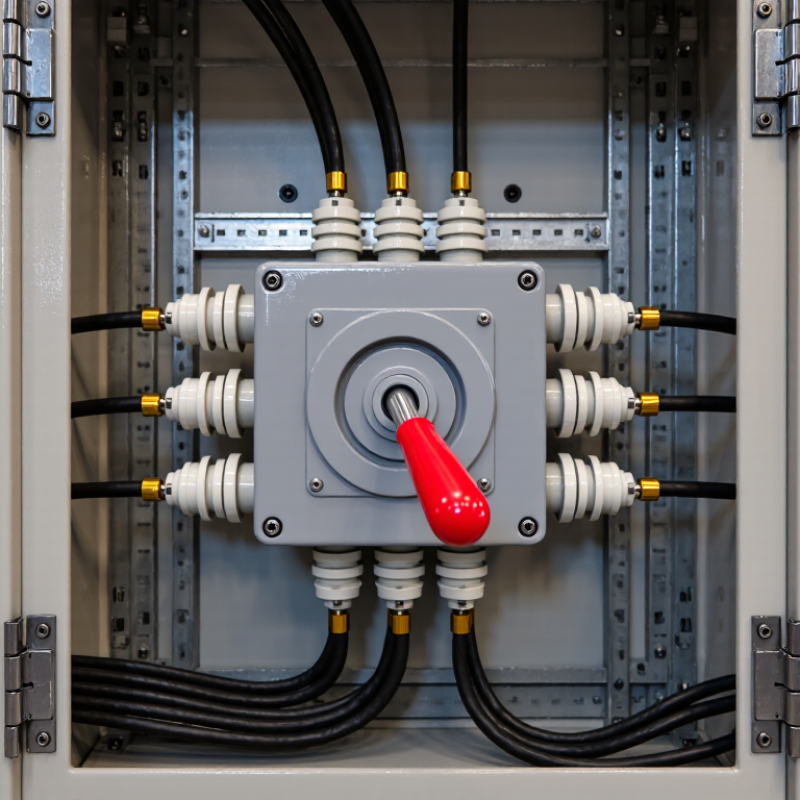
How to Choose the Best China Indoor Isolating Switch?

Define the Application: Indoor Use, 50/60 Hz, Poles, and Load Type

Choosing a China indoor isolating switch starts with the application, not the catalogue photograph. Confirm indoor installation, rated voltage, insulation level, and 50/60 Hz frequency. A 50 Hz system should not be treated as identical to a 60 Hz system without checking temperature rise and switching performance. The IEA Electricity 2024 report projects global electricity demand growth of about 3.2% annually from 2024 to 2026. Higher utilization makes accurate ratings more important.

Count the poles carefully. A three-pole switch suits many three-phase systems, while a four-pole design may be required when the neutral must be isolated. Check whether the circuit supplies motors, transformers, capacitors, heaters, or mixed loads. An isolating switch is mainly for safe separation. It is not automatically a load-break device. IEC 62271-102 distinguishes disconnectors from switches designed to interrupt operating current. That difference matters.

Review rated current, short-time withstand current, mechanical endurance, clearances, and terminal arrangement. Ask for routine test records, type-test evidence, drawings, and an inspection plan. For indoor panels, humidity, dust, condensation, and limited working space can change the practical choice. I have seen selections fail because “indoor” was assumed to mean dry and clean. It does not. Verify the applicable IEC and GB/T requirements, then compare the switch with the actual upstream protection and load profile. A perfect rating on paper can still be awkward during maintenance.

How to Choose the Best China Indoor Isolating Switch?

Define the application: indoor use, 50/60 Hz, poles, and load type.

Load type Representative current Typical pole arrangement Common indoor application
Lighting circuit 16 A 1P+N Single-phase lighting isolation
Socket circuit 32 A 1P+N Indoor general-purpose outlets
Small motor 63 A 3P Three-phase pumps and fans
HVAC feeder 125 A 3P+N Commercial indoor air-conditioning equipment
Distribution feeder 250 A 3P+N Indoor low-voltage distribution boards

The values are representative planning points for common indoor low-voltage applications at 50/60 Hz, not universal switch ratings. Select the isolating switch by verifying the system voltage, continuous load current, number of poles, switching duty, short-circuit conditions, enclosure requirements, and applicable local standards.

Verify Compliance with GB/T 14048.3 and IEC 60947-3 Requirements

When choosing a China indoor isolating switch, compliance should be checked before price or appearance. Ask for evidence against GB/T 14048.3 and IEC 60947-3. These standards cover switches, disconnectors, switch-disconnectors, and fuse-combination units. Confirm the exact product category, rated operational voltage, current, frequency, and utilization category. A switch designed for AC may not suit a DC circuit.

Inspect the nameplate carefully. It should show clear ratings, terminal identification, isolation function, and applicable standards. Request type-test reports, routine-test records, and a declaration from the manufacturer. Check whether the tested configuration matches the delivered model, including pole count, enclosure, handle, and fuse arrangement. Small differences matter. They are often overlooked.

For indoor installation, review clearance, creepage distance, temperature rise, mechanical endurance, and short-circuit performance. The selected device should isolate the intended circuit safely, including neutral or other poles when the design requires it. Verify the installation environment, humidity, dust, and mounting position against the product documentation. In practice, I would also operate the switch repeatedly before acceptance. The handle should move firmly, without excessive looseness or uncertain indication. Paperwork can look complete. The hardware still deserves doubt. Edition dates and test conditions should be checked again, because an old report may not prove current compliance.

Match Ratings: Ue, Ui, Uimp, Ie, and Systems up to 1,000 V AC

How to Choose the Best China Indoor Isolating Switch?

Choosing an indoor isolating switch starts with its electrical ratings, not its appearance. For systems up to 1,000 V AC, Ue must match the actual operating voltage. A 400 V three-phase panel needs a switch rated for 400 V AC or higher. Ui indicates insulation capability, including clearances inside the enclosure. Uimp shows resistance to short-duration surges from switching or lightning. A higher Uimp value helps, but coordination still matters.

Ie is the rated operational current under a stated utilization category. Do not compare Ie with the cable size alone. A 250 A motor feeder may need a stronger switching category than a resistive heater. Check AC-21A, AC-22A, or AC-23A requirements where applicable. Also verify pole count, frequency, short-circuit withstand, and upstream protection. Small details cause large failures.

During panel inspection, I check terminal temperature, tightening torque, creepage distance, and the visible isolation gap. Dust, condensation, and poor ventilation can reduce indoor reliability. Altitude and ambient temperature may also require derating. I have seen selections focus too heavily on Ie while ignoring Uimp and enclosure conditions. That approach feels efficient, but it is incomplete. Confirm applicable IEC or GB requirements, test documents, and clear rating labels before installation. A readable label matters.

Check Fault Performance: Icw, Icm, and Short-Circuit Withstand Data

How to Choose the Best China Indoor Isolating Switch?

Check fault performance before comparing price or enclosure size. Icw is the rated short-time withstand current. It shows how much current the isolating switch can carry during a specified period, commonly one second. IEC 60947-1 and IEC 60947-3 require manufacturers to state this value with its duration. A switch marked 25 kA for one second is not automatically suitable for a 25 kA fault lasting longer. Check the upstream protection time, cable length, and panel assembly rating. Small details matter.

Icm is the rated short-circuit making capacity. It describes the peak current the switch can close onto safely. This peak can greatly exceed the steady RMS fault current because of the first asymmetric cycle. IEC 60947-1 links Icm with the declared short-circuit performance, while IEC 61439 requires verification at assembly level. Ask for laboratory test reports, test voltage, power factor, test duration, and circuit configuration. Missing data is a warning sign. A product sheet with only “high breaking capacity” proves very little.

Tips: Match Icw with the protective device’s clearing time. Compare Icm with the prospective peak current, not only kA RMS. Confirm whether the rating applies to AC, DC, or both. Check terminal heating after testing. Field conditions are rarely perfect. Also review altitude, humidity, and installation spacing. A careful engineer should question optimistic figures, even when the certificate looks convincing.

Compare Safety and Suppliers: IP20–IP4X, CCC Certification, and Type Tests

How to Choose the Best China Indoor Isolating Switch?

An indoor isolating switch should match the enclosure and the installation room. IP20 protects against fingers and large objects. IP4X offers stronger protection against objects above 1 mm. Dusty workshops may need more protection than clean electrical rooms. Check the complete assembly, not only the switch body. Cable glands, door gaps, and unused knockouts can reduce real protection.

CCC certification is an important supplier filter in China. However, a CCC mark alone does not prove suitability for every project. Check the certificate scope, rated voltage, current, product model, and issuing information. The documents should match the nameplate. Ask for type-test reports covering temperature rise, dielectric strength, mechanical operation, and short-circuit performance. Reports should identify the tested configuration clearly.

Supplier evaluation also requires practical evidence. Request sample inspection records, material details, routine-test procedures, and batch traceability. A reliable factory can explain how contacts, terminals, and interlocks are checked. I would inspect a sample after repeated switching, because a clean catalogue image proves little. No checklist is perfect. I once focused too heavily on IP figures and nearly missed a poorly sealed cable entry. Installation conditions can change the final safety result.

How to Choose the Best China Indoor Isolating Switch? - Compare Safety and Suppliers: IP20–IP4X, CCC Certification, and Type Tests

Practical comparison guide for selecting an indoor low-voltage isolating switch and evaluating a supplier.
Evaluation Dimension IP20 Indoor Design IP4X Indoor Design What to Verify with the Supplier Selection Guidance
Ingress protection meaning IP2X protection against access to hazardous parts with a finger and against solid objects of 12.5 mm or larger. The second digit “0” means no declared water protection. IP4X protection against access to hazardous parts with a wire and against solid objects of 1.0 mm or larger. The “X” means that no water-protection rating is declared. The complete IP marking, test method, enclosure configuration, and whether the rating applies to the switch alone or to the installed enclosure. Use IP20 only in controlled indoor locations where accidental contact and small-particle exposure are limited. Prefer IP4X where fine solid particles or additional contact protection are concerns.
Typical indoor application Clean electrical cabinets, distribution boards, control rooms, and restricted-access switchgear compartments. Indoor panels, workshops, utility rooms, and equipment areas where protection from small objects and wire contact is required. Installation environment, pollution degree, ventilation, condensation risk, and enclosure layout. Do not select the IP code alone. Match it with the enclosure, site conditions, maintenance access, and applicable project specification.
Relevant product standard IEC 60947-3 / GB/T 14048.3 may apply to switches, disconnectors, switch-disconnectors, and fuse-combination units. The same product standard generally applies; the declared enclosure protection must also be demonstrated according to IEC 60529 / GB/T 4208. Applicable edition of the standard, product category, rated voltage, rated current, utilization category, and test configuration. Require a datasheet that identifies the exact standard and ratings rather than relying on a general “IEC compliant” statement.
CCC certification CCC may be required when the product falls within the applicable China Compulsory Certification catalogue and certification rules. IP4X does not itself determine CCC applicability. Certification depends on the product type, electrical ratings, catalogue scope, and current Chinese regulations. A valid certificate or official applicability explanation, certificate scope, model coverage, rated parameters, and consistency between the certificate and supplied product. Never treat a CE mark, test report, or supplier declaration as a substitute for CCC when CCC is legally required for the intended market.
Type-test evidence Should cover temperature-rise, dielectric properties, making and breaking performance, short-circuit withstand capability where applicable, mechanical operation, and marking. Should include the same functional tests plus evidence that the tested enclosure and construction achieved the declared IP4X rating. Independent laboratory report, tested model range, ratings, test standard and edition, sample configuration, test date, and pass results. Check that the report covers the exact family or approved variant being purchased; a report for a different rating or enclosure may not be sufficient.
Rated voltage and current Select according to the system voltage, continuous load current, number of poles, frequency, and required isolation function. The IP rating does not increase electrical capacity; voltage, current, pole arrangement, and utilization category must still be correctly matched. Nameplate data, terminal capacity, conductor range, torque values, pole spacing, and derating information. Choose ratings with appropriate engineering margin, while avoiding oversizing that makes the device, enclosure, or cable system impractical.
Isolation and safety position The device should provide reliable separation when open and should clearly indicate the ON/OFF or connected/disconnected position. Provides the same isolation function; the enclosure can offer improved protection against accidental contact and small objects. Visible position indication, handle locking provision, contact gap information, padlock compatibility, and wiring diagram. For maintenance isolation, verify that the product is suitable as a disconnector and not merely a control switch.
Manufacturing and quality control Basic protection can be acceptable when assembly quality, insulation, terminals, and operating mechanism are consistently controlled. More enclosure components and sealing interfaces may require tighter dimensional and assembly control. Quality-management certification, incoming-material inspection, routine electrical tests, traceability, calibration records, and corrective-action process. Prioritize documented process control and repeatable test records over catalogue claims or low purchase price alone.
Documentation and after-sales support Require installation instructions, wiring diagrams, dimensions, torque data, operating limits, and maintenance guidance. Also require enclosure assembly instructions, gasket or cover details where applicable, and limitations of the IP rating. Controlled technical documents, spare-parts availability, response time, warranty terms, batch traceability, and change-notification procedure. Select a supplier able to provide complete, consistent documents before purchase and technical support throughout installation.
Important note: IP20 and IP4X describe protection against access and solid objects; neither rating provides a complete water-protection specification. Confirm the required water rating separately when moisture, cleaning, condensation, or splashing may occur. CCC applicability should be confirmed against the current Chinese certification catalogue and the exact product classification.
Scroll to Top
Scroll to Top