How to Choose the Best Combined Harvester in 2026?
Choosing the best Combined Harvester in 2026 requires more than comparing engine power or catalogue prices. Crop type, field size, terrain, grain moisture, and local service support can change the right decision. A machine that performs beautifully in dry wheat may struggle in damp rice fields. That detail matters.
The OECD-FAO Agricultural Outlook 2024–2033 projects global agricultural and fish production to grow by about 1.1% annually during the next decade. Much of this growth must come from better productivity, not simply from expanding farmland. The FAO also identifies sustainable agricultural mechanization as an important tool for improving efficiency, reducing labor pressure, and limiting harvest losses. These findings make harvesting capacity a strategic farm investment, not merely an equipment purchase.
Reliable selection begins with measurable field evidence. Review average hectares harvested daily, fuel use per hectare, grain loss, unloading speed, and maintenance response time. The U.S. Department of Agriculture’s WASDE reports show how frequently grain production expectations change with weather and market conditions. Flexibility therefore deserves serious attention. Adjustable headers, automatic settings, moisture monitoring, and strong residue management can protect performance across changing seasons.
Still, no checklist is perfect. Operators may value cab visibility more than published specifications. Dealers may promise support that feels slower during harvest. A careful 2026 comparison should combine manufacturer data, independent testing, operator feedback, and a realistic three-year ownership cost. The strongest Combined Harvester is not always the largest one. It is the machine that delivers clean grain, dependable uptime, and practical support when the crop is ready.
What a Combined Harvester Is and How It Works
How to Choose the Best Combined Harvester in 2026?
What a Combined Harvester Is and How It Works
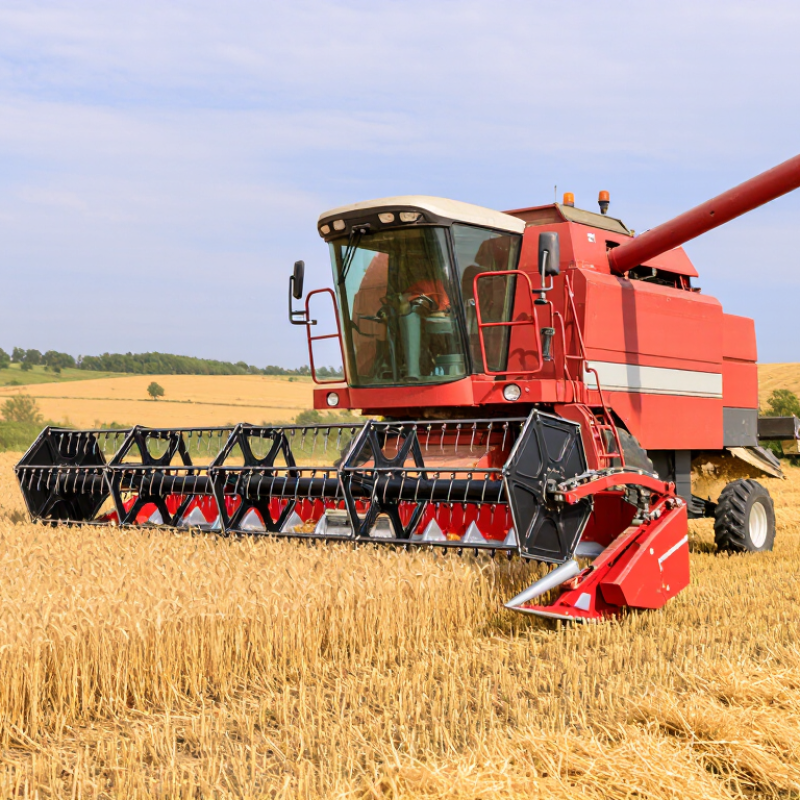
A combined harvester is a field machine that performs several jobs in one pass. It cuts crops, feeds them inward, separates grain, cleans it, and stores it. This design reduces field traffic and saves valuable harvest time. The machine usually includes a header, feeder, threshing system, cleaning unit, grain tank, and unloading auger.
The process begins at the header. Rotating blades cut the crop, while reels guide stems toward the feeder. The feeder carries the material into a drum or rotor. There, friction and impact release the grain from the ears or pods. Concaves help separate grain from straw. Sieves and a fan then remove chaff and lighter debris. Clean grain reaches the tank, while straw leaves through the rear.
Real field performance depends on crop moisture, ground speed, and machine settings. A dry crop may need gentler threshing. Damp material can demand slower feeding and stronger airflow. Small adjustments matter. Watch grain samples, check losses behind the machine, and inspect damaged kernels regularly. A full grain tank is not proof of efficiency. Some grain may still remain on the ground.
Choosing the right harvester also requires honest self-assessment. Field size, crop variety, terrain, service access, and operator skill all affect results. Bigger capacity can help, but excessive size may increase fuel use and maintenance demands. The best choice is not always the largest machine.
How to Choose the Best Combined Harvester in 2026?
Typical Effective Field Capacity by Crop
What a Combined Harvester Is and How It Works
A combined harvester performs several operations in one pass: cutting, feeding, threshing, separating, cleaning, and collecting grain. The chart uses representative planning values for modern self-propelled harvesters working with approximately 6–10 metre headers, field speeds of 4–7 km/h, and field efficiency of about 70–80%. Actual capacity depends on crop yield, moisture, terrain, header width, unloading time, and operator settings.
Selection tip: compare effective field capacity together with grain-loss rate, fuel consumption, grain-tank size, unloading speed, crop compatibility, and local service support.
Key Factors for Matching a Harvester to Your Farm
How to Choose the Best Combined Harvester in 2026?
Choosing a combine harvester starts with your farm, not the machine’s advertised capacity. Measure your field size, crop types, average yield, and harvest window. A large machine may perform poorly on small, irregular fields. It can waste fuel while turning at narrow boundaries. Check soil conditions, slope, and transport access before comparing specifications. A compact harvester may suit wet ground better, even if its daily output is lower.
Match the header to your main crops. Grain, corn, and oilseed crops require different cutting and feeding systems. Ask how quickly the header can change between fields. That detail affects real productivity. Evaluate threshing quality, grain loss, cleaning performance, and moisture measurement. A clear cab, adjustable controls, and good visibility reduce operator fatigue during long days. Test the unloading speed beside your existing grain carts.
Service access matters more than impressive numbers. Inspect belts, sieves, filters, and inspection panels in person. Can your team reach them safely? Confirm local parts availability and technician response times. Fuel use should be measured per harvested hectare, not only per hour. Digital monitoring can reveal losses, blockages, and maintenance needs, but sensor readings still need field checks. I would leave room for doubt here. Soil, weather, and operator habits can change results dramatically. Request independent field data, calculate total ownership costs, and compare several harvest seasons before deciding.
How to Choose the Best Combined Harvester in 2026? - Key Factors for Matching a Harvester to Your Farm
Typical 2026 specification ranges for new combine-harvester classes. Actual performance varies with crop yield, moisture, field shape, terrain, header type, operator skill, and local regulations. | Farm Profile | Recommended Annual Harvest Area | Suitable Crops and Conditions | Typical Engine Power | Typical Header Width | Approximate Effective Capacity | Grain-Tank Capacity | Unloading Rate | Main Selection Priority |
| Small and Mixed-Crop Farm | Up to 300 ha | Wheat, barley, oats, soybeans, and smaller irregular fields | 150–220 hp | 4.5–6.0 m | 1.0–2.0 ha/h | 5,000–7,000 L | 60–80 L/s | Compact dimensions, low purchase cost, easy maintenance, and good visibility |
| Medium Grain Farm | 300–800 ha | Wheat, barley, canola, corn, and soybeans on mixed field sizes | 220–320 hp | 6.0–7.5 m | 2.0–3.5 ha/h | 7,000–10,000 L | 80–110 L/s | Balanced fuel consumption, versatile headers, reliable grain cleaning, and service access |
| Large Arable Farm | 800–2,000 ha | High-yield wheat, corn, soybeans, canola, and large uniform fields | 320–450 hp | 7.5–9.1 m | 3.5–5.0 ha/h | 10,000–14,000 L | 100–140 L/s | High throughput, low grain loss, rapid unloading, and strong dealer support |
| Large-Scale Commercial Farm | More than 2,000 ha | Large-scale cereal, corn, soybean, and canola production with narrow harvest windows | 450–650 hp | 9.1–12.2 m | 5.0–7.0 ha/h | 14,000–20,000 L | 120–180 L/s | Maximum daily output, automation, fleet connectivity, uptime, and logistics coordination |
| Wet-Field or Rice Operation | 100–1,000 ha | Rice and other crops harvested in wet, soft, or high-humidity field conditions | 150–350 hp | 4.5–7.5 m | 0.8–2.5 ha/h | 4,000–10,000 L | 50–100 L/s | Low ground pressure, tracked or flotation options, corrosion protection, and gentle grain handling |
| Hilly or Small-Plot Farm | Up to 600 ha | Cereals and pulses in sloping terrain, fragmented fields, or areas with limited access | 150–300 hp | 4.5–6.7 m | 0.8–2.2 ha/h | 5,000–9,000 L | 60–100 L/s | Slope stability, hillside leveling, braking performance, turning radius, and transport width |
Capacity Planning
Select enough capacity to finish the crop within the available weather window, but avoid paying for unused throughput.
Header Compatibility
Match the header to crop type, row spacing, transport limits, field size, and the combine's approved operating range.
Total Operating Cost
Compare fuel use, seasonal maintenance, depreciation, labor, repairs, transport, and expected annual utilization.
Grain Quality
Prioritize adjustable threshing and cleaning systems when crop moisture, variety, or market quality requirements vary.