
Learn more about how Trevisan’s Horizontal Machining Centers can help you minimize set up time and labor costs.

How to Choose Home Connectors in 2026?

Choosing Home Connectors in 2026 is less about buying the newest plug and more about making every part of a home work together. A connector may sit behind a wall-mounted display, inside a network cabinet, or beside a smart thermostat. Yet the wrong interface can leave a costly device disconnected. Check physical fit, supported protocols, power requirements, and the manufacturer’s compatibility notes before comparing prices. Small details matter.

The International Energy Agency’s Buildings report states that buildings account for about 30% of global final energy consumption and 26% of energy-related emissions. Those figures are not connector sales data, but they show why dependable controls and connected systems matter. For smart-home devices, standards such as Matter can help equipment from different brands communicate. Connectivity Standards Alliance president and CEO Tobin Richardson has described Matter as “a unifying, IP-based connectivity protocol built on proven technologies.” Treat that as a useful direction, not a guarantee: certification does not make every product or feature compatible.

Start with the devices you already own. Check whether a connector supports the right cable, network, and operating platform. Look for clear specifications, safety certifications, warranty terms, and accessible technical support. For example, a sleek hub is of little use if it cannot reach the router through two brick walls. And product pages can be vague. That deserves a second look. This guide compares the practical trade-offs so you can choose Home Connectors that fit your setup today, while leaving room for future upgrades.
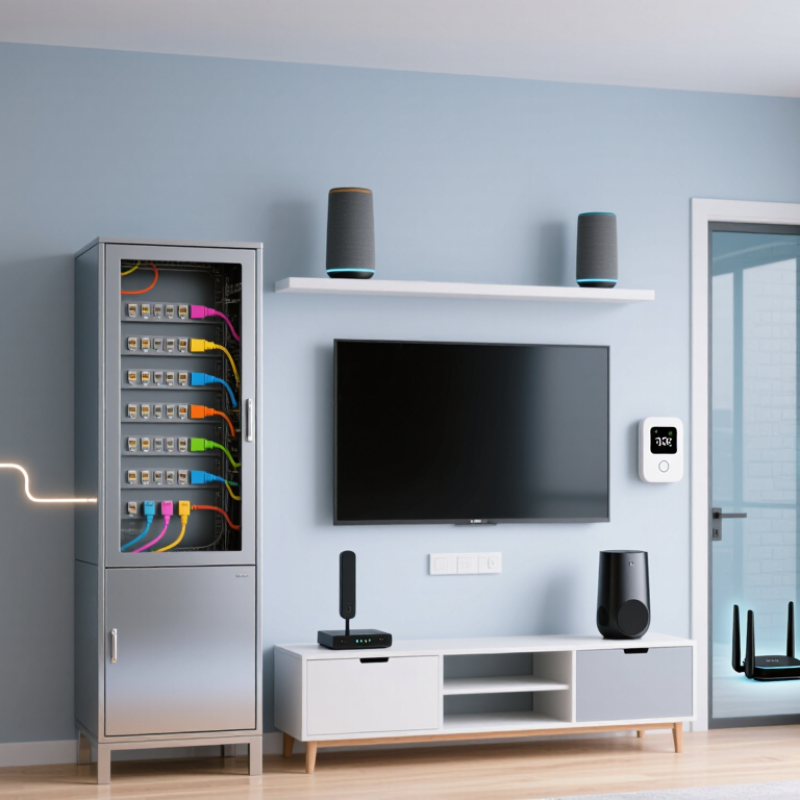
How to Choose Home Connectors in 2026?

Define Home Connectors and Their Role in a Modern Home

Home connectors are the points and components that let household systems link together. They include power outlets, data ports, cable connections, and interfaces for sensors or control devices. In a modern home, these connections help lighting, heating, internet access, and security equipment work reliably. They are easy to overlook until a plug is loose or a signal drops. Small details matter. The term is not perfectly standardized, so check what a product or installer means by “connector” before comparing options.

Tips: List the devices you use in each room. Note where power and network access are needed, including near desks, televisions, and ceiling fixtures. Check connector types, capacity, and placement against device requirements. For fixed electrical work, ask a qualified professional to assess the installation rather than relying on appearance alone.

A well-planned setup can reduce trailing cables and make future changes less disruptive. Compatibility matters, but so does access for maintenance. A connector hidden behind a heavy cabinet may work today and frustrate you tomorrow. It is also worth leaving some flexibility; household needs change, and predicting every device is difficult. A tidy plan helps, though it cannot make every connection future-proof.

How to Choose Home Connectors in 2026?

Home Connection Types and Their Maximum Theoretical Data Rates

Home connectors are the wired links and wireless protocols that let devices exchange data and control signals. Higher data rates can help with large file transfers and high-bandwidth streaming, while low-power links such as Bluetooth LE and Zigbee suit many nearby devices and sensors. Values shown are maximum theoretical link rates; real-world speeds vary with equipment, distance, interference, and network conditions.

Assess Your Devices, Wiring, and Connectivity Needs

Choosing home connectors starts with a room-by-room inventory, not a product search. Note each device’s plug or terminal type, voltage, rated load, and location. A camera by the garage may need reliable Wi-Fi; a thermostat may depend on existing low-voltage wiring. The U.S. Census Bureau’s 2023 American Housing Survey shows that roughly half of occupied U.S. homes were built before 1980. Older homes may have fewer grounded outlets or circuits with different capacities. Check the outlet and breaker labels. Don’t assume.

Map connectivity alongside wiring. The U.S. Energy Information Administration’s 2020 Residential Energy Consumption Survey reports average household electricity use of about 10,500 kWh per year. That figure is not a circuit rating, but it reflects how homes combine always-on electronics with high-draw appliances. Keep network equipment separate from heaters, pumps, and kitchen loads, and verify circuit ratings. Count walls and dead zones; brick can weaken a wireless signal. For wired connectors, check conductor count, wire gauge, neutral availability, and box depth. For wireless options, confirm supported bands and setup requirements. Measure twice. I still find it easy to overlook box depth. If wiring is damaged, warm, or unfamiliar, ask a qualified electrician rather than guessing.

Compare Connector Types, Standards, and 2026 Compatibility

Choosing home connectors in 2026 means checking both the plug and the communication standard. NEMA 5-15 outlets are common in North American homes, while IEC 60320 couplers appear on many appliances. USB-C is convenient, but the connector shape alone does not confirm charging speed or power delivery. Check voltage, current, grounding, and the device’s stated protocol before buying. Small differences matter.

For smart-home devices, Matter compatibility is separate from the physical connector. The Connectivity Standards Alliance reported more than 1,000 Matter-certified products by late 2023, a sign of growing ecosystem support. Yet certification does not guarantee every feature works across every controller. Matter 1.4 added energy-management capabilities, but older devices may need firmware updates or a compatible hub. Check the product’s supported Matter version and whether it uses Wi-Fi, Thread, or a bridge. A neat cable can still hide a compatibility problem. I would test the setup before fitting connectors behind a cabinet. Sources: Connectivity Standards Alliance, Matter certification update (2023); Matter 1.4 specification announcement (2024).

Check Safety Ratings, Installation Requirements, and Future Expandability

Choose home connectors by verified safety ratings, not packaging claims. Check the marked voltage, current, wire size, temperature range, and location suitability against your circuit. Small details matter. NFPA’s Home Electrical Fires report estimates 46,700 U.S. home fires involving electrical failure or malfunction each year, based on 2015–2019 data. This does not mean a connector alone caused each fire; it shows why careful selection and installation matter. Look for certification from an independent, recognized testing laboratory. Replace damaged plugs or loose terminals instead of trying to fix them without knowing the cause.

Before buying, inspect the wall box, wiring material, available space, and installation instructions. A connector that fits your device may still be unsuitable for the existing wiring. If the circuit is unfamiliar, ask a qualified electrician. Guessing is not a plan. For smart-home systems, check supported communication standards, local control, software-update policies, and options for adding modules later. NIST’s NISTIR 8259A identifies six core cybersecurity capabilities for IoT devices, including secure configuration and software updates. Use these as a checklist, not a compatibility guarantee. Leave room to grow. I have learned that spare capacity is easy to overlook when one outlet or hub seems enough. A clear wiring diagram and unused mounting space can make future changes less disruptive.

How to Choose Home Connectors in 2026? — Check Safety Ratings, Installation Requirements, and Future Expandability

Connector type Typical rating or safety reference Installation requirements Future expandability Best suited for Checks before choosing
Standard grounded receptacle (NEMA 5-15R) Typically rated 15 A, 125 V. Receptacles should be listed for their intended use and installed in accordance with local electrical code. Requires a compatible circuit, correctly connected line, neutral, and grounding conductors, and a suitable electrical box. Turn off and verify power before work. Limited by the existing circuit capacity and box space. Additional outlets may require circuit and load assessment. General household loads that are compatible with a 15 A, 125 V receptacle. Confirm circuit rating, grounding, receptacle condition, required protection, and local code requirements.
20 A grounded receptacle (NEMA 5-20R) Typically rated 20 A, 125 V. The T-shaped neutral slot distinguishes this configuration from a 5-15R. Must be used with a properly designed 20 A circuit and conductors of the required size. Do not select a receptacle based on its face rating alone. Can support compatible 20 A loads when the complete circuit is designed for them; it does not increase the capacity of an existing 15 A circuit. Locations or equipment requiring a compatible 20 A, 125 V connection. Have the circuit, breaker, wiring, and receptacle checked together. Follow local code and equipment instructions.
GFCI receptacle Ground-fault circuit interrupters are covered by UL 943 in the United States. Available receptacle ratings vary; GFCI protection is required in locations specified by the locally adopted electrical code. Requires correct line/load wiring and periodic testing using the device’s test and reset controls. A GFCI can provide downstream protection when wired and labeled for that purpose. Can protect compatible downstream outlets when the circuit layout and installation allow it. Protection should be verified after installation. Areas where ground-fault protection is required or otherwise appropriate, such as certain wet or damp locations. Check local placement rules, device rating, correct wiring, and whether downstream outlets need protection and identification.
AFCI-protected receptacle or circuit Arc-fault protection requirements depend on the locally adopted electrical code. Listed AFCI devices are designed to detect specified hazardous arcing conditions. The protection may be provided at the receptacle or elsewhere on the circuit, depending on the installation and applicable rules. Compatibility and wiring must be checked. Circuit-level protection can cover multiple outlets when installed as designed; adding outlets still requires checking circuit capacity and code. Circuits or locations for which arc-fault protection is required or recommended under applicable rules. Confirm the required protection method for the location and investigate repeated trips rather than bypassing the device.
Receptacle with built-in USB charging The AC receptacle and USB power supply have separate electrical characteristics. USB output voltage, current, and supported charging protocols vary by model. Requires a compatible electrical box and properly connected conductors. Some models need more box depth than a basic receptacle. Adds charging at the outlet, but charging performance and compatibility are limited to the built-in ports and supported protocols. Rooms where fixed USB charging is useful and the selected ports meet the devices’ needs. Check the product’s safety listing, USB output specifications, box depth, and whether ports can be replaced or updated independently.
Smart receptacle Current, voltage, load type, and safety listing vary by product. Use only within the stated ratings and with compatible loads. May require a neutral conductor, adequate box space, a compatible wireless network or hub, and setup through the product’s control system. Potentially supports scheduling, remote control, or automation. Long-term compatibility depends on software support, communication standards, and network availability. Loads that benefit from remote switching or automation, provided the load is suitable for the device. Check load type and rating, required wiring, independent manual control, security updates, and whether operation depends on internet access.
Listed wire connector for an enclosure or junction box Permitted conductor materials, sizes, count, voltage, and temperature ratings depend on the connector’s listing and instructions. Must match every conductor and be installed exactly as specified, inside an appropriate enclosure. Splices must remain accessible where required by code. A larger or properly planned enclosure can make future additions easier, but spare capacity and conductor limits must be assessed in advance. Joining compatible conductors in permitted, accessible electrical enclosures. Verify conductor material, gauge, strip length, connector capacity, enclosure fill, and installation instructions. Do not mix incompatible conductors.

Ratings and code requirements vary by product, location, and the edition of the electrical code adopted by the local authority. Look for certification by a recognized testing and certification organization, follow the product instructions, and consult a qualified electrician for new circuits, uncertain wiring, or code questions.

Match Connector Features to Your Budget and Home Setup

A home connector should solve a real gap in your setup, not simply offer the longest feature list. Map your devices and their locations before comparing prices. A small apartment with a stable Wi-Fi router may need only a basic connector for a few sensors. A larger home with thick walls may benefit from a system that supports mesh networking or a compatible hub. Check each device’s supported connection standard, such as Wi-Fi, Zigbee, or Thread. Similar names do not guarantee compatibility. Verify the exact requirements in the device documentation.

Budget for the whole setup, not just the connector. Include any required hub, extra network equipment, and replacement batteries. Look for clear update policies, local control options, and a straightforward setup process. These details matter when the internet drops or a device stops responding. It is easy to overbuy. I would rather start with one connector and test it in the room with the weakest signal. Then add equipment only if the test reveals a genuine problem. That approach may feel slower, and planning every detail is not always practical. Still, checking range and compatibility before purchase can prevent an expensive box from sitting unused.

Scroll to Top
Scroll to Top