
Learn more about how Trevisan’s Horizontal Machining Centers can help you minimize set up time and labor costs.

How to Choose the Best Wooden Doors in 2026?

Choosing Wooden Doors in 2026 is not just a matter of matching a finish to a hallway. The right door must suit its location, daily use, climate, and maintenance expectations. That matters as homeowners continue investing in existing homes. Harvard’s Joint Center for Housing Studies projected in its 2024 Leading Indicator of Remodeling Activity that annual owner-occupied home improvement and maintenance spending would reach about $509 billion by early 2025. The figure is a broad remodeling measure, not a door-sales forecast. Still, it shows why careful product choices matter.

Start with the basics: solid wood, engineered construction, or a wood veneer over a core. Each offers different trade-offs in appearance, stability, weight, and cost. The USDA Forest Products Laboratory’s Wood Handbook explains how wood responds to moisture and environmental conditions—useful context when comparing doors for humid bathrooms, entryways, or dry interiors. A beautiful door can still warp or stick if its construction and surroundings are a poor match. Small details count.

In this guide, we’ll look at species, core construction, finishes, hardware, installation, and expected upkeep. We’ll also separate meaningful performance details from attractive sales language. Check the manufacturer’s specifications, warranty, and care instructions before buying; labels alone rarely tell the whole story. And be honest about your priorities. The lowest price may not deliver the look or durability you want, while premium wood is not automatically the best choice for every room. There is no perfect door. There is a better-informed choice.
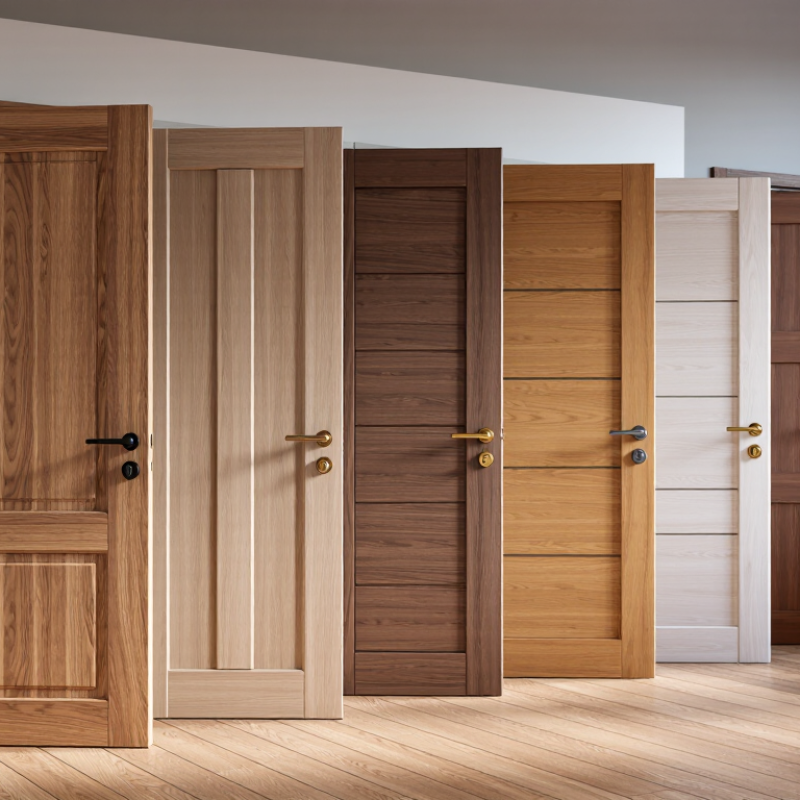
How to Choose the Best Wooden Doors in 2026?

Identify Your Room, Climate, and Door Requirements

How to Choose the Best Wooden Doors in 2026?

Identify Your Room, Climate, and Door Requirements

Start with the room, not the finish. A bedroom usually benefits from a solid, well-fitted door that reduces everyday noise. For a pantry or closet, a lighter door may be easier to use and leave more budget for hardware. Check the swing, frame condition, and floor clearance before choosing. A thick door that scrapes a rug is a poor fit. Small detail, big nuisance. In bathrooms and laundry rooms, prioritize moisture resistance and reliable ventilation. A suitable engineered construction may be more stable than solid wood in persistently damp conditions.

Climate matters, too. The U.S. Environmental Protection Agency recommends keeping indoor relative humidity ideally between 30% and 50%, and below 60% to help limit mold growth. That range also helps you assess whether a room is unusually damp.

The USDA Forest Products Laboratory’s Wood Handbook (2021) reports that common wood species can shrink about 3% to 6% radially and 6% to 12% tangentially as they dry from green to oven-dry conditions. These figures are not a prediction for your finished door; species, construction, and indoor conditions all matter. In a dry winter, a door may fit differently than it did in humid weather. Allow materials to acclimate as specified, and confirm the frame is square. It is easy to blame the door when the frame is the real problem.

Compare Wood Species, Core Types, and Construction Methods

Choosing a wooden door starts with the conditions in your home, not a species chart. Oak has a pronounced grain and feels substantial, while maple offers a smoother, quieter pattern. Mahogany-like woods bring warmth, but color can shift with sunlight. Ask for a finished sample and view it beside your flooring. Small samples can mislead.

The core matters as much as the face. Solid-wood doors have natural variation and can respond to humidity, so seasonal sticking is possible. Engineered cores are often more stable; a solid core also helps reduce sound between rooms. Hollow-core doors weigh less and cost less, but may feel less substantial when you close them. Tap the surface and inspect an exposed edge where possible. Sound tells part of the story.

Construction affects durability. A well-made stile-and-rail door uses separate vertical stiles and horizontal rails, allowing panels to move slightly as humidity changes. Flush doors rely on a flat surface over a core; check that the edges are sealed and the veneer lies smooth. I have seen a beautiful door disappoint when its finish hid uneven joints. That is easy to miss. Compare weight, panel alignment, and finish consistency, then consider who will install it. Even a quality door can bind if the frame is out of square. A little doubt is useful here.

How to Choose the Best Wooden Doors in 2026? - Compare Wood Species, Core Types, and Construction Methods
Category Option Typical characteristics Advantages Considerations Best suited for
Wood Species for the Door Face or Solid-Wood Components
Wood species Oak Prominent open grain; commonly available in red and white oak. Distinctive grain, good strength, and broad availability. Open grain may show through smooth finishes; appearance varies by cut and grade. Traditional interiors, durable everyday doors, and visible natural grain.
Wood species Maple Usually fine, relatively even grain with a light natural color. Hard, smooth surface that can suit clean, simple designs. Stains can appear uneven without suitable preparation; light color may show marks. Contemporary interiors and painted or light-toned finishes.
Wood species Walnut Dark brown color with varied grain and natural color variation. Rich appearance that can be attractive with a clear or lightly tinted finish. Generally costs more than common softwoods; color may change with light exposure. Feature doors and interiors where a darker natural-wood look is desired.
Wood species Mahogany Often has a reddish-brown appearance and a relatively fine, interlocking grain; the name covers several related timbers. Can machine and finish well when the specific timber is suitable and properly dried. Availability, appearance, durability, and environmental status vary by species and source; verify the exact species and documentation. Projects requiring a warm-toned wood appearance and traceable, appropriately sourced material.
Wood species Pine Softwood with visible knots and grain; appearance varies by grade. Often an economical choice and easy to paint or work. Softer than many hardwoods, so it can dent more readily; knots may affect the finish. Painted doors, informal interiors, and projects with a lower material budget.
Core Types
Core type Solid wood Door components are made from solid timber, often assembled as rails and stiles or panels. Authentic wood construction; can often be repaired or refinished, depending on design and finish. Wood responds to changes in humidity and temperature; movement, weight, and cost depend on species and construction. Interior doors where natural wood construction and a substantial feel are priorities.
Core type Solid engineered core An engineered wood-based core, such as particleboard or composite, beneath wood veneer or another facing. Often provides a substantial feel and can be more dimensionally consistent than a door made entirely from solid timber. Weight and performance vary by core and build; edges and faces must be properly sealed against moisture. Interior applications where a solid-feeling door and a veneered wood appearance are desired.
Core type Hollow core Typically uses a lightweight internal frame with a cellular or honeycomb insert and thin face panels. Lightweight and usually a budget-friendly interior option. Generally offers less sound reduction and impact resistance than a well-built solid-core door; hardware attachment options may be limited. Low-traffic interior rooms where low weight and cost are priorities.
Core type Foam-insulated core A door leaf with an insulating foam core, commonly used in exterior door systems. Can contribute to thermal insulation when combined with suitable frames, weather seals, and installation. Performance depends on the complete door assembly; check tested ratings and suitability for the exposure. Exterior openings where thermal performance is important and the product is rated for that use.
Construction Methods
Construction Stile-and-rail panel Vertical stiles and horizontal rails form a frame around one or more panels. Panels can move within the frame as wood responds to humidity, helping accommodate seasonal movement. Quality depends on joinery, panel design, material, and finishing; not all versions are solid wood. Traditional or decorative interior doors.
Construction Flush veneer over engineered core A flat door leaf with a wood veneer face bonded to an engineered core. Creates a simple, uninterrupted appearance; engineered construction can help limit uneven movement. Veneer is thin and can be damaged by deep sanding; edge details and veneer quality affect appearance. Modern interiors and projects needing a consistent flat-panel look.
Construction Laminated or engineered timber components Layers or pieces of wood are bonded together to form components such as stiles, rails, or cores. Can use wood efficiently and help produce more consistent components than a single large piece of timber. Adhesive quality, manufacturing, moisture protection, and the intended application matter; confirm the product is rated for its location. Doors where component consistency and reduced reliance on large solid pieces are desired.
Selection note: Compare the complete door assembly, not just the wood species. For exterior use, check the product’s exposure rating, finish system, weather seals, and installation requirements. Sound control, fire rating, and thermal performance should be based on tested product specifications; a core description alone does not establish a rating.

Evaluate Durability, Insulation, Security, and Maintenance

A wooden door should suit its exposure, not just its appearance. For an exterior entrance, compare solid-wood construction with engineered cores, which can be more stable when humidity changes. Ask how the door is finished on all six sides, including its top and bottom edges. Those hidden surfaces matter. Check for tight joints, straight stiles, and a smooth, even finish. A small finish flaw may not signal poor quality, but it deserves a closer look.

Insulation depends on the whole installation, not the wood alone. Check for weatherstripping that compresses evenly, a snug threshold, and a frame without visible gaps. If the door has glass, ask about its glazing and how it affects heat transfer. On a cold day, a hand near the edges can reveal drafts, though this simple check cannot replace product specifications. Fit matters. Security also relies on the frame, hinges, and properly fitted lock, so inspect the complete assembly rather than judging the slab by weight.

Maintenance varies with finish and local conditions. Sun, rain, and frequent temperature swings can wear coatings faster, especially on exposed faces. Look for peeling, swelling, or soft spots during routine inspections, and follow the maker’s care instructions. A door that needs occasional refinishing may still be a sensible choice; the less obvious cost is the time and access required. It is easy to focus on grain and color. Long-term upkeep deserves equal attention.

Choose a Style, Finish, Size, and Hardware

Choose a style that suits the house, not just a showroom photo. A flat-panel oak door feels clean and modern; a raised-panel design adds depth to a traditional entry. Check how the door looks from the street and from inside, where its finish meets flooring and trim. For color, test a sample outdoors: morning light can make warm stains look pale, while a covered porch keeps them darker. Measure the existing opening, jamb depth, and swing direction before ordering. Measure twice. I still find it easy to overlook trim clearance, especially in older homes with uneven floors.

Hardware should fit both the door’s weight and daily use. A substantial solid-wood door may need sturdy hinges and a well-matched lockset; confirm compatibility with the door maker or installer. The 2024 Remodeling Cost vs. Value report estimated a 188.1% cost recoup for a steel entry-door replacement. That is a useful market benchmark, not a forecast for wood doors, whose results vary by region, condition, and design. For longevity, ask about the finish system, maintenance intervals, and protection from direct rain. A beautiful dark stain can fade sooner on a sun-facing entry. It is a detail people often miss.

Check Certifications, Installation Needs, and Total Cost

How to Choose the Best Wooden Doors in 2026?

A good-looking door can still be a poor fit if its paperwork is unclear. Check that certification documents match the door’s exact model, materials, and intended use. If you need a fire-rated or sound-reducing door, confirm the rating in the product documents rather than relying on a sales description. Requirements vary by location, so ask a qualified local installer or building professional when details are uncertain. Keep copies of the documents. They may matter later.

Installation needs deserve an early check. Measure the opening at the top, middle, and bottom; older frames are often slightly uneven. Note the door swing, floor clearance, trim, and whether the existing frame can be reused. A solid wood door may need adjustment as humidity changes. That detail is easy to overlook. Ask for an itemized quote covering delivery, fitting, hinges, handles, finishing, and removal of the old door. The lowest price may not stay lowest.

Tips: Compare total installed cost, not just the door price. Ask whether painting or sealing is included, and who handles adjustments after fitting. Set aside a small contingency for uneven walls or a replacement threshold. It feels fussy, but skipping this check can cost more than expected.

Scroll to Top
Scroll to Top