What is a Circular Waveguide and Its Applications?
Circular Waveguides are critical components in modern telecommunications and microwave engineering. They effectively guide electromagnetic waves, offering enhanced performance over traditional waveguides. According to the International Telecommunication Union, the demand for high-frequency waveguides is increasing, with a projected growth rate of 8% annually until 2026.
The unique geometry of circular waveguides allows for reduced loss and improved signal integrity. They are used extensively in satellite communications, radar systems, and medical imaging technologies. A report by MarketsandMarkets indicates that the global market for waveguides is expected to reach $1.2 billion by 2025, highlighting their importance across various sectors.
However, challenges remain in the design and manufacturing of circular waveguides. Imperfections in fabrication can lead to unexpected mode propagation. Engineers and researchers continue to explore ways to optimize these technologies, ensuring they meet growing industry demands while minimizing errors. Balancing performance and reliability is essential, and ongoing innovation is needed to address these complexities.
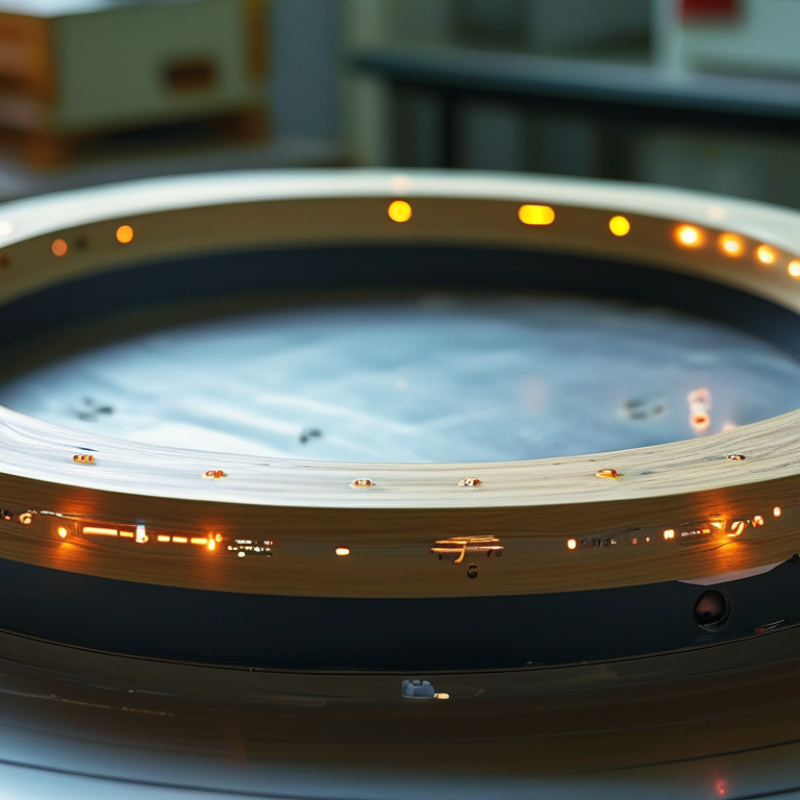
Definition and Characteristics of Circular Waveguides
Circular waveguides are essential components in the field of microwave engineering. They are characterized by their circular cross-section, enabling efficient electromagnetic wave propagation. Their primary function is to guide waves with minimal loss. This makes them ideal for high-frequency applications, including satellite communications and radar systems.
The efficiency of circular waveguides can be attributed to their low dispersion characteristics. Studies indicate that they can achieve up to 99% transmission efficiency at certain frequencies. This high performance makes them preferable over traditional rectangular waveguides in many applications. An important factor is their ability to support multiple modes, which enhances their versatility. For example, they can operate effectively in both TE (Transverse Electric) and TM (Transverse Magnetic) modes.
Despite their advantages, there are challenges in using circular waveguides. Designing for various frequency ranges can be complex. Ensuring precise manufacturing tolerances is crucial to avoid problems like mode coupling. In certain environments, the circular shape can be less space-efficient compared to other geometries. Therefore, careful consideration is needed to optimize their application in a given project.
Types of Circular Waveguides and Their Construction Methods
Circular waveguides are critical components in various fields, especially in telecommunications and microwave engineering. Understanding the types of circular waveguides and their construction methods is vital for optimizing performance. Typically, these waveguides are made from materials such as metal, plastic, or ceramics. The choice of material significantly impacts transmission efficiency and durability.
There are two main types of circular waveguides: metallic and dielectric. Metallic waveguides are generally preferred for high-frequency applications due to their superior conductivity. These waveguides feature precise dimensions to control the propagation of electromagnetic waves. On the other hand, dielectric waveguides are beneficial in integrated optics. They offer lighter weight and flexibility, making them suitable for compact devices.
When constructing a circular waveguide, tolerances must be carefully managed. Small errors can lead to losses and signal degradation. According to industry reports, a tolerance of ±0.1 mm is often recommended for high-frequency systems. It’s essential to employ precise machining techniques during fabrication.
Tip: Invest in high-quality measurement tools to ensure accurate dimensions. A small oversight can result in substantial performance issues. Observing the construction process regularly helps identify potential problems early. This proactive approach saves costs in the long run.
Principles of Propagation in Circular Waveguides
Circular waveguides play an essential role in guiding electromagnetic waves. Their design allows for multiple modes of propagation, which are influenced by physical geometry. The inner diameter and the dielectric materials used are crucial for performance. Studies show that circular waveguides can support modes such as TE (transverse electric) and TM (transverse magnetic). These modes enable efficient transmission of signals, especially in high-frequency applications.
One key principle in propagation within circular waveguides is the cutoff frequency. Each mode has its own cutoff frequency, below which it cannot propagate. Research indicates that selecting appropriate materials and geometries can significantly enhance wave transmission efficiency. A recent industry report highlighted that optimizing the dimensions can improve power handling capacity by up to 50%. This is critical for applications in telecommunications and radar systems.
Tip: Ensure the dielectric material matches the application’s requirements. Mismatched materials can lead to increased losses. Regular testing is beneficial to assess performance changes over time. Continuous monitoring can help identify complications early. Furthermore, keep in mind that adjustments to waveguide dimensions or configurations may generate unintended effects. Thoughtful experimentation can lead to valuable insights in effective wave propagation.
Applications of Circular Waveguides in Telecommunications
Circular waveguides play a crucial role in modern telecommunications. Their design allows for efficient transmission of microwave signals. Unlike rectangular waveguides, circular ones minimize losses and improve bandwidth. This aspect makes them ideal for high-frequency applications.
Telecommunication systems utilize circular waveguides extensively in satellite communications and radar systems. They help in delivering clearer signals over long distances. With the rise of 5G technology, their importance is growing. Circular waveguides can support higher data rates and reduce latency.
However, not all applications benefit equally from circular waveguides. Their manufacturing can be complex and costly. Engineers must carefully consider design parameters. In some cases, traditional waveguides might be more practical. Addressing these challenges is essential for maximizing performance in various telecommunications scenarios.
Future Trends and Innovations in Circular Waveguide Technology
Circular waveguides are gaining attention for their unique ability to channel electromagnetic waves efficiently. Their applications range from telecommunications to radar systems. The focus on circular waveguide technology shows promising trends and innovations.
Future advancements may include enhanced materials that improve durability and performance. Researchers aim to develop lightweight composites that can withstand high frequencies. There is also a growing interest in integrating AI for better signal processing in telecommunications. This approach could optimize wave propagation, leading to clearer communications.
Tips: When exploring circular waveguides, consider how they might affect system efficiency. Experimenting with different frequencies could yield surprising results. Always validate findings through multiple tests for reliability. Engaging with communities focused on waveguide technology can provide deeper insights and collaborative opportunities.
Applications of Circular Waveguides
This chart illustrates the various applications of circular waveguides across different industries and their respective percentage of usage.