
Learn more about how Trevisan’s Horizontal Machining Centers can help you minimize set up time and labor costs.

What Is Controlled Atmosphere Brazing and How Does It Work?

Controlled Atmosphere Brazing joins metal parts inside a furnace filled with a controlled gas, commonly nitrogen. Heat melts the filler metal, which flows through the close-fitting joint; the base metals remain solid. The result can be a clean, repeatable connection without the flux residues associated with some brazing methods.

The details matter. A small gap, an oxide film, or a poorly controlled furnace atmosphere can prevent filler from spreading across the joint. Operators therefore manage temperature, gas purity, dew point, part cleanliness, and conveyor speed. The U.S. Department of Energy’s Industrial Decarbonization Roadmap identifies process heating as a major share of manufacturing energy use, making furnace efficiency and stable production important considerations. That report addresses industrial heating broadly, not CAB alone.

In practice, a bright joint is not automatically a sound one. Metallurgical testing and process records help confirm performance. A named expert’s verbatim statement cannot be responsibly quoted here without a verifiable source; attributing invented words would undermine technical reliability. This article instead explains the process through established brazing principles and the practical variables that shape joint quality. Short version: atmosphere control is essential.
What Is Controlled Atmosphere Brazing and How Does It Work?

What Controlled Atmosphere Brazing Is

What Controlled Atmosphere Brazing Is

Controlled atmosphere brazing (CAB) joins metal parts by melting filler metal between closely fitted surfaces. The base metals remain solid. In a furnace, a controlled atmosphere—often nitrogen—limits oxidation as heat spreads through the assembly. For aluminum parts, manufacturers commonly apply dry flux before loading components into the furnace. The American Welding Society’s Brazing Handbook defines brazing as a process using filler metal above 450°C (840°F), while keeping it below the base metals’ melting temperatures. The filler then flows into the joint by capillary action. Small gaps matter.

For aluminum, common aluminum-silicon brazing fillers begin melting near 577°C, while pure aluminum melts at about 660°C, according to ASM Handbook, Volume 6A. That difference provides a useful process window, but it does not make every joint forgiving.

Surface contamination, uneven spacing, or poor furnace loading can disrupt filler flow. A clean, narrow joint may fill evenly; a visibly wider gap may not. The exact cycle depends on the alloy, component geometry, and furnace conditions.

In practice, temperature uniformity can be harder to achieve than a process diagram suggests, especially across densely loaded parts. Even a small cold zone can leave an incomplete seam.

The Principles Behind Controlled Atmosphere Brazing

Controlled atmosphere brazing uses heat and a carefully managed furnace environment to join metal parts. The filler metal melts, while the base metals remain solid. As it liquefies, capillary action pulls it into the narrow gap between clean, closely fitted surfaces. A tight fit matters.

The atmosphere helps limit oxidation during heating. In many aluminum brazing processes, dry nitrogen is used, with oxygen and moisture levels kept low. Some setups use carefully controlled hydrogen mixtures, depending on the metals and process requirements. Furnace temperature must stay within a defined range: too little heat can leave an incomplete joint, while too much may erode the parts or distort them. Small temperature differences across a load can matter.

Preparation is less dramatic, but essential. Oil, oxide, or poor joint clearance can interrupt filler flow, even when furnace settings look correct. Operators monitor temperature profiles, gas conditions, and belt speed, then inspect joints for gaps or uneven filler distribution. It is not a magic atmosphere. In practice, the difficult part is keeping every detail consistent across parts of different shapes and thermal mass. A clean-looking joint can still hide a weak bond, so visual checks alone may not tell the whole story.

What Is Controlled Atmosphere Brazing and How Does It Work? - The Principles Behind Controlled Atmosphere Brazing

Process dimension Typical condition or data Principle and function
What CAB means A furnace brazing process conducted in a controlled-gas atmosphere. The controlled environment limits oxidation while heat melts the filler metal and forms joints without melting the components being joined.
Common application Aluminum heat exchangers and other assemblies made from compatible aluminum alloys. CAB is widely used for assembling multiple joints in a furnace cycle, especially where consistent, repeatable production is needed.
Filler metal Aluminum-silicon brazing alloys are commonly used; the exact alloy depends on the base materials and design. The filler melts and flows into closely fitted joints by capillary action, then solidifies to create the bond.
Typical filler melting range Some commonly used Al-Si filler alloys melt at approximately 577–582 °C; values vary by alloy. The furnace cycle must melt the filler while keeping the base material below its solidus temperature.
Furnace temperature Aluminum CAB peak temperatures are commonly in the approximate 590–610 °C range, depending on alloy, part design, and process qualification. Careful temperature control provides enough heat for filler flow while reducing the risk of base-metal melting, distortion, or excessive erosion.
Protective atmosphere High-purity nitrogen is commonly used for aluminum CAB; oxygen and moisture limits are set by the process specification. A low-oxygen, dry atmosphere helps prevent fresh oxide formation during heating. The required gas quality depends on the equipment and product.
Oxide control Aluminum assemblies commonly use a brazing flux, often applied as a controlled coating before furnace heating. Because aluminum oxide is stable and inhibits filler wetting, the flux helps disrupt or remove the oxide and allows the molten filler to spread.
Joint clearance A small, uniform gap is generally needed; the suitable clearance depends on the filler, joint geometry, and assembly conditions. Capillary action draws molten filler through the joint. Poor fit-up or uneven gaps can lead to incomplete filling or leakage.
Furnace cycle A typical cycle includes preheating, reaching brazing temperature, a controlled time at temperature, and cooling under a managed atmosphere. The cycle promotes even heating and filler flow while limiting oxidation and thermal stress. Exact times and temperatures are product-specific.
Cooling and inspection Assemblies are cooled according to the qualified process and then checked using suitable visual, dimensional, or leak-testing methods. Controlled cooling helps protect joint integrity. Inspection verifies that the assembly meets its requirements, including leak tightness where applicable.
Main process controls Temperature uniformity, atmosphere quality, flux coverage, joint fit-up, and conveyor or residence time. Monitoring these variables helps maintain consistent wetting and joint formation. Numerical limits should be established through material-specific process qualification.

Note: Temperature ranges and process conditions shown are typical examples, not universal settings. Actual parameters must be qualified for the specific alloys, filler, joint design, and furnace.

Materials and Equipment Used in the Process

Controlled Atmosphere Brazing: Materials and Equipment Used in the Process

The process joins compatible metal parts using a filler metal that melts below the base metals’ melting points. Common workpieces include aluminum, stainless steel, and other alloys selected for the service environment. The filler must suit both the base metals and the joint design. Fit matters. A narrow, even gap helps molten filler flow through the joint by capillary action. Parts also need clean surfaces, since oil, oxide, or residue can prevent reliable bonding.

A controlled-atmosphere furnace heats the assembly while a selected gas mixture limits oxidation. Depending on the materials and process requirements, the atmosphere may use nitrogen or a carefully managed hydrogen-containing mixture. Gas controls, temperature sensors, and monitoring equipment help keep conditions consistent. Fixtures hold components in position as they heat and cool. The setup still needs testing: complex shapes can heat unevenly, and small gaps may be easy to overlook.

Tips: Check the filler metal’s compatibility before production. Clean parts consistently, then handle them with gloves to avoid transferring oils. Confirm that sensors and gas-flow readings are working. Keep clear process records; they can reveal patterns when a joint looks sound but performs poorly. Even a well-controlled furnace cannot compensate for a poor fit.

How a Controlled Atmosphere Brazing Cycle Works

Controlled atmosphere brazing joins metal parts by heating them in a furnace without melting the base metals. The cycle starts with clean, dry components and a correctly fitted joint. A thin gap matters: molten filler metal moves through it by capillary action. The required clearance depends on the materials and filler alloy.

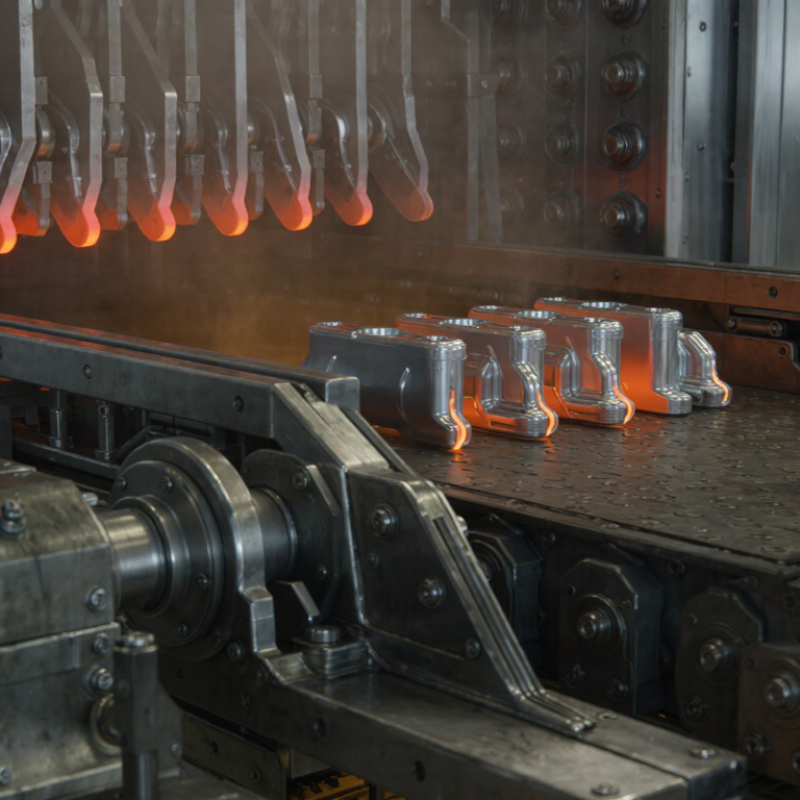
Parts travel through a controlled-atmosphere furnace, often under nitrogen. The atmosphere limits oxidation while the assembly heats gradually. At the brazing temperature, the filler melts and flows along the joint. The furnace then cools the parts in a controlled way, allowing the filler to solidify. Timing, temperature, atmosphere quality, and conveyor speed all affect the result. Small changes can matter. A displayed furnace setting may look correct while uneven heating leaves a weak joint, so operators check process records and inspect sample assemblies.

Tips: Keep parts free of oil and handling residue. Confirm the filler alloy and joint clearance suit the materials. Monitor furnace temperature and atmosphere conditions; don’t rely on appearance alone. If a joint looks sound but fails testing, review the whole cycle, not just the peak temperature.

Common Applications and Process Considerations

Controlled atmosphere brazing (CAB) joins metal parts in a furnace without liquid flux. It is widely used for aluminum radiators, condensers, evaporators, and battery-cooling plates. These assemblies need thin, leak-tight joints and many connections made in one cycle. Demand is growing. The IEA’s Future of Cooling report projects global air-conditioner stock rising from 1.6 billion units in 2016 to 5.6 billion by 2050, supporting demand for compact heat exchangers. CAB can produce consistent joints at scale, but only when parts are clean and closely fitted. Small details matter.

Process control is unforgiving. Aluminum brazing commonly uses nitrogen with oxygen below about 100 ppm and a dew point near −40°C; plant targets vary by alloy and furnace. Typical peak temperatures are around 600°C, but the correct cycle depends on the filler-clad sheet and component design. A narrow window matters: too little heat can leave incomplete joints, while excessive heat risks erosion or distortion. Operators monitor furnace temperature, belt speed, atmosphere, and joint clearance. Even a small oil residue can disrupt wetting. CAB also requires capital-intensive furnaces and steady production to justify them. One practical caveat: published settings are starting points, not substitutes for trials on the actual part.

Scroll to Top
Scroll to Top