What Types of Wooden Doors Are Available?
Wooden Doors range from solid-wood and engineered-core designs to hollow-core interior doors, each serving different needs. Their appearance matters, but construction affects weight, privacy, durability, and cost. The USDA Forest Products Laboratory’s Wood Handbook (2021) explains that wood properties vary by species and moisture content, and that changing moisture can cause wood to expand or shrink. That detail matters. A door that fits perfectly in a dry showroom may behave differently in a humid entryway.
Design adds another layer. Panel doors bring framed, recessed details; flush doors offer smooth faces; French doors use glass panels; and sliding or barn-style doors save swing space. The U.S. Department of Energy’s Energy Saver guidance highlights factors such as weatherstripping, glazing, and fit when evaluating exterior-door energy performance. These details are easy to overlook when choosing by appearance alone. A beautiful door can still disappoint if it does not suit its location, frame, or daily use. There is no single best type. This guide compares common Wooden Doors by construction, style, and application, helping readers ask practical questions before choosing—while recognizing that product quality and installation can vary.
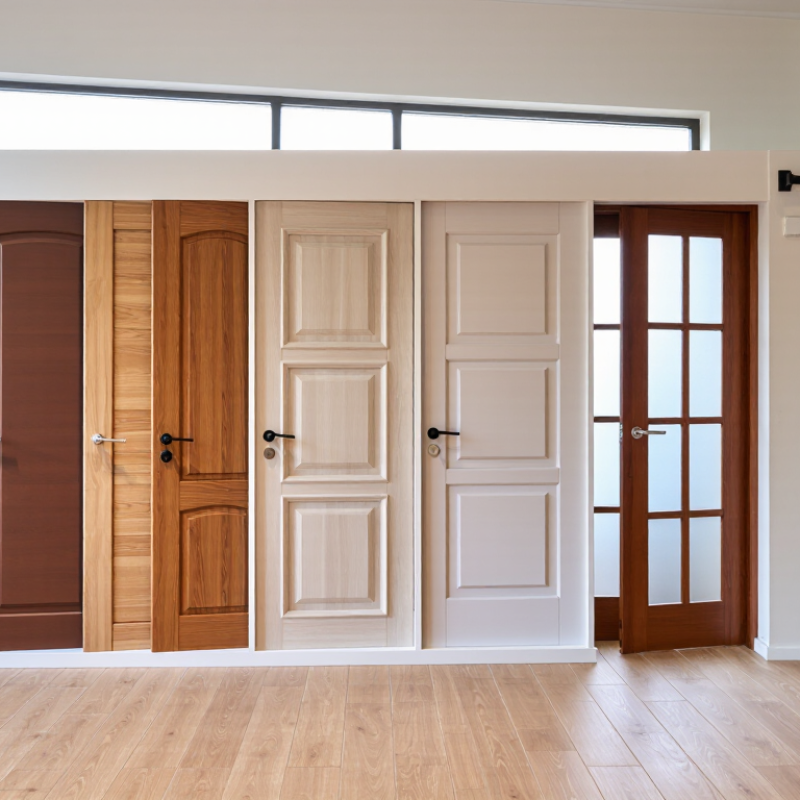
How Wooden Doors Are Classified
Wooden doors are commonly classified by construction, core, and purpose. A solid-wood door is made from timber boards or a framed panel assembly. Its grain and weight are easy to notice, and changes in humidity may cause slight movement. That distinction matters. Regular finishing can help protect the surface, but it cannot prevent every seasonal change.
Engineered doors use layered materials or a stable core, often with a real-wood veneer. Solid-core doors feel substantial and can reduce sound transfer, while hollow-core doors are lighter and often used indoors. Looks can deceive. A flush door has a smooth face; a panel door has visible recessed or raised sections. These describe appearance, not necessarily what lies inside.
Doors may also be grouped by use, such as interior room doors or exterior entry doors, which need suitable weather resistance. When comparing options, check the core, facing, and intended location together. A beautiful veneer alone does not tell you how the door will perform over time.
Types of Wooden Doors by Construction
Wooden doors are commonly built as solid-wood, stile-and-rail, solid-core, or hollow-core units. A stile-and-rail door has upright stiles, horizontal rails, and separate panels; the joints and panel edges are visible up close. Solid wood offers natural grain, but seasonal movement matters. The USDA Forest Products Laboratory’s Wood Handbook (2021) places wood’s fiber-saturation point near 30% moisture content; below that point, changing moisture can cause shrinkage or swelling. Fit matters.
Flush doors have smooth faces over a core. A solid core may use composite material beneath wood veneer, adding weight and helping reduce sound transfer. Hollow-core doors use a light internal structure, often honeycomb, between thin face sheets. They are easier to hang, but a knock can sound distinctly hollow. Construction affects more than appearance. Core type, thickness, edge blocking, and frame quality all shape durability and feel. I would not judge a door by its label alone: “solid core” does not mean solid timber, and product details can vary. Check the specification sheet for core material, panel thickness, and tested performance before choosing.
Common Wood Species Used for Doors
Oak is a common door wood, valued for its pronounced grain and good resistance to everyday wear. Its pores can show through a clear finish, creating a textured look rather than a smooth, uniform surface. Maple has a finer, quieter grain and a light color that suits simple interiors. It is hard, though, and can be less forgiving when cut or finished. Cherry starts out reddish-brown and often deepens with exposure to light. Small details matter.
Walnut offers dark, varied grain, while pine is lighter and often shows knots. Those knots can add character, but they may also make the door look less even. Mahogany is known for warm color and relatively consistent grain; availability and sourcing can vary, so ask what species the seller means. Choosing by species alone is a common mistake. Core construction, moisture conditions, and finish affect how a door performs, too. A pale maple door may highlight fingerprints, while a darker walnut surface can show dust. Check a sample in the room’s actual light before deciding.
Wooden Door Styles and Their Features
Wooden doors vary in both appearance and construction. A paneled door has framed sections that add depth and suit traditional interiors. The recessed panels can collect dust, though, so they need occasional cleaning. Flush doors have smooth, flat faces and a quieter look. They work well in modern rooms and narrow hallways, where raised details may feel busy.
French doors use glass panes within wooden frames to bring daylight between rooms. Check the glazing and frame seals if privacy or drafts are concerns. Louvered doors have angled slats that encourage airflow, making them useful for closets or utility spaces. Their open gaps offer less sound privacy. Barn-style sliding doors save floor space, but the track needs enough clear wall area. Small details matter. A few centimeters can affect how smoothly a door moves.
Wood species, finish, and room conditions also shape a door’s performance. Oak often shows a pronounced grain, while maple tends to look more even. Solid wood can respond to changes in humidity, so allow for proper fitting and care. Engineered wood may offer more consistent construction, depending on its core and facing. Not every room agrees. A door that looks right in a showroom may feel too heavy or ornate at home. Check the opening, swing, light, and nearby trim before choosing a style.
Choosing a Wooden Door for Each Space
What Types of Wooden Doors Are Available?
Choosing a Wooden Door for Each Space
A door should suit the room, not just the décor. For bedrooms and home offices, solid-core doors can soften everyday noise and feel substantial when closed. Hollow-core doors are lighter and often work well for closets or low-traffic rooms. They are less effective at blocking sound, though. For an entry, consider a solid wood or engineered wood door with a durable finish and good weather seals. The frame and installation matter just as much as the door itself.
Tips: Measure the opening, including the frame, before choosing a style. Check which way the door should swing, especially in narrow hallways. Bathrooms need extra care: humidity can damage wood, so use a suitable finish and keep the room ventilated. Small details matter.
Sliding or bifold wooden doors can save floor space in closets and compact rooms. A hinged door may feel more private, but it needs clear space to open. For kitchens, choose a finish that is easy to wipe clean. Wood naturally varies in grain and color, so samples may look different under your home’s lighting. There is no perfect choice for every space; balance privacy, moisture, noise, and available room before deciding.