
Learn more about how Trevisan’s Horizontal Machining Centers can help you minimize set up time and labor costs.

What Is a Dual Exhaust System and How Does It Work?

A Dual Exhaust System uses two exhaust paths to carry gases away from an engine. On a V-shaped engine, each path often serves one bank of cylinders. The layout can change sound, packaging, and performance, but two tailpipes alone do not prove a car has true dual exhaust. One pipe may split near the rear. The detail matters.

As a practical guide, this article explains the main components, how exhaust gases travel, and how true dual systems differ from single systems with dual outlets. It also looks at crossover pipes, mufflers, and the balance between airflow and sound. Engine-design expert David Vizard’s work emphasizes matching exhaust flow to the engine as a whole. Paraphrasing that principle: “Exhaust flow works best when the entire setup is considered.” That is a useful lens, not a promise of extra power. Results depend on the engine, pipe dimensions, and tuning.

There is a catch. More pipes do not automatically mean better performance. A mismatched system can add weight, create unwanted noise, or deliver little measurable benefit. Picture two polished pipes beneath a car; their appearance tells only part of the story. The engine configuration and the path gases actually take tell the rest. We’ll separate what the system does from what marketing claims it does—and note where a simple explanation can leave out important details.
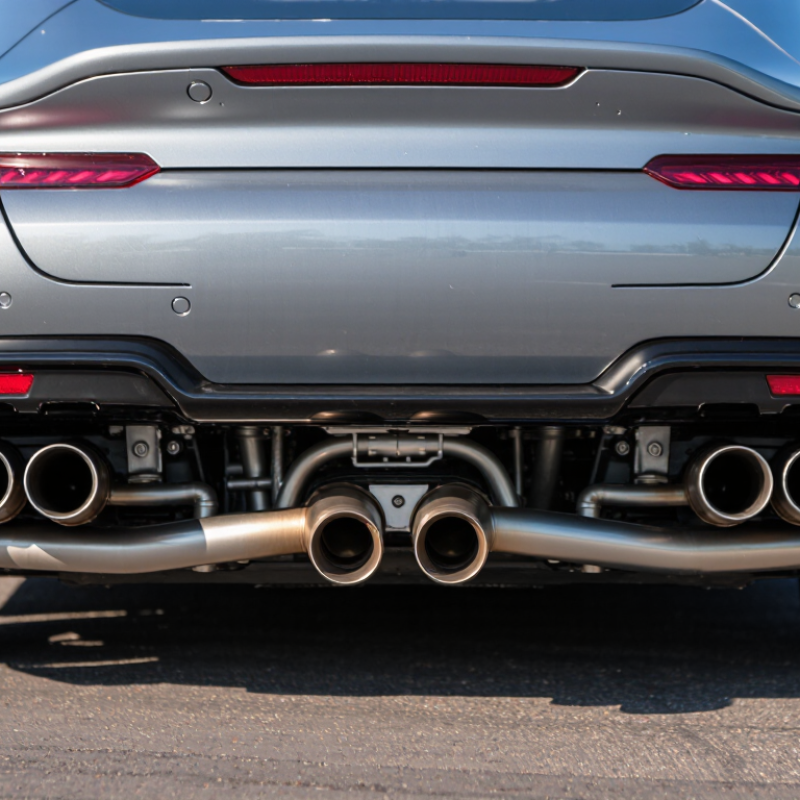
What Is a Dual Exhaust System and How Does It Work?

What Defines a Dual Exhaust System

A dual exhaust system uses two separate paths to carry exhaust gases away from an engine. In a true dual setup, each path usually serves a different group of cylinders. Each may have its own pipes, emissions-control components, muffler, and tailpipe. The exact arrangement depends on the engine and vehicle design. Two visible tailpipes alone do not confirm a true dual system. Some vehicles use one main pipe that splits near the rear, creating two outlets while sharing much of the exhaust route. That distinction matters.

The paths begin near the engine, where exhaust manifolds or headers collect hot gases. On many V-type engines, each cylinder bank can feed a separate route. An inline engine can also use a divided layout, though its plumbing differs. From there, gases pass through required emissions equipment and mufflers before leaving the vehicle. The pipes must be sized and routed to manage heat, noise, clearance, and exhaust flow. More pipes do not automatically mean better performance; poorly matched parts can reduce low-speed response or create unwanted noise. The terminology can be a little loose, so checking underneath the vehicle is more reliable than judging by the tailpipes.

The Main Components and Their Functions

A dual exhaust system carries engine gases through two separate routes, usually one for each cylinder bank on a V-shaped engine. Some systems split a single exhaust stream farther downstream, so two tailpipes do not always mean two fully independent paths. That distinction is easy to miss. The layout affects how gases move, but it does not guarantee more power or a different sound by itself.

The exhaust manifolds collect hot gases from the engine and direct them into the pipes. Oxygen sensors monitor gas content and send readings to the engine control system. Catalytic converters reduce harmful emissions; their number and placement depend on the vehicle’s design. Farther back, resonators can soften certain sound frequencies, while mufflers reduce overall exhaust noise. Tailpipes guide gases away from the vehicle. Some systems also use a crossover pipe, often shaped like an H or X, to connect the two sides and balance pressure pulses. The parts must work together. Pipe diameter, leaks, and worn muffler packing can change noise and flow. Bigger pipes are not automatically better. Even a small leak near a sensor can affect readings, so inspection should include joints and hangers, not just the tailpipes.

What Is a Dual Exhaust System and How Does It Work? - The Main Components and Their Functions

Component Typical Location Main Function How It Works in a Dual Exhaust System
Exhaust manifolds or headers Attached to the engine’s exhaust ports Collect hot exhaust gas from the engine cylinders. On many V-type engines, each cylinder bank feeds its own exhaust path. Some engines use a different layout, so the number of pipes does not always match the number of banks.
Oxygen sensors Before and, on many vehicles, after the catalytic converters Measure oxygen in the exhaust to support fuel control and emissions-system monitoring. The engine computer uses sensor signals to adjust the air-fuel mixture and check catalyst performance. Sensor placement and quantity vary by vehicle.
Catalytic converters In the exhaust paths, generally upstream of the mufflers Reduce regulated pollutants in the exhaust. Catalyst materials promote chemical reactions that convert pollutants into less harmful gases. The number and arrangement depend on the vehicle and its emissions requirements.
Crossover pipe (optional) Connects the left and right exhaust paths, commonly beneath the vehicle Allows exhaust pulses to communicate between the two sides. An H-pipe or X-pipe can balance pressure and alter exhaust sound. A system with a crossover still has two main paths, but they are not completely separate.
Exhaust pipes Run beneath the vehicle from the engine toward the rear Carry exhaust gas through the system and route it away from the passenger compartment. A dual setup typically uses two main routes for some or most of the system. Pipe diameter, bends, and routing affect fit, noise, and flow.
Resonators (optional) Usually installed in the midsection of one or both exhaust paths Tune or reduce particular sound frequencies. Resonators use internal chambers or passages to influence sound. They are separate from mufflers and are not present in every system.
Mufflers Toward the rear of the vehicle, often one per exhaust path Reduce exhaust noise. Internal chambers, perforated tubes, or sound-absorbing materials reduce noise as gas passes through. Design and placement influence the system’s sound.
Tailpipes and outlets At the rear or, on some vehicles, along the sides Discharge exhaust gas away from the vehicle. A dual exhaust often ends in two outlets, but outlet count alone does not prove the system has two independent exhaust paths; some systems split a single pipe near the rear.

How the system works: Exhaust gas leaves the engine, passes through emissions-control components and the pipe network, then flows through sound-control components before exiting the tailpipe(s). A true dual exhaust generally maintains two main exhaust paths for a substantial portion of the system; exact layouts vary by vehicle.

How Exhaust Gas Flows Through the System

At the engine, exhaust gas leaves each cylinder in timed pulses and enters an exhaust manifold. In a true dual system, each bank usually feeds its own pipe, converter, muffler, and tailpipe. Some designs share a section before splitting, so “dual” does not always mean two completely separate routes. That distinction matters. Flow moves rearward as the gas cools and pressure changes.

Mufflers reduce sound by redirecting or absorbing pressure waves, while the pipes carry the remaining gas out behind the vehicle. Some systems connect the two sides with an H-pipe or X-pipe. This crossover can help balance pressure pulses between the pipes, though its effect depends on the engine and layout. Real layouts vary. Pipe diameter matters, too: larger pipes are not automatically better, since velocity and engine needs also affect flow. A polished layout can still have tight bends that restrict it.

Tips: With the engine fully cool, look for crushed sections, loose joints, or soot marks near connections. Never touch hot exhaust parts. If you hear new rattling or smell fumes inside the cabin, have the system inspected; small leaks can be hard to spot.

Common Dual Exhaust Configurations

A dual exhaust system routes engine gases through two outlets, but the layout matters more than the number of tailpipes. A true dual system uses separate pipes from the engine banks to the rear. A dual-exit system keeps one main pipe and divides it near the back. It looks similar, but it does not provide two independent flow paths. Some systems use an X-pipe or H-pipe to connect the banks. An X-pipe encourages smoother cross-flow; an H-pipe creates a pressure-balancing link. Neither design guarantees more power. Pipe diameter, muffler restriction, engine speed, and tuning all affect the result.

For measured power claims, SAE J1349 provides a standardized engine test procedure with corrections for atmospheric conditions. That matters: a before-and-after dyno comparison is more useful when test conditions and correction methods match. A larger pipe may reduce restriction at high engine speeds, yet weaken exhaust velocity at lower speeds. The right configuration depends on the engine and intended use. There is no universal winner. Even experienced builders can misread a loud exhaust as a stronger one.

Tips: Check whether the setup is true dual or dual-exit before comparing prices or performance figures. Keep pipe routing clear of the floor, fuel lines, and suspension. Ask for comparable dyno data, not a peak-horsepower claim alone. Small details matter. A little skepticism helps.

What Is a Dual Exhaust System and How Does It Work?

Common Dual Exhaust Configurations

A dual exhaust uses two separate exhaust routes, typically serving the two cylinder banks of a V-type engine. An H-pipe or X-pipe connects the routes to help balance exhaust pulses, while a dual-exit single exhaust uses one main route that branches into two tailpipe outlets. Counts shown are simplified configuration features; actual layouts vary by vehicle.

Performance Effects and Practical Trade-Offs

A dual exhaust system routes engine gases through two separate pipes, usually from paired manifolds or a divided collector. Its performance depends on pipe diameter, bends, mufflers, and engine design—not simply the number of outlets. A properly matched system can reduce flow restriction and help an engine breathe at higher rpm. Oversized pipes, however, may weaken low-speed torque.

More pipes, not magic.

The trade-offs are practical. Two paths can add weight, cost, and extra joints that may leak or corrode. Sound often becomes deeper, but louder does not mean faster. SAE J1349 sets controlled procedures for measuring engine power, a useful reminder that performance claims need repeatable testing. The EPA’s 2024 Automotive Trends Report lists 27.1 mpg as the average for model-year 2023 new vehicles; that fleet figure does not show that dual exhaust improves fuel economy.

Honestly, the sound may feel more rewarding than the stopwatch.

Tips: Before choosing a setup, check engine compatibility and available clearance beneath the car. Compare before-and-after dyno results under similar conditions, and inspect joints after installation. A small gain is still a gain—but only if the added cost and maintenance suit your use.

Scroll to Top
Scroll to Top