Top 10 Instant Noodle Producing Machine Manufacturers
The global instant noodle industry is expanding, and production equipment must keep pace. The World Instant Noodles Association reported approximately 123.1 billion servings consumed worldwide in 2023. Asia remained the dominant region, led by China, Indonesia, India, Vietnam, and Japan. These figures show why reliable manufacturing systems matter.
An Instant Noodle Producing Machine now involves more than mixing flour and water. Modern lines control dough thickness, cutting speed, steaming temperature, frying or hot-air drying, cooling, and portion accuracy. Small timing errors can change texture, moisture, and shelf stability. IMARC Group and Grand View Research both identify automation, hygiene, energy efficiency, and production scalability as important equipment-market trends. Their market estimates differ, however. That difference deserves careful attention.
Momofuku Ando, the founder of Nissin Foods and a pioneer of instant noodles, said, “There is no such thing as too much research.” His principle still applies to machinery selection. A fast line is not automatically a good line. Manufacturers must examine output capacity, electrical requirements, oil management, cleaning access, spare-parts support, and after-sales service. Food safety should remain central.
This Top 10 Instant Noodle Producing Machine Manufacturers overview compares established suppliers through practical criteria. These include engineering experience, machine flexibility, quality control, installation support, and documented customer performance. No ranking is perfect. Supplier claims require verification. Factory visits, sample testing, and independent audits may reveal details that brochures omit. The strongest manufacturer is therefore not always the cheapest or fastest. It is the one that consistently delivers safe, repeatable, and commercially realistic production.
Instant Noodle Machinery: Scope, Types, and Production Processes
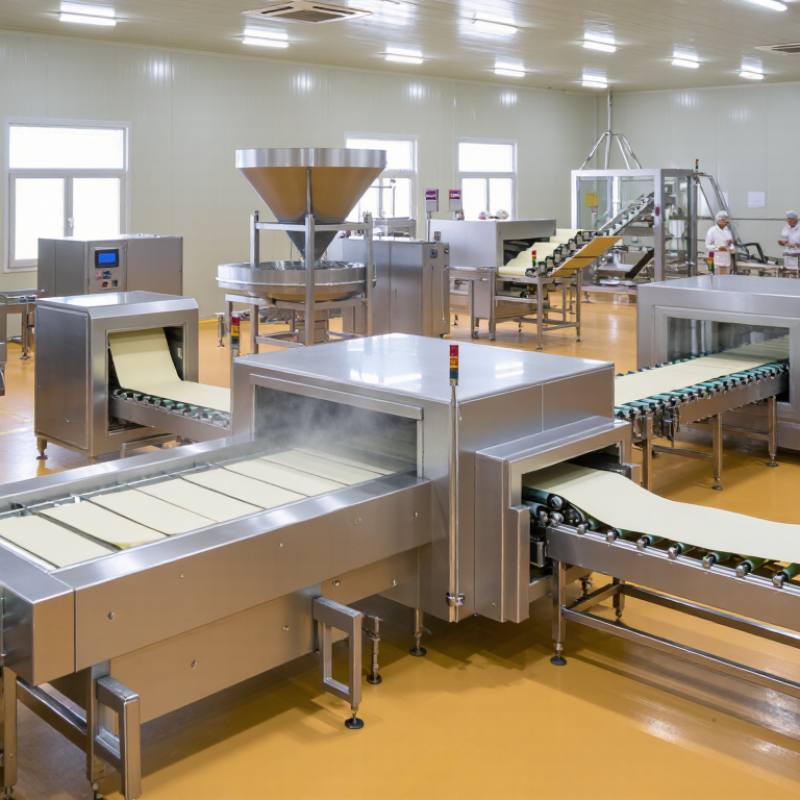
Instant noodle machinery covers more than a shaping unit. It includes mixing, sheeting, steaming, cutting, frying or drying, cooling, and packing equipment. Manufacturers are often evaluated by how well these machines work together as a complete production line.
A typical process begins with flour, water, salt, and selected additives entering a controlled mixer. Rollers then form a uniform dough sheet. Slitting creates the familiar noodle strands, while steaming develops their texture. Fried lines use hot oil for rapid dehydration. Non-fried lines use hot air, which can reduce oil content but may require longer drying time. Small modular systems suit pilot plants, while continuous lines support large-scale output.
Practical inspection matters.
Experienced buyers check surface temperature, moisture levels, belt alignment, and cleaning access during trials. Food-contact areas should use suitable corrosion-resistant materials and hygienic welds. A reliable manufacturer should provide test records, spare-parts guidance, operator training, and measurable capacity data. Claimed output can change with noodle thickness, seasoning, packaging format, and local conditions. This detail is easy to overlook.
Cup, block, and bag products may need different forming and packing systems. Energy recovery can improve efficiency, but it also increases design complexity. No line is perfect. A faster fryer may raise maintenance demands, while gentler drying may reduce throughput. Buyers should question impressive numbers and compare real test results before selecting among leading instant noodle machinery manufacturers.
Global Market Context: 123.1 Billion Servings Consumed in 2023
Top 10 Instant Noodle Producing Machine Manufacturers
Global Market Context: 123.1 Billion Servings Consumed in 2023
The world consumed 123.1 billion servings of instant noodles in 2023. This figure shows strong demand for reliable, scalable production equipment. However, output alone does not define the best manufacturer. Machine accuracy, sanitation design, energy use, and after-sales support matter equally. The leading ten manufacturers usually provide complete production lines, from dough mixing to seasoning and packaging. Their equipment must handle different noodle shapes, recipes, frying methods, and factory capacities.
In practical factory evaluations, I look closely at temperature control, conveyor stability, and cleaning access. Small faults can create uneven texture, excess oil, or frequent downtime. Experienced suppliers offer testing, operator training, spare parts, and clear technical documents. They should also explain maintenance costs honestly. No ranking is perfect. A machine that performs well in one climate may struggle in another. Buyers need production trials, not attractive catalog claims.
Tips: Request sample production before signing a contract. Check noise levels, oil filtration, emergency stops, and changeover time. Ask for verified energy data under similar operating conditions. Visit an operating facility if possible. A detailed inspection often reveals practical weaknesses that brochures hide. Also, calculate staffing needs carefully; automation may reduce labor, but it still requires skilled supervision.
Ranking Criteria: Capacity, Automation, Compliance, and Service
Top 10 Instant Noodle Producing Machine Manufacturers
Capacity is the first ranking signal, but it should never stand alone. A reliable comparison checks hourly output under real production conditions. Claims of 10,000 packs per hour may exclude seasoning, cooling, or changeover time. I would request a factory trial using the buyer’s noodle formula. Line stability matters more than an impressive peak figure.
Automation separates efficient systems from labor-heavy equipment. Strong manufacturers offer synchronized mixing, steaming, cutting, frying, cooling, packing, and inspection controls. A clear PLC interface helps operators adjust thickness, moisture, and cooking time. Sensors should detect empty film, abnormal temperature, and package defects. Still, excessive automation can create difficult repairs. That trade-off deserves careful review.
Compliance protects both workers and consumers. Ranking should examine food-contact materials, electrical safety, sanitation design, traceability, and documented quality procedures. Accessible cleaning points matter. So do stable fryer temperature controls and safe oil filtration. Service quality often decides long-term value. Review response times, installation training, spare-part availability, remote diagnostics, and technician coverage. Ask for maintenance schedules, not promises. One common mistake is choosing the cheapest quotation. Hidden downtime, slow parts, and poor training can cost more than the machine itself. A fair ranking weighs capacity, automation, compliance, and service together, while admitting that factory performance can vary after installation.
Top 10 Instant Noodle Machine Manufacturers by Industry Performance
Top 10 Instant Noodle Machine Manufacturers by Industry Performance
A reliable top-10 ranking should measure more than production speed. Factory experience shows that stable output often matters more than impressive brochure figures. Key indicators include forming accuracy, steaming consistency, frying control, energy use, and after-sales response. A strong manufacturer should provide complete lines, from dough mixing to packaging, with clear capacity data. Operators also need practical training, spare-part access, and documented maintenance schedules.
Industry performance becomes clearer through real production evidence. Look for machines that maintain uniform noodle weight during long shifts. Check whether temperature sensors react quickly and whether conveyors reduce product damage. Manufacturers with strong engineering teams usually offer adjustable molds, remote troubleshooting, and safety-focused designs. However, no ranking is perfect. Some suppliers report excellent trial results but perform differently after installation. Independent testing remains necessary.
Tips: Request a live factory demonstration before signing. Test several noodle shapes and production speeds. Ask for energy records, cleaning procedures, and replacement-part lead times. Visit an operating customer site when possible. Review warranty terms carefully, especially for heating units, cutters, and control systems. A lower purchase price can become expensive when downtime, training gaps, and inconsistent quality appear later. Be cautious with unclear performance claims. Reliable data should be measurable, repeatable, and linked to your actual product requirements.
Top 10 Instant Noodle Producing Machine Manufacturers - Top 10 Instant Noodle Machine Manufacturers by Industry Performance
Market demand is an important industry-performance indicator when evaluating instant noodle production-line manufacturers. The chart shows the 2023 annual instant noodle demand of ten major markets, measured in million servings, without presenting company or brand data.
Source: World Instant Noodles Association, 2023 global demand statistics. One serving represents one package, cup, or bowl of instant noodles.
Production Benchmarks: 30,000–150,000 Packs per Hour and Energy Use
Top 10 Instant Noodle Producing Machine Manufacturers
Production benchmarks range from 30,000 to 150,000 packs per hour, depending on line design and noodle format. A compact line may produce 30,000 packs hourly with fewer frying lanes and manual adjustments. High-capacity systems can reach 150,000 packs, but they demand stable raw materials, skilled operators, and reliable utilities.
Energy use must be measured beyond the machine nameplate. A typical electrical load may range from 120 to 450 kilowatts, including forming, cutting, frying support, cooling, packing, and conveyors. Steam or thermal oil often supplies the main frying heat. Gas, steam, and electricity should be recorded separately. This prevents misleading efficiency claims.
In practical audits, energy consumption may fall near 0.003–0.006 kWh per pack for electrical systems alone. Actual figures change with pack weight, frying temperature, moisture targets, and operating speed. Faster is not always better. A line running at 150,000 packs per hour can waste materials during frequent stops. We have seen small alignment errors create long queues at the sealing station. That detail matters. A realistic benchmark should include startup losses, rejected packs, cleaning time, and partial-load operation. Manufacturers should provide test data under clearly stated conditions, not only an impressive maximum speed.