
Choosing among the top 10 Ion Exchange Membrane Equipment suppliers requires more than comparing product catalogs. A reliable evaluation examines membrane chemistry, stack architecture, current efficiency, flow distribution, automation, safety controls, and after-sales support. These details influence whether a system performs steadily in a laboratory, a wastewater plant, or a high-purity chemical facility.
Professor Menachem Elimelech, a widely recognized membrane technology researcher, has stated, “Membrane technology is one of the most promising technologies for water purification.” His observation remains relevant to ion exchange systems, where membranes separate ions while controlling energy use and product quality. However, membrane equipment is not a simple plug-and-play purchase. Poor pretreatment can cause fouling. Uneven pressure can shorten membrane life. Weak technical support can turn a minor fault into extended downtime.
The suppliers discussed in this guide are considered through practical criteria, including engineering experience, customization capability, testing standards, spare-parts access, and documented field performance. Equipment should also match the application. Electrodialysis, electrodeionization, and other ion-selective processes demand different configurations. That distinction is often overlooked.
Real performance matters most.
A supplier may present impressive specifications, yet operating results can vary with feedwater, temperature, scaling potential, and operator skill. This guide therefore avoids treating any ranking as permanent. It compares strengths, limitations, and suitable use cases, while recognizing an uncomfortable point: published data may not always reveal the full lifecycle cost. Careful buyers should request pilot results, maintenance records, and clear warranty terms before committing to an Ion Exchange Membrane Equipment supplier.
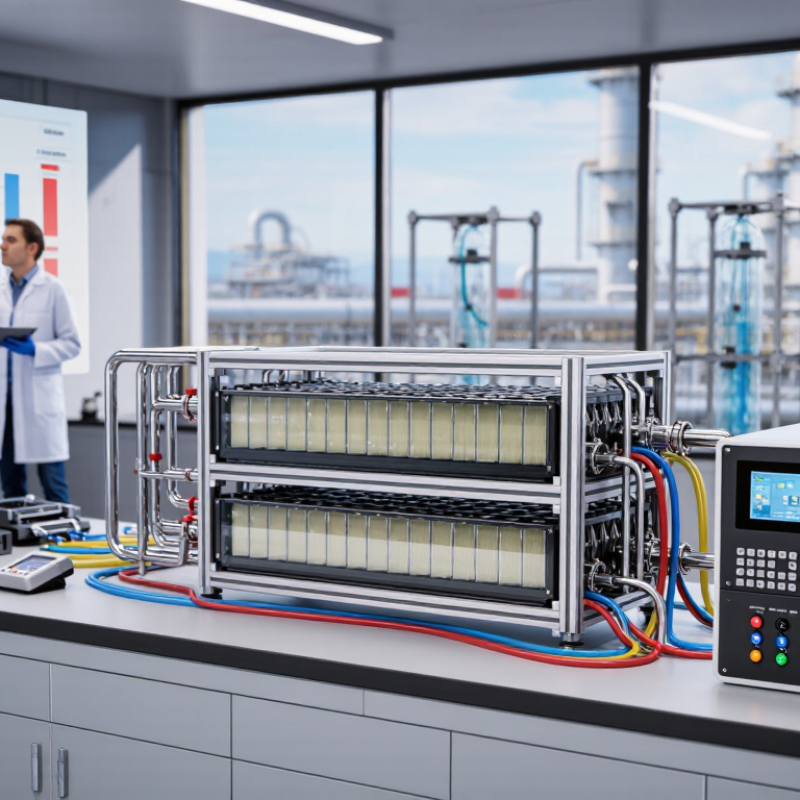
Ion exchange membrane equipment separates ions through charged polymer membranes. Common systems include electrodialysis, electrodialysis reversal, electrodeionization, and membrane stacks. Electrodialysis moves dissolved ions under direct current. Electrodeionization combines membranes, resin, and electricity for high-purity water. The equipment includes stacks, pumps, rectifiers, sensors, pretreatment units, and control software.
Market estimates differ. A 2024 MarketsandMarkets report valued the global ion exchange membrane market at approximately USD 1.1 billion in 2024. It also projected steady growth through the decade, supported by water reuse, chemical processing, and energy applications. Grand View Research reported similar expansion, but its boundaries included membrane materials, not only complete equipment. That distinction matters. Buyers can easily compare unlike numbers.
A reliable top-ten supplier assessment should examine current density, membrane life, energy consumption, recovery rate, and service records. Pilot data is more useful than brochure claims. Ask for results using water with similar hardness, silica, and organic loading.
A system running at 95% recovery may still disappoint if pretreatment costs are high. I have seen specifications hide cleaning frequency. That is a warning sign.
Independent testing, documented maintenance intervals, and compliance with recognized water-treatment standards strengthen supplier credibility. Pricing also needs context, because stack replacement and electricity may exceed the initial purchase cost.
Top 10 Ion Exchange Membrane Equipment Suppliers?
At 100–500 mA/cm², an ion exchange membrane system must manage transport, heat, pressure, and water balance. This current-density range is demanding. Equipment suppliers should provide stack designs tested under comparable operating conditions, not only attractive laboratory figures. Ask for polarization curves, voltage stability, temperature records, and long-duration performance data. A useful technical file should also state membrane area, electrolyte concentration, flow rate, electrode configuration, and measurement method.
Ion selectivity depends on membrane chemistry, thickness, hydration, and competing ions. It is not a fixed number. Suppliers should report selectivity with defined test solutions and realistic current densities. Small leaks matter. Even minor crossover can reduce product purity, increase energy consumption, and create unstable outlet concentrations. Inspectors should examine gasket compression, channel uniformity, electrode spacing, and automated safety controls. These details often separate a reliable pilot unit from a difficult-to-maintain prototype.
A practical top-ten assessment should compare engineering depth, customization, service response, replacement parts, and validation quality. Request a witnessed factory test when possible. Review how the system responds to fouling, blocked channels, temperature drift, and sudden conductivity changes. Data can disappoint. Some published results use clean solutions, short runs, or ideal membrane conditioning. A cautious buyer should repeat key tests with actual feed chemistry before approving scale-up. No membrane is perfectly selective, and no supplier can remove every operating compromise.
Current-density and ion-transport benchmark for the 100–500 mA/cm² operating range
The chart uses Faraday’s law to convert current density into ideal molar flux. For the same charge-transfer rate, a monovalent ion such as Na⁺ has twice the theoretical molar flux of a divalent ion such as Ca²⁺. Actual ion selectivity depends on membrane chemistry, hydration, water uptake, co-ion leakage, concentration, temperature, and hydrodynamic conditions; it must be verified through laboratory or pilot testing.
When comparing the top ten ion exchange membrane equipment suppliers, request energy data in kWh/m³, not general efficiency claims. A practical target is 0.5–2.0 kWh/m³ under defined feedwater conditions. Ask suppliers to state salinity, temperature, recovery, flow rate, and pretreatment requirements. Without these details, energy figures can look impressive but remain difficult to verify.
Membrane life deserves equal attention. Review expected operating hours, cleaning frequency, chemical exposure, and replacement costs. A strong supplier should provide pilot-test results, maintenance records, and a clear membrane warranty. Inspect how easily operators can remove a stack, replace spacers, and detect pressure loss. Small design details matter during a night shift. They reduce downtime.
Do not judge equipment by purchase price alone. Calculate electricity, cleaning chemicals, labor, membrane replacement, and wastewater handling over five years. I would also request a performance test using representative water, because laboratory results may not match a dusty industrial site. Some suppliers may promise ten-year membrane life, but actual service depends on fouling control and operating discipline. That claim needs careful questioning. A transparent supplier admits uncertainty and explains which measurements could change the estimate.
A credible top-ten ranking should separate membrane technologies before comparing supplier scale. Key categories include electrodialysis, reverse electrodialysis, membrane chlor-alkali systems, and proton exchange membrane electrolysers. Each serves different operating conditions. Electrodialysis suits salt separation and industrial water reuse. Proton exchange membrane equipment supports fast-response hydrogen production. The International Energy Agency’s Global Hydrogen Review 2024 reported that global installed water-electrolysis capacity exceeded 1 GW in 2023. This figure signals stronger demand for membrane-based systems, but it does not measure equipment quality alone.
Capacity should include manufacturing output, installed reference projects, stack size, and service coverage. The U.S. Department of Energy’s Pathways to Commercial Liftoff: Clean Hydrogen report highlights cost, electricity use, durability, and supply-chain scale as major commercialization factors. Those metrics help identify the leading ten suppliers without relying on marketing claims. Large manufacturers may offer higher annual output, while specialist firms can provide better membrane customization or pilot-scale support.
Capacity figures are not perfectly comparable. Some suppliers report factory potential, not delivered systems. That weakness matters. Buyers should verify membrane area, current density, operating pressure, replacement intervals, and independent performance data. A practical ranking therefore combines technology maturity with proven throughput, documented efficiency, local maintenance, and transparent testing. Supplier reputation helps, but field evidence should carry more weight.
Comparing the top ten ion exchange membrane equipment suppliers requires more than checking price. Start with stack scale, from laboratory cells to continuous industrial trains. A supplier should explain current density, membrane area, flow limits, and expansion options clearly. Ask for test data using your water chemistry, not generic performance charts. Small details matter. Skid layout, electrode access, gasket replacement, and cleaning procedures affect daily uptime.
Automation separates a workable system from a difficult one. Review sensor quality, alarm logic, recipe control, remote diagnostics, and data logging. Confirm whether the controls integrate with your existing PLC and cybersecurity policies. Service coverage also deserves careful attention. Compare commissioning support, spare-part locations, response times, training, and technician availability across regions. Certifications should match the installation site and process risk. Check pressure, electrical, material, and quality documentation before signing. A certificate list alone proves little.
Tips: Request a witnessed factory acceptance test and a written service-level agreement. Use identical questions for every shortlisted supplier. A perfect comparison is unrealistic; operating conditions change, and published guarantees may depend on careful pretreatment. I would score technical fit separately from sales responsiveness. A fast reply cannot compensate for weak maintenance access. Leave room for operator feedback after pilot testing. Sometimes the least impressive proposal has the clearest limitations, which can be more reliable than ambitious promises.
Comparative overview of typical ion exchange membrane system capabilities. Values are indicative procurement ranges and should be verified against the supplier’s current technical offer, project scope, and regional compliance requirements.
| Supplier ID | Primary Equipment Focus | Typical Stack Scale | Process Capacity Range | Automation and Controls | System Integration | Service Coverage | Common Certification Availability | Scale-Up Readiness |
|---|---|---|---|---|---|---|---|---|
| Supplier 01 | Electrodialysis and electrodialysis reversal skids | Laboratory to commercial; approximately 0.1–1,000 m³/day per train | 0.1–1,000 m³/day, depending on feed salinity and recovery target | PLC/HMI controls, conductivity monitoring, alarm management, recipe-based operation | Feed pumps, pretreatment, concentrate handling, CIP and remote data logging | Regional field support with project-based commissioning and spare-parts supply | ISO 9001CE where applicable | ★★★★☆ |
| Supplier 02 | Industrial electrodialysis desalination systems | Modular stacks; typically 10–500 m² membrane area per train | 10–5,000 m³/day for industrial water and salt recovery projects | Automated flow, pressure and conductivity control; SCADA integration available | High compatibility with UF, RO, ion exchange and crystallization units | Multi-region distributor network; remote troubleshooting and scheduled service | ISO 9001ISO 14001 project-dependent | ★★★★☆ |
| Supplier 03 | Electro-deionization and polishing systems | Standardized modules from pilot units to multi-module industrial arrays | 0.5–300 m³/hour, subject to conductivity and silica loading | Advanced PLC, conductivity/resistivity monitoring, interlocks and performance trending | Designed for integration with RO pretreatment and high-purity water loops | Strong service model for utilities, electronics and pharmaceutical applications | ISO 9001CE where applicableGMP-supporting documentation | ★★★★★ |
| Supplier 04 | Electrodialysis bipolar membrane systems | Pilot to full-scale; commonly configured in 10–300 m² stack sections | 1–1,000 m³/day for acid, base and specialty chemical production | PLC-controlled current density, voltage, flow, pressure and product conductivity | Custom integration with tanks, dosing, filtration, gas handling and product storage | Application engineering-led support with site commissioning by project | ISO 9001CE where applicableATEX review if required | ★★★★☆ |
| Supplier 05 | Electrolytic and membrane-cell process equipment | Bench, pilot and large industrial cells; parallel-cell configurations available | Project-specific; commonly from 1 to more than 10,000 m³/day equivalent throughput | Automated rectifier control, current monitoring, safety interlocks and batch data capture | Strong integration with electrical systems, cooling, ventilation and chemical handling | International project support through local engineering and service partners | ISO 9001ISO 14001CE where applicable | ★★★★★ |
| Supplier 06 | Compact ion exchange membrane laboratory and pilot units | Single-stack and multi-stack pilot systems; approximately 0.01–50 m³/day | 0.01–50 m³/day, mainly for validation and process development | Basic-to-intermediate automation, manual bypasses, digital sensors and data export | Flexible connection to laboratory tanks, dosing pumps and analytical instruments | Direct technical support; limited local service outside primary markets | ISO 9001 project-dependentCE where applicable | ★★★☆☆ |
| Supplier 07 | Containerized membrane separation and water-reuse plants | Skid or containerized arrays; approximately 20–1,500 m² membrane area | 50–10,000 m³/day for wastewater reuse and resource recovery | Full PLC/SCADA package, remote monitoring, automated CIP and energy tracking | Turnkey pretreatment, pumping, chemical dosing, disinfection and discharge systems | Broad international commissioning and operations-support capability | ISO 9001ISO 14001CE where applicable | ★★★★★ |
| Supplier 08 | Selective ion separation and brine concentration equipment | Modular stacks from pilot scale to multiple commercial trains | 10–2,000 m³/day, depending on ion selectivity and concentration factor | Automated current, flow, pressure, temperature and conductivity control | Integration with evaporation, crystallization, RO and zero-liquid-discharge systems | Application support in major industrial markets; service contracts available | ISO 9001ISO 14001 project-dependentCE where applicable | ★★★★☆ |
| Supplier 09 | Industrial wastewater electrodialysis-reversal packages | Packaged skids from pilot units to approximately 500 m² per train | 25–3,000 m³/day for high-salinity industrial streams | Automated polarity reversal, fouling alarms, pressure protection and CIP sequencing | Designed for upstream biological treatment, clarification, filtration and downstream discharge | Regional service teams with operator training and annual maintenance options | ISO 9001CE where applicableLocal electrical code compliance | ★★★★☆ |
| Supplier 10 | Custom membrane stacks and OEM equipment modules | Custom stack geometry; laboratory, pilot and OEM production volumes | 0.01–2,000 m³/day, determined by membrane area and process duty | Controls range from manual systems to fully automated PLC/SCADA packages | High customization for OEM frames, rectifiers, pumps, sensors and enclosures | Factory support with partner-led installation and local service availability | ISO 9001CE where applicableCustomer-specific documentation | ★★★★☆ |
"*" indicates required fields