
Learn more about how Trevisan’s Horizontal Machining Centers can help you minimize set up time and labor costs.

Top 10 Water Drilling Rig Manufacturers for Global Buyers

Choosing a Water Drilling Rig manufacturer takes more than comparing brand names or headline prices. Global buyers need equipment suited to the geology, water-table depth, site access, and expected drilling schedule. Ground conditions matter. A rig that performs well in soft soil may need different tooling and power in fractured rock. Buyers should also compare drilling methods, mast capacity, pump options, transport dimensions, and routine maintenance needs.

This guide introduces ten manufacturers for buyers assessing equipment across different project types and markets. It is a starting point, not a universal ranking: the best choice depends on local conditions and available service. Check technical specifications against the work you expect to do, and ask suppliers for clear details on spare parts, training, warranty coverage, and service response. A nearby support team can matter when a component fails far from a major city. Look for documented project experience and references that match your intended use. Details matter. Brochures can make every rig sound suitable, yet field performance depends on setup, operators, and maintenance. Some comparisons may remain imperfect because manufacturers publish different levels of technical detail. Treat that gap as a reason to ask better questions, not as proof of quality. With careful checks, buyers can narrow the shortlist and make a more informed decision.
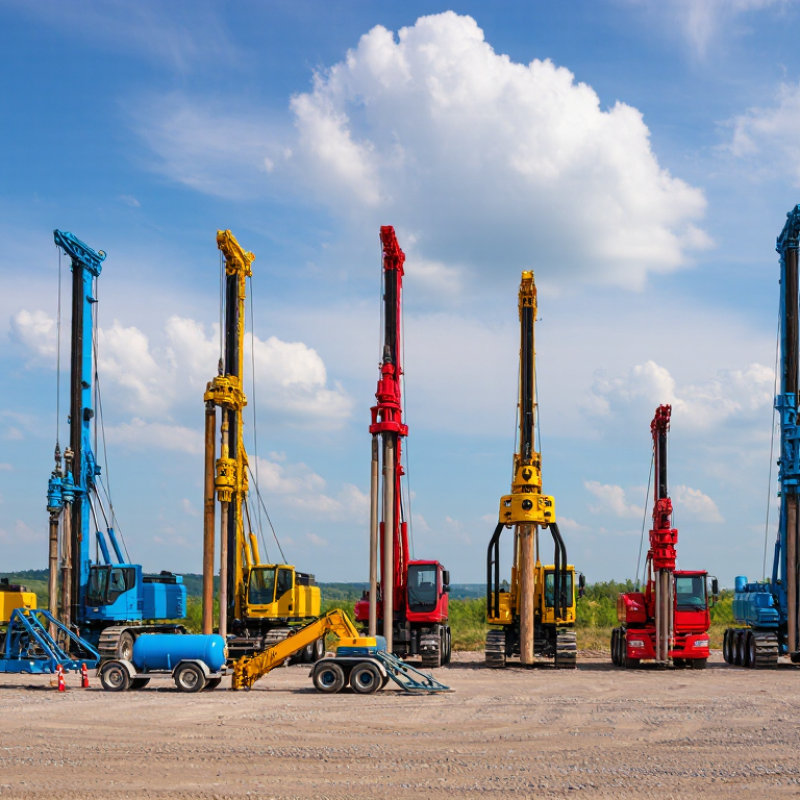
Top 10 Water Drilling Rig Manufacturers for Global Buyers

What Water Drilling Rigs Are and How They Work

A water drilling rig creates a narrow borehole to reach water-bearing layers underground. Its main parts include a mast, drill string, power unit, and bit. The method depends on the ground: rotary rigs turn a bit through soil and rock, while down-the-hole hammer systems use rapid impacts in harder formations.

UNESCO’s 2022 World Water Development Report estimates that groundwater makes up about 99% of Earth’s liquid freshwater. A vital resource, but not an unlimited one.

As the bit advances, drilling fluid or compressed air carries cuttings back to the surface. The crew checks those cuttings for changes in rock and soil, then logs the depth and water-bearing zones. After drilling, casing supports the borehole walls; a screened section admits water while limiting sediment. The well is then developed to clear fine material and tested for yield.

Small details matter. A borehole can look sound and still produce sandy water.

A pump moves water to the surface, but drilling alone does not make it safe to drink.

The WHO/UNICEF Joint Monitoring Programme reported that 2.2 billion people lacked safely managed drinking water in 2022. Proper sealing, water-quality testing, and ongoing maintenance help reduce contamination risks.

A clear sample is not proof of safety. Ground conditions vary, and even an experienced crew may need to revise its plan when the geology changes.

How to Evaluate Water Drilling Rig Manufacturers

A buyer evaluating water drilling rig manufacturers should start with the well, not the brochure. The UNESCO World Water Development Report 2022 says groundwater supplies about half of domestic water withdrawals worldwide and roughly one-quarter of irrigation water. That makes dependable access and maintainability practical priorities. Ask whether the rig’s rated depth, torque, feed force, and drilling method match your local geology and planned well diameter. Request test records from comparable ground conditions, not just maximum-depth figures. Those figures can mislead.

Check the compressor or mud-pump specifications, mast stability, control layout, and availability of wear parts. Ask for documented service intervals and a realistic parts-delivery estimate to your operating region. The UNESCO World Water Development Report 2024 reports that agriculture accounts for about 70% of global freshwater withdrawals; water demand makes efficient, reliable well construction especially important. Compare fuel use and drilling output under similar conditions, rather than relying on unverified claims. Also inspect a rig in operation if possible. Look for clear welds, protected hydraulic lines, and controls an operator can reach safely. Manufacturer references should include site conditions, operating hours, and maintenance history. One weakness remains: reported performance can be hard to compare when test methods differ. Request the method in writing.

Top 10 Water Drilling Rig Manufacturers for Global Buyers — How to Evaluate Water Drilling Rig Manufacturers

Start by matching a rig’s capabilities to the water-use needs of its intended market. Global freshwater withdrawals are dominated by agriculture, making reliable access to water a key consideration for many drilling projects.

Global freshwater withdrawals by sector (approximate share)

When comparing manufacturers, use the intended application as a starting point, then verify drilling depth and method, ground-condition suitability, service and spare-parts availability, safety features, and documented performance. Source: UN-Water, Summary Progress Update 2021: SDG 6 — Water and Sanitation for All.

Top 10 Water Drilling Rig Manufacturers for Global Buyers

Top 10 Water Drilling Rig Manufacturers for Global Buyers

Choosing among the top water drilling rig manufacturers requires more than comparing catalog prices. Buyers should match rig capacity to local geology, target depth, borehole diameter, and available transport. A compact rig may suit a remote site with narrow access, while harder formations can demand stronger torque and a compatible drilling method. Ask manufacturers for technical data, operating limits, and service details in writing. Clear answers matter.

Global buyers should also assess parts availability, operator training, warranty terms, and response times across their region. Request references from projects with similar ground conditions, not just polished product images. Check whether the quoted package includes pumps, rods, tools, and commissioning support; missing items can change the real cost. Specifications can look impressive. Field conditions are less tidy, and even a well-matched rig may need adjustments after drilling begins.

Tips: Compare total operating costs, not only purchase price. Confirm shipping dimensions and local service coverage before ordering. Keep one point of comparison consistent: the same depth, formation, and included equipment. A supplier’s confidence is useful, but documented evidence is better.

How to Match a Rig to Project and Site Requirements

Matching a water drilling rig starts with the ground, not a catalogue. Review geological records, nearby well logs, and expected drilling depth before comparing models. Loose sand, fractured rock, and clay place different demands on the mast, rotary system, and drilling method. A rig suited to hard formations may be costly and awkward on a shallow rural project.

Measure the site itself. Check access-road width, overhead cables, turning space, ground bearing strength, and room for support vehicles. A large rig can meet the depth target yet fail at the gate. It happens. Compare required torque, pullback capacity, and feed force with the planned casing and bore diameter, then confirm those figures against technical documents. Also consider water supply, power availability, local service support, spare-part lead times, and operator training. Experienced crews often note that maintenance access matters on muddy sites, where a small repair can become a long delay.

There is no perfect checklist; early estimates can be wrong. Build some flexibility into the selection, and ask suppliers to explain performance limits under your actual site conditions.

What to Consider When Buying and Operating a Drilling Rig

Choosing a water drilling rig starts with the ground, not the catalogue. Check local geological records, expected well depth, and the likely water table before comparing models. Hard rock may call for different drilling methods and torque than soft, sandy layers. Match the rig’s capacity to the project, but consider transport too: a powerful machine is less useful if it cannot reach a narrow, muddy site. Ask suppliers for clear specifications, service intervals, and realistic information about parts availability.

Tips: Confirm the rig’s working depth and drilling method. Inspect the mast, hoses, and connections before use. Keep maintenance records. A small leak can become a costly delay.

Daily operation also depends on trained people and practical planning. Operators should understand the controls, emergency stops, and site-specific safety procedures. Check that the compressor, pump, and support vehicle suit the planned work, rather than assuming they will. Before purchase, request a demonstration using comparable ground conditions and ask how routine repairs are handled. A spreadsheet cannot capture every muddy access road, and estimates may miss unexpected wear. That uncertainty deserves room in the budget. After drilling begins, monitor performance and adjust the plan when ground conditions differ from the survey.

Scroll to Top
Scroll to Top