
China’s metal stamping sector serves automotive, electronics, appliance, and industrial buyers with parts ranging from tiny terminals to deep-drawn housings. The scale is significant. Grand View Research estimated the global metal stamping market at approximately US$217.5 billion in 2023 and projected continued growth through 2030. That figure describes the global market, not China alone, so it should not be read as a measure of any supplier’s capacity.
Taiichi Ohno, a pioneer of the Toyota Production System, wrote, “Having no problems is the biggest problem of all.” It is a useful reminder when assessing a stamping manufacturer: ask how it detects defects, controls tool wear, and responds when a production run drifts. A polished factory tour is not enough. Look for clear evidence, such as inspection records, sample parts, press capabilities, and practical answers about lead times.
This guide introduces leading metal stamping manufacturers in China and the factors that help distinguish them. Compare capabilities against your actual requirements: material grade, thickness, tolerances, annual volume, tooling ownership, and secondary operations. Then verify claims through technical discussions and documented samples. Details matter.
Some suppliers may look impressive on paper, yet fit poorly once drawings, volumes, or quality expectations become specific. There is no universal best choice. The right partner is the one whose process, communication, and documented performance match the part you need.
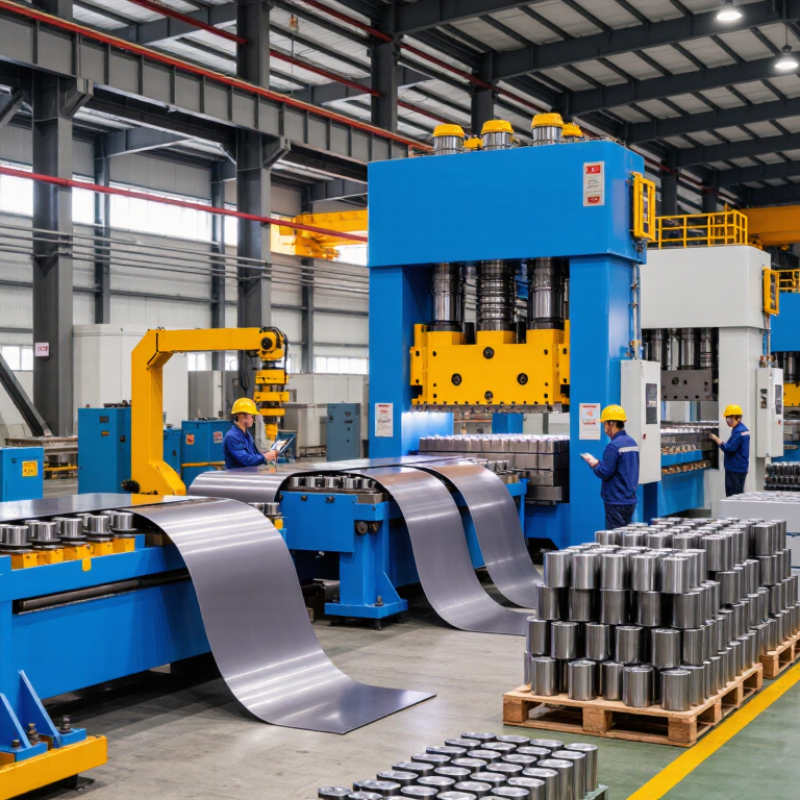
Metal stamping shapes flat metal sheet with a press and a matched set of tools called a die. The press applies controlled force, while the die guides the material into a specific form. Common operations include blanking, which cuts a part from the sheet; piercing, which makes holes; and bending or drawing, which creates angles or depth.
A typical run begins with sheet or coil material selected for the part’s strength and thickness. The metal is positioned in the die, then the press cycles to cut or form it. Some components need several stations, with each one adding a feature. Small changes matter. A slight misalignment can leave uneven edges or misplaced holes. After forming, operators may check dimensions, surface marks, and burrs, then adjust the tooling if results drift.
The method can produce consistent parts at high volume, but it is not ideal for every shape or order size. Dies take time and money to make, so a design change can be costly. That sounds simple, but details decide success: material springback, press force, and lubrication all affect the finished piece. A useful drawing and an early sample review can reveal problems before production scales. Even a clean-looking part deserves measurement.
China’s metal-stamping industry is supported by a large manufacturing base and dense networks of component suppliers. The National Bureau of Statistics reported that manufacturing value added accounted for 26.2% of China’s GDP in 2023. This scale supports demand for stamped parts used in vehicles, electrical equipment, appliances, and industrial machinery. Still, national figures do not show where stamping capacity is concentrated.
Major manufacturing hubs include the Yangtze River Delta, the Pearl River Delta, and the Bohai Rim. Shanghai, Jiangsu, and Zhejiang offer close links to automotive and machinery customers, while Guangdong’s electronics and appliance supply chains generate demand for precise, high-volume parts. Tianjin and nearby northern industrial centers serve vehicle and equipment makers. These are broad production ecosystems, not sharply bounded stamping districts. Not a perfect map.
Automotive demand helps explain the industry’s regional pattern. The China Association of Automobile Manufacturers reported 30.16 million vehicle units produced in 2023, including 9.59 million new-energy vehicles. That output creates demand for brackets, housings, reinforcement panels, and other formed components. For buyers, proximity can shorten logistics routes, but it does not guarantee consistent quality. Compare tooling capability, material traceability, and inspection records. Public reports rarely separate metal stamping from wider manufacturing categories, so capacity estimates deserve caution.
A regional overview of China’s metal stamping supply base. The hubs below are not ranked; capabilities vary by factory, tooling, material, and order requirements.
| Manufacturing hub | Common stamping capabilities | Typical application areas | Supply-chain characteristics | Buyer considerations |
|---|---|---|---|---|
| Pearl River Delta Guangdong, including Dongguan, Shenzhen, and Foshan | Progressive-die stamping, precision presswork, sheet-metal fabrication, and secondary assembly are available across the regional supplier base. | Consumer electronics, electrical equipment, automotive components, appliances, and general industrial products. | A broad manufacturing ecosystem supports access to tooling, machining, surface finishing, and electronics-related suppliers. | Confirm whether tooling, finishing, and assembly are performed in-house or coordinated through local partners. |
| Yangtze River Delta Shanghai, Jiangsu, and nearby Zhejiang cities | A varied supplier base offers progressive stamping, transfer stamping, precision components, and related tooling and fabrication services. | Automotive and mobility components, electrical products, machinery, appliances, and industrial hardware. | Dense transport and industrial networks connect manufacturers with metal processors, logistics providers, and downstream customers. | For automotive or safety-related parts, assess process controls, traceability, inspection plans, and applicable certifications. |
| Ningbo and eastern Zhejiang Zhejiang Province | Metal stamping is commonly integrated with die making, machining, die casting, plastic molding, or product assembly, depending on the supplier. | Automotive parts, electrical hardware, appliances, locks and fittings, and general-purpose metal components. | The region has a diverse export-oriented manufacturing base and access to port and logistics services. | Specify material grade, coating or plating requirements, corrosion testing, packaging, and export documentation. |
| Taizhou and central Zhejiang Zhejiang Province | Regional suppliers serve varied requirements, including conventional presswork, formed parts, and components combined with other manufacturing processes. | Appliances, electrical products, plumbing and hardware products, and general industrial components. | Manufacturing capabilities are spread across multiple local industrial clusters; available services differ from one supplier to another. | Review sample parts and production records, and verify the supplier’s actual press capacity and tooling resources. |
| Shandong industrial belt Including Qingdao and other manufacturing cities | Metalworking suppliers may provide stamping alongside fabrication, machining, welding, and assembly for industrial products. | Machinery, transportation equipment, appliances, electrical products, and industrial enclosures or components. | The broader industrial base supports a range of metal-processing and equipment-manufacturing activities. | Check the distance between stamping, finishing, and assembly sites when evaluating lead time and shipment coordination. |
Evaluation note: Regional presence alone does not establish a manufacturer’s suitability. Compare part drawings, material specifications, annual volume, tooling ownership, quality controls, sample results, and total landed cost before selecting a supplier.
Evaluating metal stamping manufacturers in China takes more than comparing unit prices. Start with your part drawing, annual volume, material grade, and critical tolerances. Ask how the supplier manages tooling design, press selection, and process changes. A capable team should explain its choices in clear, specific terms. For example, it should show how a stamped bracket is checked for hole position and burr height.
Review sample parts and inspection records before approving production. Check whether measurement tools suit your tolerances, and ask how material batches are identified. Discuss die maintenance, scrap handling, lead times, and the plan for correcting defects. A factory visit can reveal practical details, such as organized tooling storage or inconsistent inspection habits. Still, a polished presentation is not proof of stable production. I would verify claims against actual records; it takes time, and sometimes the evidence is incomplete.
Tips: Request a production sample, a control plan, and recent dimensional results. Confirm who owns the tooling and how revisions are approved. Compare quotations line by line, including setup, packaging, and inspection costs. If an answer sounds vague, ask for a concrete example. Even a strong supplier may need time to understand a new design.
China’s metal-stamping manufacturers serve automotive, appliance, electronics, and industrial-equipment supply chains. The scale is substantial. The World Steel Association reported China produced 1,019.1 million tonnes of crude steel in 2023. The China Association of Automobile Manufacturers recorded 30.16 million vehicles produced that year. These figures show a large materials and manufacturing base, but they do not rank stamping suppliers or guarantee quality.
Leading supplier profiles vary by production focus. One common profile is the high-volume automotive press shop, equipped for progressive dies, repeat orders, and close dimensional checks. Another is the precision-parts specialist, handling smaller components, thinner sheet, and tighter tolerances. A third focuses on custom assemblies, combining stamping with welding or finishing to reduce handoffs. Look for documented inspection routines, traceable material certificates, and clear tooling-maintenance records. Ask how the supplier controls burrs, springback, and die wear on your actual part. A polished sample is not enough.
Capacity claims need context. A large press tonnage says little about changeover time or process stability. That matters. Published industry figures describe the market, not an individual factory’s performance. Factory audits and trial runs remain useful, though they take time and may expose gaps in the buyer’s own drawings.
Comparing Chinese metal stamping manufacturers starts with the part, not the machine list. A 1,000-ton press helps only when die design, coil feeding, and material thickness are properly matched. Ask whether progressive, transfer, and deep-draw tooling are available, and whether forming, trimming, and finishing happen under controlled processes. Try a sample run. Inspect burrs, springback, edge cracks, and measurements across several batches, not only the first piece.
Quality certificates are useful, but they do not prove every production line performs consistently. Check calibration records, material traceability, inspection plans, and corrective-action records. For automotive work, IATF 16949 can indicate a sector-specific quality system; it cannot replace a process audit. The IEA reported nearly 14 million electric-car sales worldwide in 2023, about 18% of total car sales. This shift increases demand for repeatable stamped battery enclosures, brackets, and lightweight structural parts.
Applications differ widely. The China Association of Automobile Manufacturers reported vehicle production of 30.16 million units in 2023, supporting substantial demand for automotive components. Appliance panels may prioritize surface appearance, while electrical enclosures need consistent fit and corrosion protection. Compare tool-maintenance capacity, changeover time, and defect data alongside quoted prices. One caution: a polished factory tour can hide weak batch control. Request production records from a comparable part, then verify them against delivered samples.
"*" indicates required fields