
Learn more about how Trevisan’s Horizontal Machining Centers can help you minimize set up time and labor costs.

Top 10 Salinity Meters for Accurate Water Testing

Salinity affects decisions in aquariums, aquaculture, laboratories, and field water surveys. A small reading error can change a mixing plan or trigger an unnecessary adjustment. A Salinity Meter helps quantify dissolved salts, but reliable results depend on more than the display. Calibration, temperature compensation, probe condition, and sample handling all matter.

Oceanographer Rainer Feistel’s research on seawater properties underscores a practical point: a salinity value needs its measurement method and conditions to be meaningful. This is a summary of that principle, not a verbatim quotation. Small errors matter. A probe rinsed with tap water, a dried sensor, or an uncalibrated meter can produce a convincing number that still misleads. That deserves attention.

This Top 10 guide compares meters by accuracy, measurement range, usability, durability, and suitability for different water-testing tasks. It considers handheld, portable, and bench instruments, while noting where each type may fall short. A low-cost model may suit routine checks, yet prove frustrating in a busy lab. Conversely, advanced features add little value if operators cannot maintain the instrument. Readers should match specifications to their samples and workflow, then verify performance with appropriate standards. The best choice is not always the most expensive. It is the one that delivers dependable readings under real working conditions.
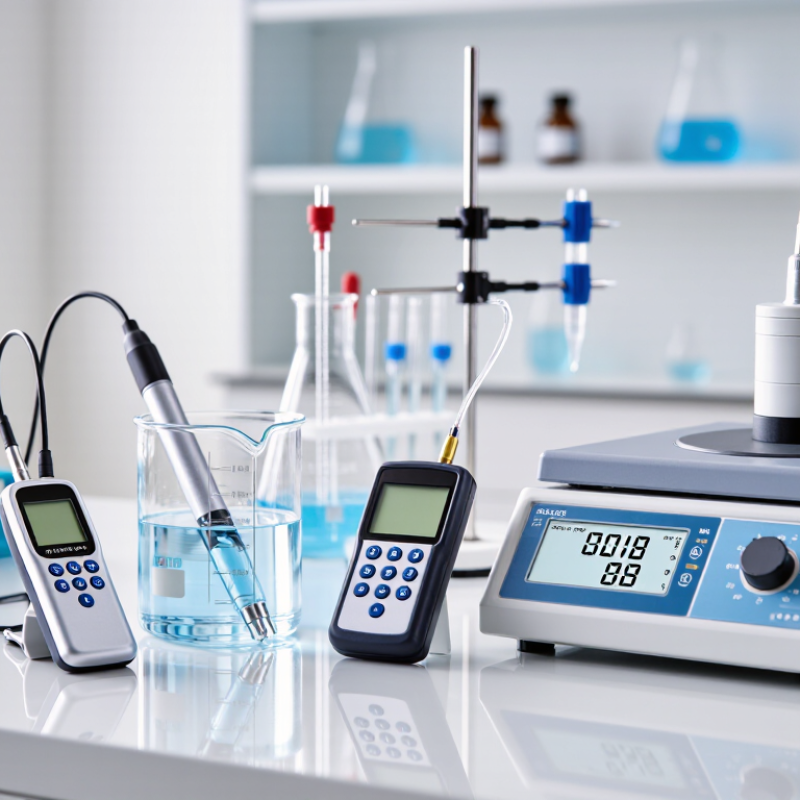
Top 10 Salinity Meters for Accurate Water Testing

Salinity Units Explained: 35 g/kg Standard Seawater and Practical Salinity

A salinity reading of 35 g/kg means about 35 grams of dissolved salts in one kilogram of seawater. It is a mass-based expression, useful when comparing water samples or preparing reference solutions. Standard seawater near this value is a familiar calibration point, not a promise that every ocean sample has identical chemistry. Coastal runoff, evaporation, and rainfall can shift local readings.

Practical Salinity is different. It is calculated from seawater’s electrical conductivity, temperature, and pressure using a defined scale. A practical salinity value of 35 has no physical unit, though meters and everyday reports sometimes label it “PSU.” That shorthand is common, but it can blur the distinction between a conductivity-based value and 35 g/kg. Check the instrument’s display and documentation.

Small details matter. Rinse the probe with clean water between samples, remove visible bubbles, and allow the reading to stabilize. Temperature compensation helps, but it cannot fix a dirty or poorly calibrated sensor. A meter may show 35.0 while the sample is slightly different; that decimal is not automatic proof of accuracy. I still find unit labels easy to overlook, especially when comparing field notes with laboratory results. Keep the method and unit beside each reading.

How Meters Work: PSS-78 Calculates Salinity from Conductivity Ratios

Salinity meters do not usually detect dissolved salt directly. They measure how easily water carries an electrical current, then estimate salinity from that response. PSS-78, the Practical Salinity Scale of 1978, uses a conductivity ratio: the sample’s conductivity compared with standard seawater under defined reference conditions. The calculation also accounts for temperature, because conductivity changes as water warms or cools. Some meters apply pressure compensation as well. The result is practical salinity, a dimensionless value, not a direct measurement in grams per liter.

That is the key. A reading depends on a clean sensor and a suitable calibration, not just the display. A thin film of salt or air bubbles between the electrodes can shift conductivity. Rinse the probe with clean water, remove trapped bubbles, and let the reading stabilize. For field work, record water temperature and check the meter against a suitable reference solution. A precise-looking number can still be wrong if the probe is dirty. I have seen readings settle slowly in cold water; waiting a little longer is worthwhile.

Tips: Keep the sensing surface clean, avoid touching it with your fingers, and use the same sampling routine each time. If repeated readings disagree, pause and inspect the probe before trusting the average.

Accuracy Benchmark: 35 Salinity Seawater Measures 42.914 mS/cm at 15°C

35 practical salinity units
42.914 mS/cm at 15°C

A useful accuracy check for a salinity meter is a seawater reference near 35 practical salinity units. At 15°C, its conductivity is approximately 42.914 mS/cm. Treat this as a benchmark, not a universal reading for every instrument. Results can shift with calibration, temperature compensation, probe condition, and the reference solution itself. Small differences matter. A meter that reads far from the benchmark may need recalibration or a careful probe inspection.

For a meaningful test, let the sample and probe reach a stable temperature. Rinse the sensor with clean water, then gently shake off excess droplets before measuring. Avoid trapped bubbles around the electrodes; they can distort conductivity readings. Check that the instrument’s temperature setting matches the test conditions, especially when comparing measurements taken at different temperatures. Record both the displayed salinity and conductivity when possible. This makes later checks easier, though I would still question a result that looks unusually neat.

Tips: Use a fresh, certified conductivity standard near the expected range, and follow its temperature instructions. Do not rely on a single test. Take two or three readings, allowing the display to settle each time. If readings drift, clean the probe and repeat the check. Calibration helps, but it cannot fix a damaged sensor or a poorly handled sample.

Top 10 Salinity Meters Compared by Range, Accuracy, and Calibration

A useful comparison of ten salinity meters starts with range, accuracy, and calibration—not the display or price. The USGS describes average ocean salinity as about 35 parts per thousand, a practical benchmark for seawater testing. Freshwater, brackish water, and concentrated process samples need different measurement ranges. A meter that tops out too low may return an error instead of a reading. Too much range can also make small changes harder to resolve. Check whether the instrument reports practical salinity, parts per thousand, or conductivity; these values are related, but not interchangeable without context.

Accuracy figures need careful reading. A stated percentage of full scale can mean larger errors near the bottom of a wide range. Resolution is not accuracy. It only describes the smallest displayed increment. Standard Methods for the Examination of Water and Wastewater, Method 2510 B, describes conductivity measurement using calibrated equipment and suitable reference solutions. In practice, select a calibration standard near the expected sample value, and record its temperature. Small details matter.

Calibration frequency depends on use, sample conditions, and instrument stability. Rinse the probe between samples; salt crystals left around the sensor can distort later readings. Automatic temperature compensation helps, but it cannot fix a poorly matched calibration or a dirty probe. Compare each meter’s stated accuracy, usable range, and calibration procedure side by side. Specs can look neat on paper. Field work is less tidy. A quick check against a reference solution may reveal drift that the screen does not.

Top 10 Salinity Meters for Accurate Water Testing

A representative comparison of generic meter types by salinity range and stated accuracy. These are illustrative capability profiles, not specifications for particular products.

How to read: Range bars show the maximum salinity in parts per thousand (ppt); accuracy is shown as percent of full scale, so a lower percentage indicates a tighter stated tolerance. Accuracy definitions differ between instruments, so check each product’s specification before comparing. Calibrate with a suitable certified standard near the expected sample salinity and follow the instrument’s procedure; temperature compensation and calibration requirements vary by meter type.

Calibration and Applications: Verify Readings Against Certified Standards

A salinity reading is only useful when you know the meter is responding correctly. Check it with a certified reference standard suited to the meter’s measurement method and expected range. For brackish pond water, a standard near the sample’s salinity can reveal errors that a much stronger solution may miss. Small details matter. Let the standard and sample reach a similar temperature, since temperature shifts can affect conductivity-based readings.

Rinse the probe with clean water, then gently blot it before placing it in the standard. Rinse between solutions. Wait for the display to stabilize, and compare the result with the certificate’s stated value and temperature conditions. Record the date, standard lot, temperature, and observed reading. Record the difference. In irrigation checks, an unexpected rise might prompt a closer look at the source water; in aquaculture, it could justify rechecking before changing water conditions. A tidy log cannot fix a rushed rinse or a contaminated cup. That can mislead. Repeat the check if the value seems off, and follow the meter’s instructions for adjustment. Certified standards improve confidence, but they do not remove every source of measurement error.

Top 10 Salinity Meters for Accurate Water Testing - Calibration and Applications: Verify Readings Against Certified Standards

Rank Meter Configuration Measurement Method Typical Salinity Range Typical Accuracy* Calibration and Verification Suitable Applications
1 Benchtop conductivity salinity meter Conductivity cell with temperature compensation; salinity calculated from conductivity and temperature 0–70 ppt (approximately) About ±0.5% of reading, depending on probe and method Verify with a certified conductivity standard appropriate to the range, such as 12.88 mS/cm; use a higher-range standard when needed. Laboratory water analysis, aquaculture, and seawater studies
2 Portable handheld conductivity salinity meter Conductivity probe with automatic temperature compensation 0–70 ppt (approximately) About ±1% of reading is common Check with a certified standard near the expected sample conductivity; record standard value and temperature. Field surveys, coastal monitoring, and routine process checks
3 Low-conductivity salinity meter with a low-cell-constant probe Conductivity measurement optimized for dilute samples Approximately 0–5 ppt Typically around ±1–2% of reading, subject to sample and probe conditions Verify with a certified low-conductivity standard, such as 84 µS/cm or 1,413 µS/cm, as appropriate. Freshwater, brackish water, and low-salinity discharge testing
4 High-range conductivity salinity meter Conductivity cell designed for concentrated solutions Approximately 0–150 ppt, instrument dependent About ±1% of reading is typical for suitable ranges Use a certified high-conductivity standard, such as 111.8 mS/cm, if it falls within the instrument’s range. Concentrated brines, salt production, and industrial process control
5 Inductive conductivity salinity meter Non-contact inductive measurement of solution conductivity Typically suited to moderate and high conductivity; range varies by sensor Often around ±1–2% of reading under specified conditions Verify using a certified conductivity solution and the sensor’s specified calibration procedure. Dirty or corrosive process water, tanks, and continuous monitoring
6 Four-electrode conductivity salinity meter Four-electrode cell helps reduce polarization effects across a broad conductivity range Range depends on cell design; commonly covers freshwater through seawater About ±0.5–1% of reading for suitable instruments Check with a certified conductivity standard close to the sample range; rinse the cell between solutions. Variable-salinity samples and routine laboratory measurements
7 Two-electrode conductivity salinity meter Conductivity measured between two electrodes with a defined cell constant Best within the probe’s specified conductivity range Typically around ±1% of reading in the calibrated range Calibrate or verify with a certified standard near the working range; inspect electrodes for deposits. Routine testing of relatively clean water samples
8 Oceanographic conductivity-temperature-depth salinity system Conductivity and temperature measurements used to calculate practical salinity Commonly covers seawater conditions; deployment range is sensor specific Accuracy is system dependent and requires documented calibration Compare against certified conductivity standards and appropriate seawater reference materials; follow the sensor’s calibration schedule. Oceanographic casts, water-column profiling, and marine research
9 Inline process conductivity salinity transmitter Installed conductivity sensor with continuous temperature measurement or compensation Configured to the process range Typically around ±1–2% of reading, depending on sensor and installation Verify with a certified standard during maintenance; also check installation effects and temperature compensation. Desalination, food processing, and industrial water treatment
10 Portable refractometer with salinity scale Measures refractive index and converts it to a displayed salinity estimate Often designed for seawater or brine ranges; scale varies by instrument Commonly about ±1–2 ppt or better, depending on scale and resolution Check zero with purified water and verify using a suitable certified reference solution; do not substitute conductivity standards. Quick checks in aquariums, aquaculture, and field sampling

*Specifications shown are typical examples for instrument classes, not guaranteed performance for a particular device. Confirm the meter’s stated range, accuracy, salinity scale, temperature-compensation method, and calibration instructions. Certified conductivity standards are commonly specified at 25 °C; use the value and temperature stated on the certificate. Conductivity standards verify conductivity response, while salinity conversion and seawater-scale checks may require suitable reference materials.

Scroll to Top
Scroll to Top