
Steam turbines remain essential wherever heat must become dependable electricity. Their blades face hot steam, high rotational speeds, and repeated thermal cycling. A small defect can affect efficiency, maintenance schedules, and plant availability. Choosing a supplier is therefore a technical decision, not just a purchasing exercise.
The International Energy Agency’s Electricity 2024 report projected global electricity demand growth of about 3.4% annually from 2024 through 2026. That outlook keeps reliable generation equipment in focus. IEA Executive Director Fatih Birol described the broader shift: “The world is entering the Age of Electricity.” His remark concerns the energy system, not blade design specifically. Still, it helps explain why turbine performance and dependable component supply matter.
This guide compares 10 worldwide suppliers of Steam Turbine Blade products and services. It considers manufacturing capability, material expertise, quality systems, repair support, and experience with different turbine designs. Public information is uneven, and rankings can never capture every plant’s operating conditions. That deserves a careful second look. A blade suited to one unit may not suit another. Buyers should verify specifications, inspection records, delivery terms, and references directly with each manufacturer. The list is a starting point, not a substitute for engineering review.
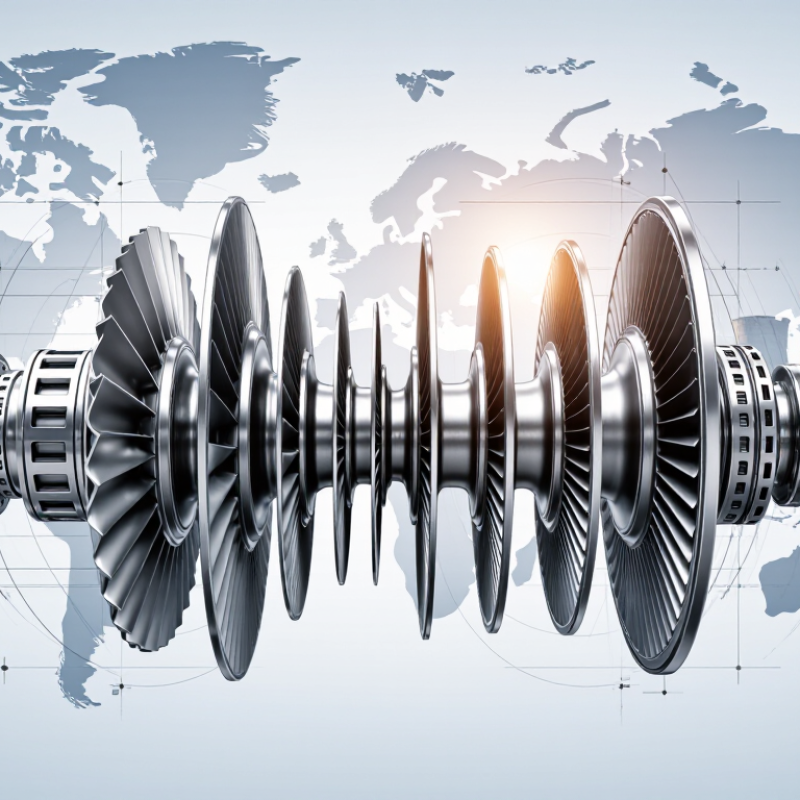
Steam turbine blades convert the energy of moving steam into rotation of the turbine shaft. Their curved profiles guide steam across the rotor, changing its direction and momentum. In impulse stages, stationary nozzles accelerate steam before it strikes the blades. In reaction stages, pressure also drops as steam passes through the moving blade rows. Many turbines combine both approaches across multiple stages.
Blade geometry must match steam conditions at each stage. Small changes in angle or surface finish can affect efficiency and vibration. At the root, a carefully shaped attachment transfers force to the rotor while resisting repeated loads. Materials are selected for temperature, stress, and resistance to moisture or particle erosion. The choices involve trade-offs. A lighter blade may reduce centrifugal loading, yet still needs enough strength for demanding operation.
During operation, steam expands through successive rows, and the blades experience changing pressure, temperature, and speed. Engineers assess these conditions through design calculations, manufacturing checks, and scheduled inspections. In a service inspection, technicians may look for deposits, cracks, or worn leading edges. Even careful checks have limits; some damage can be difficult to detect without suitable testing. Small defects matter. Regular monitoring helps identify changes before they affect stable operation.
Choosing a steam turbine blade supplier requires more than comparing quoted prices. Review its experience with the turbine model, operating conditions, and blade stage you need. Ask for material certificates, heat-treatment records, dimensional inspection results, and non-destructive testing reports. These documents help confirm that the blades match the specified alloy and tolerances.
A polished brochure is not proof.
Check how the supplier measures critical features, such as airfoil profile, root fit, and surface finish. Request sample inspection data or a controlled inspection plan before production. Ask how engineers handle deviations and whether they can explain their repair or manufacturing process in plain language. Clear answers matter.
Confirm that proposed lead times include tooling, inspection, and packaging, not just machining. Where practical, review references for comparable work and ask what operating data informed the design. Be cautious when claims lack measurable evidence; even a detailed checklist cannot reveal every production issue. A site visit or independent inspection may provide useful confirmation, though it adds time and cost. Compare technical support after delivery, too, since installation questions can expose gaps that paperwork misses.
Global Market Overview of Steam Turbine Blade Manufacturing
Steam turbine blade manufacturing serves power stations, industrial plants, and equipment repair markets worldwide. Suppliers range from large engineering groups to specialist component makers. Production hubs are found across Asia, Europe, and North America, although capabilities vary by facility. Some manufacturers focus on new turbines, while others specialize in replacement blades and refurbishment.
Blade production requires careful control of geometry, materials, and surface finish. A small dimensional error can affect vibration, efficiency, or service life. Manufacturers commonly use precision machining, inspection equipment, and material testing to verify quality. Yet public supplier rankings can be misleading: a company’s suitability depends on turbine design, operating conditions, and delivery needs. That picture is useful, but incomplete. Buyers should compare documented capabilities rather than rely on broad market labels.
Tips: Ask for material traceability, inspection records, and experience with the relevant blade design. Confirm tolerances, repair options, and realistic lead times before placing an order. A sample report can reveal more than a polished brochure. Also clarify how technical changes are reviewed; this step is easy to overlook.
A technology-led overview of ten blade and manufacturing capability areas. Supplier names are intentionally omitted; the entries are not a ranked list of companies.
| No. | Blade or capability area | Typical materials | Common manufacturing routes | Typical turbine section | Key engineering considerations |
|---|---|---|---|---|---|
| 1 | Long last-stage moving blades | Martensitic stainless steels, including chromium-bearing grades; titanium alloys are used in some designs. | Forging followed by precision machining and inspection; route depends on alloy and blade design. | Low-pressure exhaust end | High centrifugal loading, vibration and fatigue, wet-steam erosion, and blade length. |
| 2 | Shorter low-pressure moving blades | Typically chromium-containing martensitic stainless steels. | Forging, CNC machining, finishing, and dimensional inspection. | Low-pressure stages upstream of the last stage | Fatigue strength, corrosion resistance, steam-path efficiency, and reliable attachment to the rotor. |
| 3 | High-pressure moving blades | Heat-resistant alloy steels selected for the turbine’s steam temperature and stress conditions. | Forging and precision machining are common; heat treatment and inspection are specified by the design. | High-pressure section | Elevated temperature, creep and fatigue resistance, dimensional accuracy, and secure blade-root fit. |
| 4 | Intermediate-pressure moving blades | Chromium-bearing martensitic stainless steels or other alloy steels, depending on operating conditions. | Forging or other qualified forming routes, followed by machining and finishing. | Intermediate-pressure section | Combined thermal and mechanical loading, vibration control, and resistance to moisture as steam expands. |
| 5 | Stationary guide blades and diaphragm blades | Alloy steels or stainless steels selected for steam conditions and the stationary assembly design. | Machining and assembly into stationary blade carriers or diaphragms; some designs use fabricated assemblies. | Fixed rows throughout the turbine | Accurate flow passage geometry, secure assembly, thermal expansion, and resistance to steam erosion. |
| 6 | High-pressure nozzle and stationary blade rows | Heat-resistant alloy steels appropriate to the steam temperature and pressure. | Precision machining or other design-qualified forming and finishing processes. | Steam admission and high-pressure stages | Flow-angle accuracy, pressure and temperature exposure, surface finish, and dimensional stability. |
| 7 | Reaction-stage blade rows | Commonly alloy steels or stainless steels, chosen for the section’s temperature and moisture conditions. | Precision-formed or machined moving and stationary blades, assembled to the specified geometry. | Reaction stages, often in intermediate- and low-pressure sections | Pressure drop occurs across both fixed and moving rows, making clearances and blade profiles important to performance. |
| 8 | Impulse-stage blade rows | Alloy steels or stainless steels selected for the relevant steam conditions. | Machined moving blades paired with stationary nozzle passages; exact methods vary by design. | Impulse stages, including some high-pressure arrangements | Steam velocity and direction from the stationary nozzles, blade loading, and control of leakage and vibration. |
| 9 | Shrouded or laced blade assemblies | Typically alloy steel or martensitic stainless steel, as required by the stage design. | Blade forming and machining with integral or assembled features; configuration is design-specific. | Selected moving-blade rows | Shroud or lacing design affects row stiffness and vibration behavior; clearances and assembly tolerances remain critical. |
| 10 | Moisture-erosion-resistant blade solutions | Often chromium-bearing stainless steels; protective features or materials may be specified for exposed areas. | Blade manufacture plus design-qualified surface protection or erosion-resistant features where applicable. | Wet-steam portions of the low-pressure section | Liquid-droplet impact can erode blade leading edges; protection must be compatible with the blade design and operating conditions. |
Note: Materials and manufacturing routes shown are typical examples, not specifications for every turbine. Actual choices depend on steam conditions, stage design, operating history, and the applicable engineering requirements.
Top 10 Steam Turbine Blade Suppliers Worldwide
A worldwide comparison of steam turbine blade suppliers should look beyond company size. The strongest candidates typically combine turbine design knowledge, precision machining, heat treatment, and documented inspection. Some serve original equipment programs, while others specialize in replacement parts or refurbishment. Their capabilities can differ sharply by blade stage, material, and operating conditions. A universal top-ten ranking can be misleading.
Tips: Request material certificates, dimensional inspection records, and traceability details. Ask how the supplier verifies blade profiles and root fit. Check whether its experience matches your turbine model and steam conditions.
A practical evaluation should include engineering support, delivery reliability, and repair options, not only quoted price. Inspect sample documentation for alloy identification, non-destructive testing, and quality controls. These details matter when blades face high temperature, vibration, and repeated operating cycles. Site conditions also count; a technically capable supplier may still be a poor fit if communication or logistics are weak. I may be giving documentation too much weight, but it is easier to verify than broad claims of quality. Compare references carefully, and confirm what work is performed in-house.
This chart compares approximate nominal densities of alloy families used or considered for steam-turbine components; it is not a supplier ranking. Actual specifications vary by grade and application, and material selection depends on the turbine stage and operating conditions.
Leading steam turbine blade suppliers serve power generation, industrial processing, and marine applications. Their work differs with steam conditions, operating hours, and equipment design. A blade made for a utility-scale power station may not suit a compact industrial turbine.
In thermal power plants, suppliers provide blades for high- and low-pressure sections, where temperature, moisture, and rotational speed shape material and profile choices. Combined-cycle facilities also rely on steam turbines to convert recovered heat into electricity. The service can be demanding. Small design differences affect vibration, efficiency, and wear over time.
Industrial users include chemical plants, refineries, paper mills, and district heating systems. These sites may use turbines to drive pumps or compressors, or to generate electricity from process steam. Marine operators have different constraints, including limited space and changing loads. Details matter. Suppliers often need operating records, drawings, and inspection findings before recommending a replacement. That coordination is not always smooth; older machines may have incomplete documentation. Buyers should compare technical support, material traceability, repair options, and experience with similar operating conditions—not just quoted output or delivery time.
"*" indicates required fields