Top 10 Tips for Choosing CNC Equipment for Your Business?
In the competitive landscape of manufacturing, selecting the right CNC equipment is crucial. Industry expert John Matthews, a consultant at Precision Machining, emphasizes, "The right CNC machine can make or break your business." Understanding your needs is essential.
When choosing CNC equipment, consider your business scale and budget. Analyze the specific projects you plan to tackle. Different machines serve different purposes. The versatility of CNC equipment can significantly impact your production capabilities.
Remember to prioritize reliability and support services. Investing in machines with robust customer support can save time and minimize downtime. Reflect on the technology's future-proofing. The rapid advancements in CNC equipment may require you to adapt to stay competitive. Making an informed decision can set your business on a path to success.
Understanding Your Business Needs and CNC Equipment Requirements
When selecting CNC equipment, understanding your business needs is paramount. The right CNC machine can enhance productivity and improve product quality. According to a report by the National Tooling and Machining Association, 65% of manufacturers cite equipment efficiency as a critical factor in their investment decisions. Analyze your production volume, material types, and complexity of the desired tasks. This assessment helps in choosing a machine that meets specific requirements without overspending.
Consideration of your operational space and future scalability is essential. Many businesses overlook space constraints when upgrading equipment. A machine that fits perfectly today might not accommodate future growth. Industry data reveals that 45% of companies fail to account for expansion needs, resulting in costly modifications or replacements later. Additionally, evaluate maintenance and support availability for your chosen equipment. A reliable support network can mitigate downtime, ensuring smoother operations while fostering trust. Engaging with experts or consultants can offer insights into best practices and potential pitfalls.
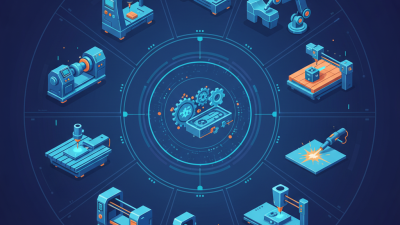
Top 10 Factors to Consider When Choosing CNC Equipment
Evaluating Different Types of CNC Machines and Their Capabilities
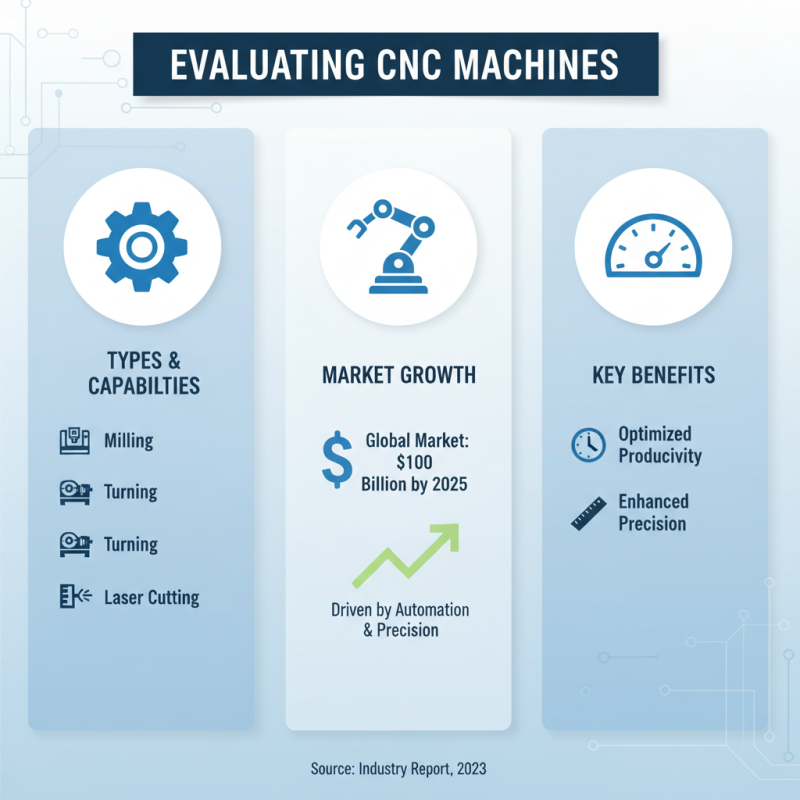
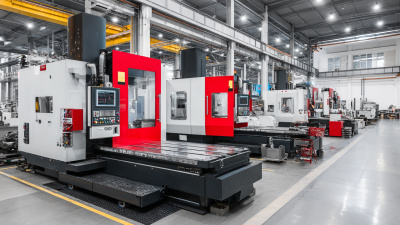
When evaluating different types of CNC machines, consider their capabilities and applications. Each type of CNC machine serves a unique purpose, from milling to turning and laser cutting. According to a recent industry report, the global CNC machine market is projected to reach $100 billion by 2025, highlighting the increasing reliance on automation in manufacturing. This growth indicates a demand for machines that can optimize productivity and precision.
Milling machines, for instance, are versatile but require skilled operators for complex tasks. A report by the International Federation of Robotics states that CNC milling machines accounted for over 40% of CNC machine sales in 2022. Their adaptability to various materials makes them essential in many industries. However, they may not be suitable for every application, which can lead to operational inefficiencies if used improperly.
On the other hand, laser CNC machines offer high precision with lower operational costs. These machines excel in cutting thin materials and detailed engravings. Studies show that the adoption of laser CNC cutting has grown by 25% annually. Still, they may lack the bulk processing capabilities of milling machines. This trade-off demands careful consideration depending on your business's specific needs and projects.
Analyzing Budget Constraints and Total Cost of Ownership
When selecting CNC equipment, analyzing budget constraints is crucial. Many businesses focus solely on the initial purchase price. However, total cost of ownership (TCO) includes maintenance, tooling, and operational costs. These factors can significantly impact your overall investment. For instance, a cheaper machine may require more frequent repairs, leading to higher long-term expenses.
It's essential to consider training as well. Employees need proper education to operate the machine efficiently. This can incur additional costs that shouldn't be overlooked. Understanding the machine's energy consumption is another critical aspect. An inefficient model can lead to skyrocketing utility bills.
Moreover, think about the resale value. Will the equipment hold its worth over time? Some machines depreciate quickly, making them poor investments. You'll also want to assess your production needs. A machine that doesn't meet those needs can lead to downtime and lost opportunities. The complexity of these decisions reflects the necessity for careful evaluation and reflection on potential choices.
Top 10 Tips for Choosing CNC Equipment for Your Business
| Tip |
Description |
Estimated Cost ($) |
Total Cost of Ownership ($) |
Budget Impact |
| 1. Assess Your Needs |
Evaluate the production requirements and specifications. |
5000 |
15000 |
Low |
| 2. Consider Software Compatibility |
Ensure the CNC equipment works with your design software. |
3000 |
10000 |
Medium |
| 3. Evaluate Machine Precision |
Look into the accuracy ratings of different models. |
7000 |
20000 |
High |
| 4. Check Maintenance Requirements |
Analyze the maintenance cost and ease of upkeep. |
2000 |
8000 |
Low |
| 5. Factor in Production Speed |
Understand how machine speed affects your turnaround times. |
6000 |
18000 |
Medium |
| 6. Review Build Quality |
Examine the materials and craftsmanship of the machine. |
8000 |
25000 |
High |
| 7. Assess Customer Support |
Gauge the responsiveness of the manufacturer’s support. |
1000 |
5000 |
Low |
| 8. Look for User Reviews |
Research feedback from other business owners on the machines. |
1500 |
5000 |
Low |
| 9. Identify Resale Value |
Consider how much value the machine will retain over time. |
3000 |
12000 |
Medium |
| 10. Compare Financing Options |
Explore loan and leasing possibilities to manage costs. |
4000 |
9000 |
Medium |
Researching Manufacturers and Supplier Reputation in the Market
When selecting CNC equipment, researching manufacturers is crucial. Start by examining their years of experience in the industry. Companies with a long history often display reliability. Look for manufacturers that specialize in the type of CNC machines you need. Specialization can indicate expertise in specific applications.
Next, consider supplier reputation. Read customer reviews and testimonials. Pay attention to feedback about service quality and machine performance. A supplier with a solid reputation will often provide better support after the sale. Don’t overlook online forums or industry publications. These can offer insights and recommendations from seasoned professionals.
It's important to ask questions during your research. This can reveal how a manufacturer handles challenges. Assess their response times, warranties, and maintenance services. Your choice of equipment should reflect both quality and the manufacturer’s commitment to customer satisfaction. A thoughtful approach can prevent costly mistakes in equipment selection.
Considering Future Scalability and Upgrade Options in CNC Equipment
When selecting CNC equipment, future scalability is vital. Many businesses overlook this aspect, which can lead to costly upgrades later. According to a report from the International Federation of Robotics, the demand for CNC automation is projected to grow by over 12% annually. Investing in scalable equipment now can save time and money in the long run.
Consider equipment that can easily integrate with new technologies.
Flexibility is important. Features like modular designs allow manufacturers to upgrade specific components. This strategy minimizes downtime and maintains productivity. A study from the Association for Manufacturing Technology highlights that 70% of manufacturers prefer versatile systems. Yet, many are caught off guard by rapid technological changes.
Evaluate your long-term production goals. You need to think several years ahead. If your business grows, will your CNC equipment keep up? Many firms fail to account for increased production demands. This oversight can hinder growth. Investing in adaptable solutions now will future-proof your operational capabilities. Embracing this mindset is crucial for staying competitive in a fast-evolving market.