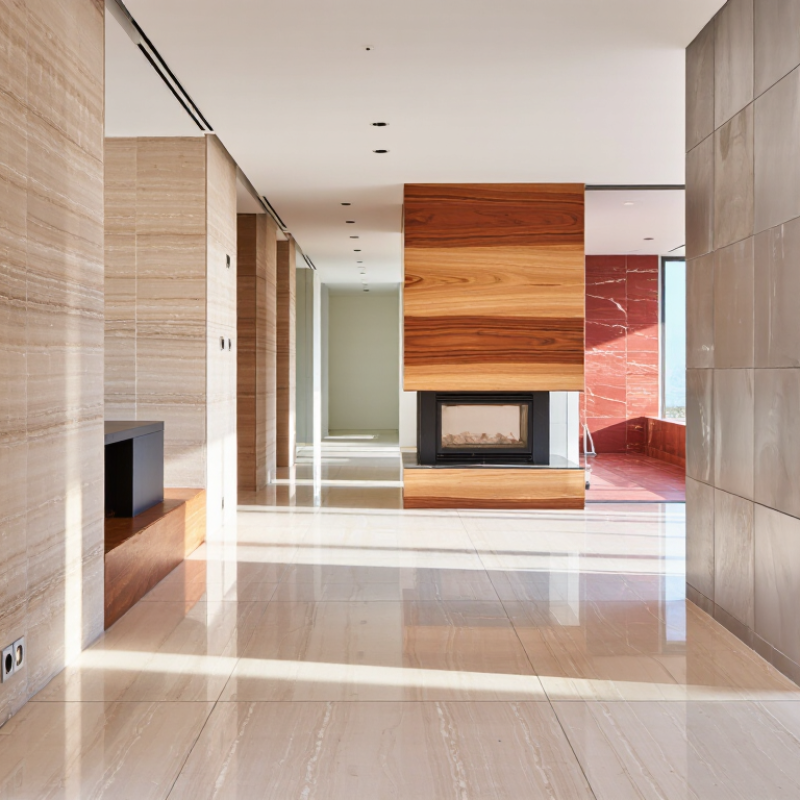
Travertine Marble remains a sought-after choice for floors, bathrooms, fireplaces, and feature walls in 2026. Despite its familiar name, travertine is a type of limestone, formed as mineral-rich water deposits calcium carbonate. The distinction matters. It helps explain why this stone often shows pores, soft bands, and natural color shifts. These are not necessarily flaws; they are part of its character.
Popular options include ivory, beige, walnut, silver, and red travertine, with each bringing a different mood to a room. Vein-cut slabs reveal long, flowing lines, while cross-cut pieces show softer, cloud-like patterns. Finishes change the look, too. A honed surface feels quiet and matte; a filled finish gives pores a smoother appearance. Names and shades can vary by quarry and supplier, so samples are worth checking in the actual room light. Small differences can matter.
This guide compares the leading travertine types and explains where their colors, cuts, and finishes may work best. It also considers practical details, including surface texture, sealing, and everyday cleaning. A pale stone can brighten a narrow hallway, while walnut tones may add warmth around a fireplace. Still, no type is universally best. Natural variation makes every slab different, and that can complicate matching pieces. Choosing well means balancing appearance with maintenance and the way a space is used.
What Travertine Marble Is and How Its Main Types Are Classified
What Are the Top Travertine Marble Types in 2026?
What Travertine Marble Is and How Its Main Types Are Classified
Travertine is a natural stone formed as mineral-rich water deposits calcium carbonate, often near springs. It is technically a type of limestone, though it is commonly sold as “travertine marble.” It is porous. Tiny cavities and soft color shifts are part of its character, not necessarily defects. In a sample, you might see cream bands, rust-colored marks, or small pits.
Travertine is commonly classified by its cut, fill, color, and surface finish. Vein-cut slabs show long, parallel lines; cross-cut slabs reveal cloudy, rounded patterns. Open-pore travertine keeps its natural holes, while filled travertine has them packed with grout or resin for a smoother surface. Finishes such as honed, polished, and brushed change both appearance and grip. Color names can be inconsistent between suppliers, so judge the actual stone, not just its label.
The Leading Travertine Types by Color and Vein Pattern in 2026
Travertine color choices in 2026 favor natural variation over perfectly uniform surfaces. Ivory and warm beige remain versatile, pairing easily with pale oak, brushed metal, and soft white walls. Look closely, though. Some slabs shift from cream to honey within a few inches. Walnut travertine brings deeper brown bands and a grounded feel, while silver-gray varieties suit cooler interiors. Gold-toned stone adds warmth, but strong lighting can make its yellow notes appear more intense than expected.
Vein pattern depends partly on how the stone is cut. Vein-cut travertine shows long, parallel lines, often resembling layered sediment. Cross-cut material reveals softer rings and cloudlike patches. Neither is automatically better. Linear patterns can make a narrow hallway feel longer, while cloudy surfaces may soften a large floor. Inspect several pieces together, not just one sample. Check filled holes, surface finish, and color under the room’s actual lighting. A polished sample may look striking, yet show water marks more readily; a honed finish can feel calmer, though it is not maintenance-free. These differences matter more than a trend label.
How Cuts and Finishes Shape Travertine’s Look and Performance
What Are the Top Travertine Marble Types in 2026? How Cuts and Finishes Shape Travertine’s Look and Performance
Travertine’s cut can change its appearance more than its color. Vein-cut slabs reveal long, directional lines, like layers running across a canyon wall. Cross-cut stone shows softer rings and cloudy patterns. Honed finishes feel smooth and look quietly matte, while polished surfaces reflect more light and highlight color variation. Tumbled edges add a worn, relaxed character, but collect dust more readily.
Tips: View a sample in the room’s actual light. Check both wet and dry surfaces. For floors, compare finishes underfoot before choosing; a glossy piece may look beautiful but feel slippery when damp.
Finish also affects upkeep. A filled surface has small natural holes packed with filler, creating a more even face. Unfilled travertine keeps visible pits and a rustic texture, though crumbs and moisture can settle there. Sealing helps reduce staining, but it does not make stone stain-proof. Ask how the stone was filled and finished, then test a spare piece with ordinary cleaning products. One sample can still mislead; natural veining and shade may shift across a full installation.
Top Travertine Marble Types in 2026: How Cuts and Finishes Shape Look and Performance
A qualitative comparison of common travertine cuts and finishes. Scores describe typical visual characteristics on a 1–3 scale, not laboratory measurements. Slip resistance and durability vary with the stone, surface treatment, sealing, and installation.
Where Each Travertine Type Works Best in Interior and Exterior Design
Travertine works best when its finish and cut match the space. Though often sold alongside marble, it is a porous limestone with natural cavities. Classic ivory suits calm bathrooms and living rooms, where its warm tone softens hard surfaces. Silver travertine brings cooler gray movement to contemporary kitchens and covered patios. Walnut tones add depth around fireplaces, but dramatic veining can make small rooms feel busy. Vein-cut slabs show linear bands, useful for long walls or shower surrounds. Cross-cut slabs reveal softer, cloud-like patterns for floors and broad surfaces. Test before specifying.
The choice changes outdoors. Tumbled or brushed finishes provide more texture underfoot than polished stone, especially near pools and garden paths. Yet texture alone does not guarantee slip resistance; check test results for the intended wet-use setting. For exposed paving, confirm freeze-thaw suitability, drainage, and the supplier’s installation guidance. UNEP and GlobalABC’s 2024 Global Status Report states that buildings and construction produced 37% of global energy- and process-related CO2 emissions in 2022. That figure is not a travertine-specific footprint, but it supports choosing finishes likely to serve for years. Sealers can reduce staining, not eliminate maintenance. And color varies. View several pieces in natural light before approving a batch.
How to Compare Travertine Types for Durability, Care, and Cost
Travertine varies by finish and cut, so compare those before judging durability or price. Honed, filled travertine has a smooth surface and fewer open pits, making it practical for busy indoor floors. Unfilled stone keeps a more textured look, but its cavities can collect grit and need closer attention. Vein-cut slabs show linear bands; cross-cut slabs usually have softer, cloud-like patterns. Neither cut is automatically tougher. Stone density, thickness, installation, and finish also matter.
Care is manageable, but not carefree. Use a pH-neutral stone cleaner and wipe spills promptly, especially wine, citrus juice, or vinegar. Acids can etch the calcium-based surface, even when it has been sealed. Test a sample first. A sealer can slow absorption, not prevent every stain, and its performance depends on the product and upkeep. For bathrooms or entryways, ask for a sample with the intended finish and check how it feels when damp. Polished travertine may show scratches more clearly, while textured finishes can be harder to clean. Cost depends on grade, finish, slab size, and local installation rates; unusual colors and detailed layouts may add expense. One trade-off is easy to overlook: the cheapest tile can cost more to maintain. Compare installed quotes, not just price per square foot.