
Learn more about how Trevisan’s Horizontal Machining Centers can help you minimize set up time and labor costs.

What Are the Top Types of Pharmaceutical Checkweighers?

A Pharmaceutical Checkweigher verifies the weight of products as they move through a production line. In pharmaceutical manufacturing, even a small weight difference can signal a filling issue, a damaged package, or inconsistent output. These systems help operators identify deviations and maintain dependable quality checks. They do not replace process validation or other inspection methods.

The right design depends on the product, package, line speed, and production environment. In-line checkweighers weigh bottles, cartons, or blister packs while products continue moving. Some systems handle small, lightweight items with precision. Others are built for heavier containers or faster lines. Combination units may pair checkweighing with metal detection or other inspection functions, where the application calls for it. Each option has trade-offs. A faster line is not always a better fit.

This guide introduces the main types of pharmaceutical checkweighers and the situations they are designed to serve. It also considers practical details, such as conveyor layout, changeover needs, data handling, and integration with existing equipment. A well-chosen machine should fit the real process, not just a specification sheet. That sounds obvious. Yet it is easy to overlook the awkward transfer point where a package tips, pauses, or reaches the scale inconsistently. Careful evaluation, supported by qualified engineering and quality teams, helps manufacturers compare options and set realistic expectations.
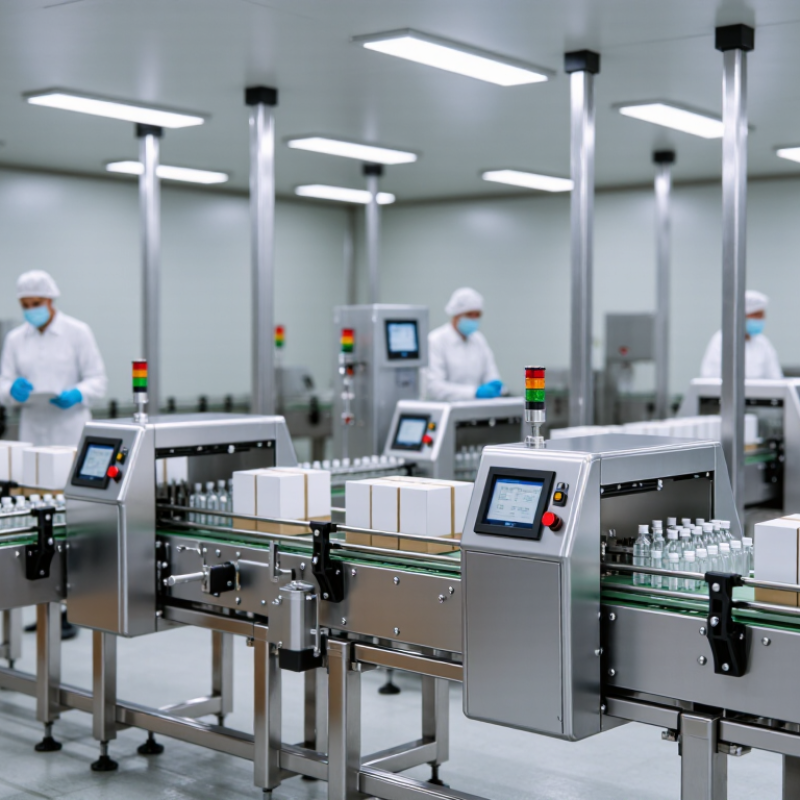
What Are the Top Types of Pharmaceutical Checkweighers?

Inline Dynamic Checkweighers for Continuous Production

Inline dynamic checkweighers weigh packages as they move along a production line. A conveyor carries each item across a weighing platform, where sensors capture its weight within a brief interval. The system compares that reading with configured limits and can signal a reject mechanism when a package falls outside them. No pause is needed. This makes inline systems useful for continuous production, especially where stopping the belt would disrupt flow.

Accuracy depends on more than the scale itself. Belt vibration, uneven package spacing, changing line speeds, and product movement can affect readings. Operators typically set up the unit for the package format and verify its performance under real operating conditions. A few trial runs matter. If packages are touching or arriving too close together, the readings may be unreliable, even when the equipment is functioning normally.

Inline dynamic checkweighers can provide frequent weight data and help teams spot process drift before it affects a large batch. They do not replace other quality checks, and results still need sensible review. For example, a sudden shift in average weight may point to a filling adjustment or a change in product flow. The technology is practical, but setup deserves careful attention; it is easy to assume a fast line automatically means dependable measurements.

What Are the Top Types of Pharmaceutical Checkweighers? - Inline Dynamic Checkweighers for Continuous Production
Type How It Works Typical Pharmaceutical Applications Production Fit Key Considerations
Inline Dynamic Belt Checkweigher Weighs each package as it moves across a conveyor, then compares the measured weight with configured acceptance limits. Cartons, bottles, pouches, and other packaged products moving along a production line. Continuous in-line inspection with minimal interruption to product flow. Stable product spacing, conveyor speed, package handling, and routine verification affect measurement performance.
High-Speed Dynamic Checkweigher Uses a weighing conveyor and control system designed to inspect products at the pace of a high-throughput line. Lines with a consistently high number of individual packs or cartons passing the inspection point. Suitable where inspection must keep pace with upstream packaging equipment. Actual throughput depends on package size, spacing, line layout, and the required weighing performance.
Multi-Lane Dynamic Checkweigher Checks products from two or more lanes, either with separate weighing paths or a system designed to handle multiple streams. Parallel packaging lanes, including small-format products presented in separate streams. Can inspect multiple lanes without first combining all products into one stream. Each lane needs reliable product separation and suitable calibration and monitoring procedures.
Compact Checkweigher for Small Packs Uses a suitably sized conveyor and weighing section to handle smaller or lighter packages in motion. Small cartons, sachets, and other compact packaged pharmaceutical products. Useful where floor space is limited or the line handles small-format packs. Light products can be more sensitive to vibration, airflow, and inconsistent transfer between conveyors.
Combination Checkweigher and Metal Detector Combines dynamic weight inspection with metal detection in one integrated line section. Packaged products for which both weight verification and metal contamination detection are required. Can reduce the number of separate inspection stations and simplify product transfer. Each inspection function needs its own validation, operating limits, and reject confirmation procedures.
Static Bench Checkweigher Weighs a product while it is stationary on a scale platform rather than while it travels on a production conveyor. Manual sampling, laboratory work, or checks at a production station where products can be paused. Better suited to intermittent checks than continuous, automated line inspection. Does not provide the same continuous in-motion inspection as an inline dynamic checkweigher.

Static Checkweighers for Sample and Batch Verification

What Are the Top Types of Pharmaceutical Checkweighers?
Static Checkweighers for Sample and Batch Verification

Static checkweighers measure individual containers while they rest on a weighing platform. Teams may use them to verify samples during filling or review selected units from a completed batch. An operator tares the container, waits for a stable reading, and records the result. The method is straightforward. Small handling differences still matter. Warm containers, drafts, residue, or an unsettled platform can affect readings.

Tips: Select samples from different points in the run, not just convenient cartons. Check that the balance is level and within its calibration schedule. Use a consistent tare method, and record individual values rather than only an average. Compare results with approved batch criteria. A static check alone cannot confirm every unit.

This approach supports spot checks, setup confirmation, and investigations into fill-weight variation. It provides useful records without requiring every unit to be weighed manually. But sample selection has limits. A few accurate readings may miss brief process drift. Treat the results as one signal alongside process records and other quality checks. Revisit sampling frequency when production conditions change.

High-Speed Checkweighers for Tablets and Capsules

High-speed checkweighers for tablets and capsules verify product weight while items move along a production line. They can flag individual units that fall outside a configured weight range, helping operators spot filling or handling issues quickly. Small products need careful control. A tablet may shift on a narrow belt, while a capsule can roll or bounce near a transfer point. These movements affect weighing stability, especially when the line runs fast.

Tips: Keep the infeed spacing consistent, and avoid sudden belt-speed changes. Check the scale with suitable test weights at planned intervals. Record the results. A quick visual check is useful, but it cannot replace documented verification. Clean product dust from contact areas as part of routine maintenance.

Choose equipment based on product size, line speed, and the accuracy your process requires. Test representative tablets and capsules under real operating conditions before setting the final speed. Watch for jams, vibration, and inconsistent spacing; each can distort readings. A system may perform well during a short trial and still struggle across a full shift. That gap deserves attention. No checkweigher fixes upstream variation, so operators should investigate repeated weight alerts rather than simply adjusting limits.

Multi-Lane Checkweighers for Parallel Production Lines

Multi-lane checkweighers inspect packs moving along several parallel production lines. Each lane uses a weighing belt and sensor to check individual items without stopping the flow. This setup can help facilities handle higher combined output within limited floor space.

Lane-specific readings matter. If one lane drifts, its results should not be hidden by the others. Operators can review weight trends by lane and investigate recurring variation, such as product buildup on a belt or inconsistent spacing between cartons. Small details matter. A qualified team should verify the system with suitable test weights and confirm that recorded results match the site’s procedures. Check the reject mechanism too: a pack removed from one lane must not disrupt neighboring lines.

Integration takes planning. Lane speeds, transfer gaps, guarding, and access for cleaning all affect performance. In a real installation, uneven product spacing can cause missed or unstable readings, even when the scale itself is accurate. That sounds simple. It is not always simple. More lanes also mean more sensors and settings to maintain, so clear calibration records and routine checks are essential. A multi-lane design works best when each lane can be monitored and serviced without unnecessary downtime.

Combination Checkweighers with Integrated Inspection Systems

Combination checkweighers bring weight verification and product inspection into one production line. A package passes over a weighing cell while integrated sensors check for selected contaminants or visible defects. The exact inspection tools depend on the product, packaging, and line requirements. Metal detection is common; some setups use vision systems to check labels, closures, or package condition.

This setup can save floor space and reduce handoffs between separate machines. It also creates practical trade-offs. A reject mechanism must remove the correct pack without disturbing neighboring products. Test samples, calibrated weights, and routine challenge checks help confirm that each function is working. Small details matter. Operators should be able to review alarms and inspection results clearly, rather than relying on a single pass-or-fail light. Cleaning access and changeover time deserve equal attention, especially when pack sizes vary. Integration is not automatically better. A combined system can be harder to troubleshoot if its inspection functions are poorly configured. Teams should verify performance under real production conditions and document what the equipment can—and cannot—detect. That last limit is easy to overlook.

What Are the Top Types of Pharmaceutical Checkweighers? — Combination Checkweighers with Integrated Inspection Systems

Illustrative checkweighing run for 500 g packs. The example acceptance range is 495–505 g; readings are sample values, not production or industry data.

A combination system pairs in-line weight verification with an inspection technology selected for the product and packaging risk. Common configurations include checkweighing with metal detection, X-ray inspection, or vision and label-code inspection. Actual capabilities depend on the system configuration.

Scroll to Top
Scroll to Top