
Learn more about how Trevisan’s Horizontal Machining Centers can help you minimize set up time and labor costs.

Top 10 Valve Water Meter Suppliers for Global Buyers

A Valve Water Meter is more than a line item on a purchasing sheet. It measures flow, supports water management, and can help operators spot unusual consumption. For global buyers, the hard part is matching the meter to the job. Pipe size, pressure range, operating conditions, materials, readout options, and local service support all matter. A polished specification sheet is useful. It is not proof of field performance.

The need for dependable water infrastructure is substantial. The U.S. Environmental Protection Agency’s 2023 Drinking Water Infrastructure Needs Survey and Assessment estimates $625 billion in investment needs over 20 years. The WHO and UNICEF Joint Monitoring Programme reported that 2.2 billion people lacked safely managed drinking water in 2022. These figures describe a broad infrastructure challenge, not demand for any single meter type. Hydrologist Luna Leopold’s words offer a useful reminder: “The health of our waters is the principal measure of how we live on the land.” Small details matter. This guide compares ten suppliers through practical buyer questions: documented accuracy, product range, materials, customization, quality controls, warranty terms, and after-sales support. Buyers should verify claims against test records and project requirements. Supplier rankings can simplify a search, but they cannot replace due diligence. A low price may look attractive; compatibility and reliable service deserve equal scrutiny.
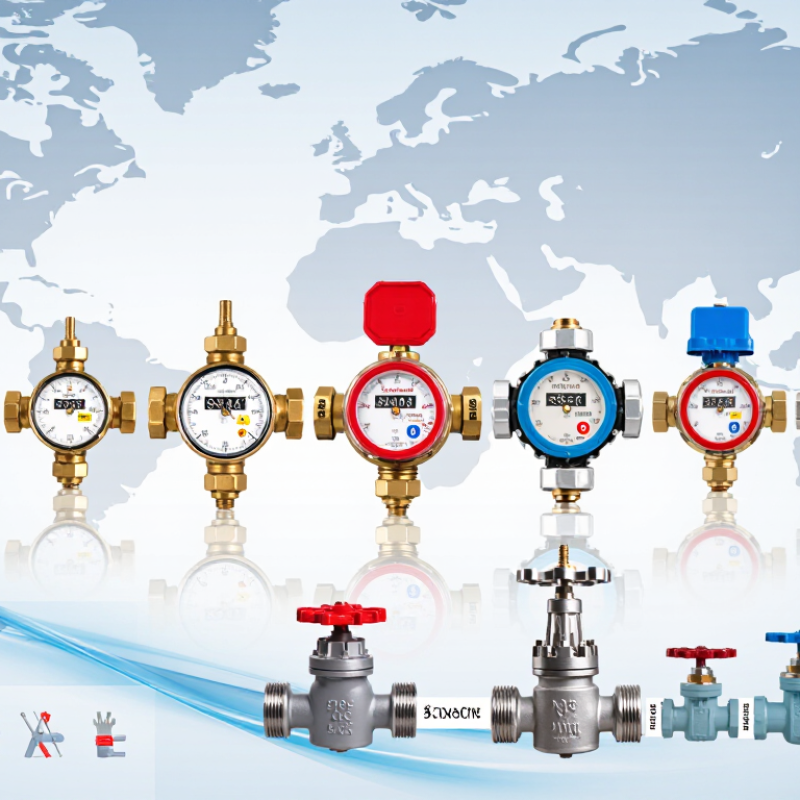
Top 10 Valve Water Meter Suppliers for Global Buyers

What Valve Water Meters Are and Where They Are Used

A valve water meter combines a flow-measuring unit with a valve that can control or stop water supply. The meter records the volume passing through a pipe, while the valve allows isolation during repairs or routine maintenance. Some models place both functions in one body; others connect separate components. The exact design varies.

These meters are used in apartment buildings, commercial properties, irrigation lines, and individual service connections. They can help operators monitor consumption by unit or branch. For example, a building manager may compare readings from separate floors to spot unusual use. A meter does not identify the cause of a leak by itself. Readings need context.

Tips: Check pipe diameter, operating pressure, flow range, connection type, and installation orientation before selecting a meter. Follow the supplier’s installation guidance, including any requirements for straight pipe sections. Flush the line to clear grit. Small particles can affect moving parts or readings. Keep access to the valve clear for servicing.

For global buyers, ask suppliers for technical data, test records, and clear instructions for local operating conditions. Confirm whether the meter supports remote reading if that feature is needed. Accuracy also depends on correct installation and periodic checks. A tidy specification sheet is useful, but it cannot replace a site assessment; older pipework may not match the drawing.

How to Assess Valve Water Meter Suppliers

Assessing a valve water meter supplier starts with the meter’s actual working conditions. Share the expected flow range, pipe size, pressure, water temperature, and installation position. Ask for a datasheet that matches those details, not a generic product family. Small details matter. Check whether the valve body and seals suit the water quality and operating environment. A mismatch may not show up until the meter has been installed for months.

Ask how accuracy is tested and whether test results can be linked to a specific production batch. Request sample inspection records, material specifications, and clear guidance on installation and maintenance. Ask for evidence. A capable supplier should explain its test method in plain language and identify the limits of its claims. Compare warranty terms, replacement-part availability, and typical lead times in writing. Quick replies are useful, but they do not replace technical support after delivery.

Look closely at communication during a technical review. Does the supplier ask for missing site details, or simply recommend the most popular model? That distinction can prevent avoidable sizing errors. A neat datasheet can still leave questions about long-term seal wear or performance under fluctuating pressure. Ask who handles those questions and what information they need to investigate a field issue. The answer may reveal gaps, and it is better to notice them before placing an order.

Profiles of Ten Suppliers Serving Global Buyers

Global buyers comparing valve water meter suppliers should look beyond catalogue prices. These ten profiles show the different capabilities available, rather than ranking named companies. A domestic manufacturer may offer flexible production and closer factory communication. An export-focused supplier may handle shipping documents and protective packing. An OEM-oriented producer can adapt dial layouts or connection sizes. A specialist in mechanical meters may suit straightforward replacement projects. An integrated manufacturer may produce both meters and shut-off valves.

A supplier focused on smart metering may provide remote-reading options, but buyers should check system compatibility. A utility-project supplier may support bulk orders and technical submittals. A private-label producer may customize packaging while keeping core specifications standard. A regional distributor may provide local stock and quicker delivery. A service-led supplier may help with installation guidance, spare parts, and warranty processes. These profiles can overlap. They are not proof of performance, and a polished brochure cannot replace sample testing.

Tips: Request datasheets, calibration details, and a sample before ordering. Confirm materials, pressure range, connection dimensions, and after-sales support in writing. Small specification gaps can cause costly delays.

How Suppliers Compare in Products, Standards, and Export Reach

Comparing valve water meter suppliers starts with the product, not the catalog. Check available pipe sizes, connection types, body materials, and whether the shutoff valve is manual or remotely operated. Ask for flow-range data and test results for the exact model you plan to buy. Details matter. A meter suited to a small apartment branch may not fit a high-demand commercial line.

Standards need careful checking. Suppliers may cite ISO 4064 or OIML R 49, but buyers should confirm which models were tested and request current certificates. Potable-water contact approvals can also differ by destination market. Ask how production batches are inspected and how calibration records can be traced. A polished certificate is not enough. Export reach is more than a list of countries: review sample shipping times, export documents, protective packaging, spare-part availability, and technical support across time zones. Request a recent shipment reference or a sample document set where possible. One detail is easy to miss: support may be strong before an order, then slow when a field technician needs a replacement valve. Check that risk before comparing prices.

Top 10 Valve Water Meter Suppliers for Global Buyers - How Suppliers Compare in Products, Standards, and Export Reach

This is a product-category comparison, not a verified ranking of individual suppliers. Standards listed are relevant standards or approval frameworks to check; their inclusion does not indicate that any particular supplier or product is certified. Export availability and approvals must be confirmed with the supplier for the destination market.

# Supplier / Product Category Typical Meter and Valve Offering Relevant Standards to Check Common Application Export-Reach Considerations
1 Volumetric meter specialists Positive-displacement meters; confirm whether an integrated shut-off valve or a separate valve assembly is available. ISO 4064 / OIML R 49; local drinking-water material requirements. Residential connections and low-flow measurement. Verify destination-market type approval, material compliance, and accepted test reports.
2 Single-jet meter manufacturers Compact inferential meters, sometimes offered with a valve-ready body or optional shut-off module. ISO 4064 / OIML R 49; NSF/ANSI/CAN 61 or other applicable potable-water requirements where required. Individual homes and small service lines. Check local approval requirements and whether the valve configuration is included in the approved assembly.
3 Multi-jet meter manufacturers Multi-jet mechanical meters; valve options vary by model and connection size. ISO 4064 / OIML R 49; applicable national metrology and potable-water rules. Residential and light-commercial water services. Request destination-specific certificates, language requirements, and sample export documentation.
4 Woltmann / turbine meter suppliers Large-diameter mechanical meters; shut-off valves are commonly specified separately in the pipeline design. ISO 4064 / OIML R 49; relevant flange and local installation requirements. Commercial, industrial, and distribution-network measurement. Confirm available sizes, pressure ratings, flange standards, and local metrology acceptance.
5 Ultrasonic meter suppliers No-moving-parts measurement options; valve control may be integrated in selected smart-meter systems or supplied separately. ISO 4064 / OIML R 49; IEC 60529 for declared enclosure protection ratings. Smart metering, remote reading, and applications seeking low-flow monitoring. Check radio-frequency rules, communications compatibility, product approvals, and service support in each market.
6 Electromagnetic meter suppliers Electronic meters for conductive liquids; isolation or shut-off valves are generally selected for the installation separately. ISO 4064 / OIML R 49 where applicable; check electrical safety and EMC requirements for the product and market. Large services, treatment plants, and process-water systems. Confirm power supply, output protocols, environmental ratings, and local conformity requirements.
7 AMR / AMI meter system suppliers Metering products paired with remote-reading hardware; valve operation depends on the specific system design. Meter-specific ISO 4064 / OIML R 49; applicable radio, cybersecurity, and data-protection rules. Utility projects requiring remote consumption data and network management. Evaluate local network coverage, frequency approvals, interoperability, and ongoing software support.
8 Prepayment meter system suppliers Metering and payment-control systems that may include a remotely controlled shut-off valve. Applicable meter metrology rules; verify electrical, radio, payment, and consumer-protection requirements locally. Managed utility, rental, or other controlled-payment programs. Confirm payment-platform integration, local operating rules, and support for the buyer’s chosen communication method.
9 Bulk-meter project suppliers Large-size meters supplied for project specifications; valves, strainers, and fittings are typically confirmed as a system package. ISO 4064 / OIML R 49 where applicable; project-specific pressure, flange, and material specifications. Municipal networks, campuses, and industrial facilities. Assess project references, inspection options, packing requirements, and availability of local commissioning support.
10 Meter-and-valve assembly suppliers Configured meter, shut-off valve, and connection components supplied as a coordinated assembly. Meter-specific ISO 4064 / OIML R 49; potable-water material and valve requirements applicable in the destination market. Projects seeking simplified procurement and matched components. Confirm that approvals cover the complete assembly, not only individual components, and verify destination-market acceptance.

Buyer check: request model-specific certificates, test reports, valve specifications, material declarations, warranty terms, and references for the intended destination market before comparing quotations.

How to Verify and Select a Supplier for Your Project

A supplier’s catalogue cannot prove that a meter will perform reliably in your network. Ask for type-test reports, calibration records, and clear explanations of the meter’s operating range.

The World Bank’s 2006 report, The Challenge of Reducing Non-Revenue Water in Developing Countries, estimated global water losses at about 45 million cubic metres daily. That historical estimate is not a project forecast, but it shows why dependable measurement matters.

Check that test documentation references the applicable edition of ISO 4064 or OIML R 49. Compare accuracy across low, transitional, and higher flow rates—not just one headline figure. Request evidence for pressure testing, material traceability, and valve compatibility. Ask for raw records. A polished certificate without test conditions leaves important questions unanswered. Confirm whether the stated performance applies to your water quality, installation orientation, and expected pressure changes.

Before ordering, review reference installations with similar pipe sizes and operating conditions. Ask how faults, warranty claims, and replacement parts are handled, including typical response times. If possible, inspect a production sample and compare its serial number with the test documents. Keep a written acceptance checklist for the delivery inspection. This part is easy to rush; buyers may focus on price and overlook the cost of repeat calibration or site visits. A supplier’s willingness to discuss limitations can be as useful as its best-case specifications.

Scroll to Top
Scroll to Top