What Is a Sandwich Cake Machine?
A Sandwich Cake Machine automates the assembly of layered cakes, helping producers apply fillings, stack sponge sheets, and portion finished products. Depending on its design, it may include batter feeding, baking, cooling, cream depositing, layer alignment, and cutting. The result is more consistent layers and less repetitive manual handling. But the term does not describe one standard machine. Some systems handle only filling and stacking; others connect several production stages in one line.
Industry data helps explain the equipment’s wider context. Grand View Research’s Bakery Products Market Size, Share & Trends Analysis Report estimated the global bakery products market at USD 480.7 billion in 2023 and projected growth through 2030. That figure covers bakery products, not sandwich cake machinery, so it should not be mistaken for equipment-market revenue. PMMI’s 2024 State of the Industry report also discusses automation, flexibility, and labor constraints across packaging operations—factors relevant to bakery-line planning. On a factory floor, those priorities can mean fewer handoffs between a depositor and cutter, or faster changeovers between cake sizes.
Details matter. A buyer should check layer accuracy, filling consistency, cleaning access, and how gently the machine handles soft sponge. A fast line is not always a better line. Product recipes, operator skills, and available floor space can change the right choice. Even published specifications leave questions; real product trials are still useful. A Sandwich Cake Machine is best understood as production equipment configured around a particular cake, recipe, and throughput—not a universal solution.
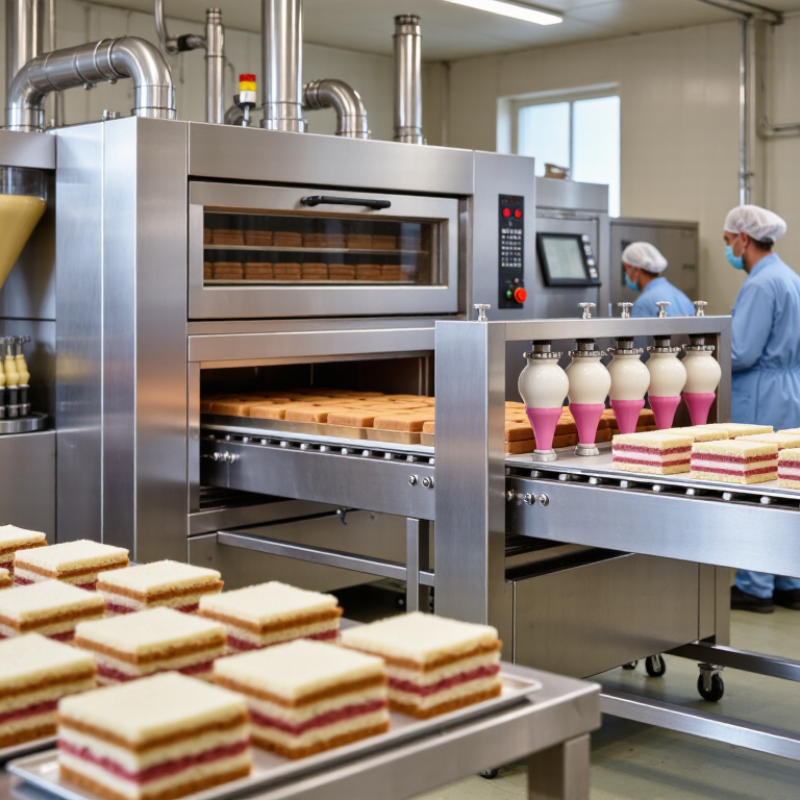
Definition and Purpose of a Sandwich Cake Machine
A sandwich cake machine is a food-production tool that helps assemble layered cakes with consistent spacing and filling. Depending on its design, it may dispense cream, position cake sheets, or guide layers through assembly. Its purpose is practical: reduce repetitive handwork, improve portion uniformity, and help bakeries produce batches at a steady pace. It does not replace recipe judgment. Sponge softness and filling thickness still matter.
During production, the machine can help create even cream layers and reduce shifting. Operators adjust belt speed, portion size, and layer alignment for each product. Check these settings when cake dimensions or filling texture change. A small test run helps. Delicate sponge can crack if handled too firmly, and some edges may need trimming. Machine functions vary, so follow the equipment instructions and clean food-contact parts between runs.
Tips: Use stable cake layers and filling that holds its shape. Check one assembled cake before increasing production. That catches issues early. A setting may need adjustment; change it gradually rather than simply speeding up the line.
Main Components and Their Functions
What Is a Sandwich Cake Machine? Main Components and Their Functions
A sandwich cake machine builds layered cakes by depositing filling, positioning cake sheets, and cutting finished portions. Its frame holds each assembly in alignment, while a conveyor moves layers through the working stations. A hopper and metering pump control the flow of cream or filling. The spreading head then distributes it across the cake surface. A small variation in pump pressure can leave a thin edge or a heavy center.
Sensors and a control panel coordinate speed, spacing, and portion size. The cutting unit may use a blade or wire, depending on the cake texture. Removable food-contact parts matter: they help operators clean corners where cream can collect. FAO’s 2011 Global Food Losses and Food Waste report estimated that about 1.3 billion tonnes of food were lost or wasted worldwide each year. USDA’s 2014 food-loss assessment estimated 133 billion pounds lost at U.S. retail and consumer levels. These are broad food-system estimates, not measurements of machine performance. Still, accurate dosing and clean cuts can help limit avoidable rejects. A tidy layer is not guaranteed. Operators still need to check alignment, filling consistency, and cleaning between production runs.
What Is a Sandwich Cake Machine? — Main Components and Their Functions
A sandwich cake machine uses coordinated components to prepare cake layers and assemble them with filling. The bars count the primary functions described for each component; they do not represent production capacity or measured machine performance.
How the Machine Assembles a Sandwich Cake
A sandwich cake machine builds a layered savory cake from bread sheets and fillings. Its assembly line typically guides each layer into position, adds a measured spread, and stacks the next sheet on top. Depending on the model, operators may load ingredients by hand or use dispensers. The machine’s purpose is steady layering, not replacing careful ingredient preparation.
During assembly, a conveyor carries the base bread beneath a filling unit. A nozzle or spreader distributes ingredients such as cream cheese, egg mixture, or vegetables across the surface. Bread sheets are placed over the filling, and the cycle repeats until the cake reaches its planned height. Gentle compression helps the layers hold together, while guides keep the edges aligned. Some systems can portion the finished cake, but settings and capabilities vary. The process looks simple. It is not always forgiving: uneven bread or a thick filling can make layers slip, so operators still need to check the result.
Tips: Keep fillings spreadable and evenly prepared, and test a small batch before adjusting machine settings. Watch the edges as layers stack; a neat center can hide uneven sides. Small corrections matter.
Common Machine Types and Their Features
A sandwich cake machine is designed to build a cake from layers of sponge and filling. The term can describe several different machines, not one standard design. A small bakery may use a semi-automatic unit that portions cream between cake sheets. Operators load the layers, adjust the filling amount, and guide the cake through the process. It suits varied recipes, though manual handling can make layer alignment less consistent. A little unevenness shows.
Depositing machines apply measured lines or sheets of cream, jam, or mousse. Their nozzles and pump settings affect portion size and placement. For larger output, a layer-assembly system may align cake layers and fillings on a conveyor, reducing repetitive handwork. Some setups add icing or finishing equipment, but these functions are often separate modules rather than one complete machine. That distinction matters when comparing specifications. A machine’s stated capacity may assume steady feeding, uniform cake dimensions, and a particular filling texture. Real production is messier. Thick fillings can flow differently, and delicate sponge may compress under pressure. Before choosing a type, check changeover time, cleaning access, portion accuracy, and whether staff can adjust recipes without lengthy downtime. The fastest option on paper is not always the easiest to run.
Applications, Cleaning, and Safety Considerations
What Is a Sandwich Cake Machine?
A sandwich cake machine helps bakeries and catering kitchens spread filling evenly between cake layers. It can support consistent portions for celebration cakes, café slices, and larger batch orders. Even distribution matters: a thick patch of cream may make layers slide or create uneven slices. Operators should match the machine’s settings to the cake’s size and filling texture, then check a sample before running a full batch. Some fillings behave differently than expected. A small test helps.
Cleaning starts with switching off and unplugging the machine, then allowing warm parts to cool. Remove detachable food-contact components as directed in the operating instructions. Wash them with suitable detergent, rinse, and dry them completely before reassembly. Wipe the frame with a damp cloth; keep water away from motors, switches, and electrical connections. In a busy kitchen, this step is easy to rush. Residue can still collect around rollers and joints, so inspect those areas under good light.
For safe operation, keep hands, loose sleeves, and utensils clear of moving parts. Use guards where fitted, avoid overloading the feed area, and stop the machine before clearing a jam. Check cables and components for visible damage before use. Clean tools and work surfaces between recipes to reduce allergen cross-contact. Follow the machine’s instructions, since designs differ. A quick inspection is worth the pause.