
Stainless Steel Hollow Bar is a useful starting material when a component needs a central bore, a strong outer wall, or further machining. Unlike solid stock, it can reduce the material removed when producing hollow parts. That may mean less cutting and fewer chips on the shop floor. Small gains matter. The bar is commonly considered for machined shafts, sleeves, spacers, and fittings, though suitability depends on the part’s design and service conditions.
Its advantages are practical, not automatic. A hollow section can reduce weight compared with a solid bar of similar outside diameter, but wall thickness and loading still determine whether it is strong enough. Stainless steel grades also vary: corrosion resistance depends on the alloy, surface condition, fabrication, and the environment. Salt spray, cleaning chemicals, and trapped moisture can change performance. Check the grade, dimensions, tolerances, and applicable material documentation before specifying a product. Ask how it will be cut and finished, too. A detail that looks minor on a drawing can affect machining or fit. There is no single best option. This guide explores where Stainless Steel Hollow Bar can offer value, what trade-offs deserve attention, and which questions help match the material to a real application. Some choices remain imperfect; careful comparison is more reliable than assuming hollow always means lighter, cheaper, or better.
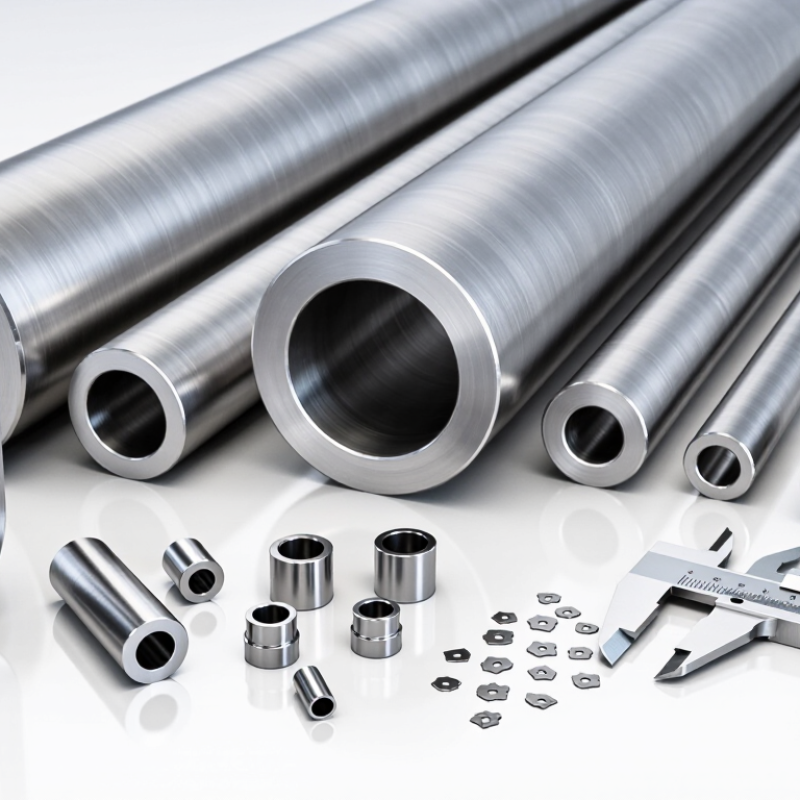
Stainless steel hollow bar is thick-walled tubular stock, usually supplied in round lengths for machining. Its central bore can reduce drilling time and material waste when a component needs a deep internal passage. The name can mislead a little. Hollow bar is not simply thin-wall pipe; its wall thickness and tolerances suit different machining jobs. Actual dimensions and finish vary by specification and production route.
Many hollow bars start as a heated stainless steel billet. Rotary piercing forms a cavity, then rolling or extrusion adjusts the outside diameter and wall. Some products receive further cold working for tighter dimensions.
Heat treatment helps achieve specified properties; descaling, straightening, and inspection follow. The exact sequence differs between mills. It is worth checking the bore, straightness, and surface condition, since these affect machining and usable yield.
The World Stainless Association’s Stainless Steel in Figures 2024 reports 58.4 million tonnes of global stainless crude steel production in 2023. That gives useful industry context, not a hollow-bar production figure. Not the same measure. For technical checks, ASTM A484/A484M sets general requirements for stainless steel bars and related forms, while product requirements should be confirmed against the purchase specification. A report or standard cannot replace checking the actual material certificate.
Stainless steel hollow bar combines a load-bearing wall with a central bore, reducing excess material where a solid bar is unnecessary. Its performance depends on grade, heat treatment, and wall thickness—not appearance alone. ASTM A276/A276M lists annealed Type 304 bar minimums of 515 MPa tensile strength and 205 MPa yield strength. These figures offer a useful baseline, not a guarantee for every hollow product; manufacturing route and final condition matter.
Corrosion resistance comes from a chromium-rich passive surface, but it is not immunity. Chlorides can trigger pitting, especially in crevices around fittings or trapped moisture. Euro Inox technical tables report a density near 8.0 g/cm³ for austenitic stainless steel and thermal expansion around 16 × 10⁻⁶/K. That expansion can affect long, tightly restrained components as temperatures shift. Worth checking. In machining, the bore can reduce drilling and material-removal work, yet the remaining wall still needs to withstand clamping and service loads. A thin section may distort under a tool. It happens. Engineers should verify grade, tolerances, and operating environment against the actual specification before selecting a bar.
Stainless steel hollow bar can reduce stock weight while preserving a useful machining envelope. A 60 mm bar with a 30 mm bore uses about 75% of the metal in a 60 mm solid bar. That means less material to turn, lift, and move. In shafts, rollers, and spacers, the center bore may also accommodate wiring or fluid. But it is not an automatic strength upgrade. Under axial load, less metal means less load-bearing area; torsion and buckling still need engineering checks.
Material choice matters, too. The International Stainless Steel Forum’s 2019 life-cycle inventory reports roughly 44% recycled input across global stainless steel production. That industry average does not describe every bar. Compared with carbon steel, stainless grades can reduce corrosion-related maintenance in wet or washdown settings. Aluminum is lighter, but may not meet the required stiffness, wear, or temperature performance. Grade and environment decide. Chlorides, heat, and surface finish can change the result; stainless steel is not corrosion-proof. One practical catch: hollow stock may cost more per kilogram and needs a bore-tolerance check before machining. Those details are easy to overlook.
Why Choose Stainless Steel Hollow Bar? For bars with the same 50 mm outside diameter, a hollow bar with a 10 mm wall uses about 36% less steel while retaining about 87% of the solid bar’s bending stiffness. Estimated mass is 9.9 kg/m for the hollow bar versus 15.4 kg/m for the solid bar, using a steel density of 7,850 kg/m³. Values are geometry-based estimates; actual performance depends on the grade, dimensions, and loading conditions.
Stainless steel hollow bar is commonly machined into components that need strength without the weight of solid stock. In pump and valve systems, it can become sleeves, spacers, and rotating parts. A machinist may bore cross-holes for fluid flow or turn the outside to fit a housing. Less material may need to be removed than when machining a solid bar. That can save time, though the actual benefit depends on the component’s dimensions and tolerances.
Food-processing equipment uses hollow bar for shafts, rollers, and fittings that face frequent washdowns. Chemical plants may use it for parts exposed to corrosive fluids, but stainless steel is not immune to every chemical. Grade selection matters. In marine settings, hollow bar can serve as structural supports or machined hardware, provided the alloy suits the water and operating conditions. A hollow section also leaves an internal surface that may be difficult to inspect or clean. That detail is easy to overlook. Engineers should check wall thickness, straightness, and surface condition before specifying it; nominal dimensions alone do not tell the whole story.
| Industrial Use | Typical Components | Why Hollow Bar Is Useful | Common Grade Considerations | Practical Selection Factors |
|---|---|---|---|---|
| Pumps and valves | Pump shafts, valve stems, sleeves, and machined housings | The pre-existing bore can reduce drilling and boring when the finished component needs an internal passage or opening. | 304 may suit many general environments; 316 is often considered where greater resistance to chlorides or certain process fluids is needed. | Check the fluid chemistry, temperature, pressure, required finish, and applicable component specification. |
| Hydraulic and pneumatic equipment | Cylinder barrels, guide components, and precision-machined parts | A hollow starting form can reduce material removal for parts that require a central bore and may reduce machining time. | Grade selection depends on the working environment and mechanical requirements; corrosion resistance alone does not determine suitability. | Specify bore diameter, straightness, concentricity, surface finish, pressure requirements, and machining allowance. |
| Food and beverage processing | Equipment shafts, rollers, fittings, and process-machine components | Stainless steel offers corrosion resistance and can be machined into components with internal or external features. | 304 is common for many food-processing environments; 316 may be preferred where cleaning chemicals or chloride exposure make it appropriate. | Confirm the required hygienic design, surface finish, cleanability, and any relevant food-contact or industry requirements. |
| Chemical and process industries | Agitator shafts, instrument components, sleeves, and fittings | The hollow section can provide a useful starting shape for machined parts and may reduce excess material where a bore is required. | 316 and duplex stainless grades such as 2205 may be considered for particular corrosive environments, subject to compatibility checks. | Assess the specific chemicals, concentration, temperature, exposure time, and risk of localized or stress-corrosion damage. |
| Marine and coastal equipment | Shafts, spacers, sleeves, and machined hardware | Hollow stock can help reduce material removal and component mass compared with machining the same bore from solid stock. | 316 is often considered for marine exposure, but seawater service can be severe; duplex grades may be evaluated for suitable applications. | Account for seawater exposure, crevices, deposits, load, and maintenance. Select the alloy and design for the actual service conditions. |
| General fabrication and machinery | Rollers, structural machine parts, spacers, and custom turned components | Useful when a tubular geometry is needed; the existing bore can reduce machining waste and processing steps. | 304 is widely used for general corrosion resistance; other grades may be needed for higher strength or more demanding environments. | Compare the required dimensions, tolerances, availability, strength, and total machining cost before choosing hollow or solid stock. |
Selection note: Stainless steel hollow bar is available in different grades, dimensions, and manufacturing routes. Confirm the product standard, whether the material is seamless or welded, mechanical properties, tolerances, and corrosion requirements for the intended application.
Selecting a stainless steel hollow bar starts with the job it must do, not a familiar grade name. Identify the load, operating temperature, and exposure. A pump shaft near salt spray needs different corrosion performance from an indoor machine spacer. Grade affects strength, machinability, and corrosion resistance, but no alloy is best in every environment. Ask for documented chemistry and relevant mechanical test results, rather than relying on a generic “stainless” description.
Dimensions deserve equal care. Confirm outside diameter, bore size, wall thickness, straightness, and length, then check tolerances against the finished-part drawing. A small bore offset can leave uneven machining allowance and waste hours on a lathe. For close-fit components, ask how concentricity is measured and what inspection records are available. The first specification is rarely perfect. Check it twice.
Also consider how the bar will be cut and machined. A thick wall may provide needed stiffness, yet increase material removal, cycle time, and scrap. Review the machining route, stock allowance, surface condition, and delivery length with the supplier. Verify applicable material standards, traceability, and test documentation for the order. The lowest price per kilogram can be misleading; compare usable yield and machining effort too. In many machining jobs, dimensions can dominate the decision more than grade. That is not universal.
"*" indicates required fields