
Global buyers are choosing Frequency Vfd systems to control motors with greater precision, efficiency, and operational flexibility. In factories, pumps, fans, conveyors, and compressors, a suitable drive can adjust motor speed to match real demand. This reduces unnecessary energy use and lowers mechanical stress during starting and stopping.
Bimal K. Bose, a recognized power-electronics expert, once stated, “Power electronics is the technology of the future.” His observation remains relevant for modern Frequency Vfd applications. A variable frequency drive can support smoother acceleration, stable process control, and more predictable maintenance. For example, a water pump may run slowly during low demand instead of operating continuously at full speed. That difference can become significant across thousands of operating hours.
The choice is not automatically simple. A low purchase price may hide weak cooling, limited overload capacity, or poor service support. Global buyers should examine voltage compatibility, motor ratings, enclosure protection, communication protocols, harmonic performance, and local technical assistance. Standards and installation conditions also vary between regions. A drive used in a dusty workshop needs different protection from one installed in a clean control room.
Field experience matters.
Reliable suppliers provide test data, wiring guidance, manuals, and responsive support. They also explain limitations instead of promising perfect savings. Real energy results depend on the motor, load profile, installation quality, and operator settings. This article explores why Frequency Vfd technology attracts international buyers, while recognizing that the best solution must fit the application, not merely the catalog.
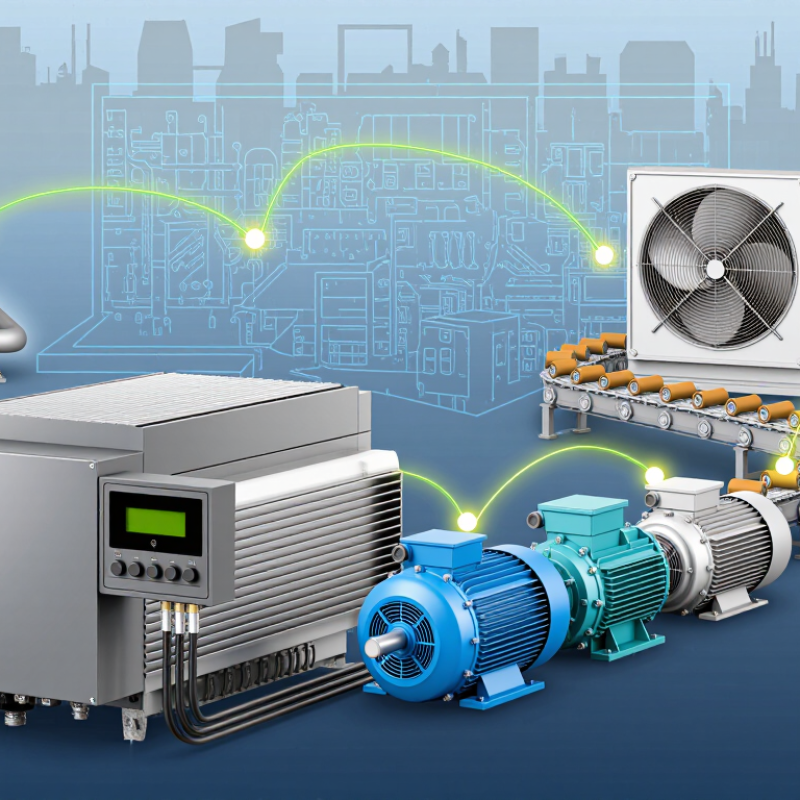
A frequency VFD, or variable frequency drive, controls an electric motor by changing its input frequency and voltage. Instead of running at one fixed speed, the motor can slow down or accelerate according to machine demand. Inside the drive, incoming AC power becomes DC power, then returns as controlled AC output. Switching electronics and programmed control logic manage this process. In factory testing, this response can reduce harsh starts, belt shock, and unnecessary energy use.
For global buyers, practical value depends on correct sizing, not impressive specifications alone. A drive must match motor voltage, current, overload needs, and duty cycle. Pumps, fans, conveyors, and compressors behave differently. Sensor feedback can improve speed control. Protection functions can detect overheating, overcurrent, or phase loss.
However, efficiency claims need measured operating data. A poorly tuned drive may create noise, vibration, or disappointing savings. That detail is easy to overlook.
Tips: Confirm local power standards before ordering. Check whether the motor supports inverter operation. Leave space for ventilation and cable routing. Request test records, manuals, and clear fault codes. Start with conservative settings, then adjust them after observing temperature, current, and load behavior. Qualified installation improves reliability. Small mistakes matter.
Frequency VFDs matter most where industrial loads change throughout the day. Pumps, fans, compressors, and conveyors rarely operate at one constant speed. The European Commission’s 2020 Ecodesign preparatory study estimates that electric motor systems consume nearly half of global electricity. That scale makes motor control an energy decision, not merely an automation accessory.
Water and wastewater plants use VFDs to match pumping output with changing flow demand. HVAC systems adjust chilled-water pumps and cooling fans as building conditions shift. In factories, VFDs support mixers, crushers, extruders, and conveyor lines with smoother starting and better speed control.
The U.S. Department of Energy’s Variable Speed Pumping guide reports that a 20% speed reduction can reduce pump power by roughly 49%, when affinity-law conditions apply.
Field experience adds a caution. A VFD cannot repair an oversized pump, blocked filter, or unstable control loop. Poor commissioning can erase expected savings. Buyers should check motor compatibility, enclosure rating, harmonics, bypass requirements, and local service skills before comparing prices. Actual performance depends on duty cycles, maintenance, pipe resistance, and operator settings. The calculation is useful, but never automatic.
A frequency VFD improves motor performance by matching speed with actual process demand. Motors no longer run at full speed when production needs less output. This matters because the International Energy Agency reports that electric motor systems consume about half of global electricity. In industry, their share can approach 70 percent.
For pumps and fans, small speed changes can create major savings. The U.S. Department of Energy explains that power demand follows the cube of speed. A 20 percent speed reduction may therefore cut theoretical power use by nearly 49 percent. The result is quieter operation, lower heat, and less mechanical stress. In practical installations, savings vary with load, control settings, and maintenance quality. The number is not a promise.
A VFD also controls acceleration and deceleration smoothly. This reduces starting current and protects couplings, belts, pipes, and bearings from sudden shock. Operators gain steadier pressure and more precise torque control. I have seen systems waste energy because the drive was oversized or poorly tuned. That weakness deserves attention. Correct motor data, suitable cable selection, and regular parameter checks remain essential for reliable performance.
Why Choose a Frequency VFD for Global Buyers?
Global buyers should evaluate more than purchase price before choosing a frequency VFD. Start with the local power supply. Check input voltage, phase, frequency, and allowable fluctuations. A drive designed for 400 V may not suit a 480 V system. Motor data also matters. Confirm rated current, overload capacity, speed range, and braking requirements.
Look closely at operating conditions. A dusty workshop may require a higher protection rating. Coastal sites need stronger corrosion protection. In a hot control cabinet, poor ventilation can shorten service life. Review efficiency figures at actual loads, not only at the rated point. Harmonic performance deserves attention too. It affects transformers and sensitive equipment. Ask for test reports, compliance documents, and clear installation instructions.
Support can decide whether a project succeeds. Check spare-part availability, remote assistance, local service capability, and response times. Language matters during commissioning. So does training. A simple parameter guide can prevent costly mistakes. One practical detail is often missed: cable length between the drive and motor. Long cables may require additional filtering. A spreadsheet cannot reveal every site problem. Field conditions are messier. Buyers should leave room for correction after inspection, because the first specification is not always perfect. Total cost includes installation, cooling, maintenance, downtime, and disposal—not only the invoice.
Before choosing a variable frequency drive (VFD), global buyers should evaluate motor compatibility, input voltage and frequency, overload capacity, enclosure protection, EMC requirements, control method, local certifications, and after-sales support. For centrifugal pumps and fans, the affinity laws show how speed control can significantly reduce theoretical power demand.
Chart interpretation: For centrifugal fan and pump systems, power demand is approximately proportional to the cube of rotational speed. Reducing speed to 80% can reduce theoretical power demand to about 51.2%, while operating at 70% speed can reduce it to about 34.3%. Actual savings depend on system resistance, motor efficiency, drive losses, and operating conditions.
Why Choose a Frequency VFD for Global Buyers?
Global VFD purchasing involves more than comparing output power and price. Regional standards can affect voltage ranges, EMC performance, safety testing, and installation requirements. A drive designed for 400 V, 50 Hz service may need different settings from one used on a 480 V, 60 Hz network. Buyers should request current certificates, test reports, wiring diagrams, and manuals in usable languages. Details matter.
Support can decide whether a technically suitable VFD performs well after arrival. Clear parameter lists help technicians configure acceleration, braking, overload protection, and motor control. Remote guidance is useful, but local service partners can reduce downtime during commissioning. Spare fans, keypads, and control boards should have stated lead times. Support matters. Still, no service promise should be accepted without response times and escalation contacts.
Supply chains also influence the real purchase cost. Buyers should check production capacity, component traceability, inspection records, and export packaging before placing large orders. Consistent firmware and batch testing are important when several machines share one control design. A low quotation may hide longer shipping, uncertain parts, or costly engineering changes. I would not treat a supplier’s compliance statement as final evidence. Independent verification remains sensible, especially when equipment crosses several regulatory regions. Even careful projects miss small details. A terminal label, software revision, or delivery assumption can change the installation plan.
| Purchasing Dimension | Relevant Global Requirement | What the Buyer Should Verify | Operational Effect | Recommended Documentation or Evidence |
|---|---|---|---|---|
| Electrical Safety | IEC 61800-5-1 or the applicable national equivalent for adjustable-speed power drive systems. | Rated input voltage, insulation system, protective grounding method, leakage current, and required installation clearances. | Improves installation safety and helps prevent approval delays caused by incomplete technical information. | Declaration of conformity, safety test report, product datasheet, wiring diagram, and installation manual. |
| EMC Compatibility | IEC 61800-3 defines EMC requirements for adjustable-speed electrical power drive systems; local rules may also apply. | EMC category, intended installation environment, cable shielding requirements, filter options, and permissible motor-cable length. | Reduces the risk of interference with sensors, communications equipment, and other industrial controls. | EMC test summary, installation instructions, filter specifications, and recommended cable layout. |
| Ingress Protection | IEC 60529 classifies enclosure protection using IP codes. | IP rating, cooling method, permissible ambient temperature, altitude limit, humidity conditions, and required enclosure mounting position. | Determines whether the drive can be installed in a control cabinet, clean industrial area, dusty location, or other defined environment. | IP test information, environmental specifications, derating curves, and cabinet installation guidance. |
| Regional Market Access | Market-specific conformity requirements may apply, including European, United Kingdom, North American, or other national regulations. | Whether the exact model and configuration are approved for the destination market, including voltage, frequency, safety, and EMC requirements. | Prevents customs, commissioning, and customer-acceptance problems after shipment. | Destination-specific declaration, certification scope, technical file reference, and labeling artwork. |
| Environmental Compliance | Common requirements include EU RoHS Directive 2011/65/EU with amendments, REACH Regulation (EC) No 1907/2006, and WEEE Directive 2012/19/EU where applicable. | Material declarations, restricted-substance status, reporting responsibilities, and end-of-life collection obligations in the destination market. | Supports importer due diligence and reduces the possibility of rejected shipments or customer compliance findings. | RoHS declaration, REACH statement, material composition information, and applicable recycling instructions. |
| Input and Motor Compatibility | VFD selection must match the local electrical supply and the motor's rated data; supply systems commonly differ in nominal voltage and frequency by country or facility. | Input phase, voltage range, line frequency, output frequency range, motor current, overload rating, braking needs, and motor insulation limits. | Avoids nuisance trips, overheating, poor torque performance, and premature motor or drive failure. | Nameplate-matching guide, sizing worksheet, overload curve, wiring diagram, and application questionnaire. |
| Control and Communications | Industrial projects may require digital or analog control and a fieldbus or industrial Ethernet interface specified by the system integrator. | Available I/O, protocol compatibility, parameter access, fault reporting, cybersecurity expectations, and PLC integration requirements. | Determines commissioning time and whether the drive can be integrated without additional gateways or control hardware. | Communication manual, parameter list, register map, sample configuration, and integration test record. |
| Technical Support | Support quality is usually defined by the supplier's service process rather than by a single international product standard. | Language coverage, response channel, remote troubleshooting capability, commissioning assistance, escalation process, and spare-parts policy. | Shortens downtime and reduces the risk of incorrect parameter settings during startup. | Support scope, service contact process, troubleshooting flowchart, training materials, and escalation commitments. |
| Warranty and After-Sales Service | Warranty terms are contractual and may vary according to destination, installation conditions, and authorized service arrangements. | Warranty duration, exclusions, return procedure, inspection requirements, labor coverage, and availability of repair or replacement units. | Makes the total cost of ownership and downtime exposure easier to evaluate before purchase. | Signed warranty terms, RMA procedure, service-level description, and spare-parts availability statement. |
| Supply Continuity | Delivery depends on production capacity, component availability, export controls, transport conditions, and destination import procedures. | Quoted lead time, production location, stock status, minimum order quantity, allocation policy, and approved substitute configuration. | Helps buyers plan projects and reduce the impact of component shortages or transport disruption. | Written lead-time confirmation, production schedule, order acknowledgment, continuity plan, and change-notification procedure. |
| Shipping and Customs | Import requirements can include commercial invoices, packing lists, transport documents, origin information, tariff classification, and destination-specific certificates. | Incoterms, export packaging, document accuracy, responsible importer, customs broker requirements, and tax or duty responsibility. | Reduces clearance delays, unexpected landed costs, and damage during international transport. | Pro forma invoice, packing list, transport document, origin statement, export classification, and agreed Incoterms. |
| Lifecycle and Spare Parts | Industrial equipment may remain in service for many years, so replacement compatibility and documentation control are important. | Product-change notification, firmware compatibility, spare-part identification, repairability, and migration options for discontinued models. | Protects the buyer's investment and simplifies future maintenance or capacity expansion. | Lifecycle statement, revision history, spare-parts list, firmware policy, and replacement selection guide. |
| Total Cost of Ownership | Purchase price is only one part of the cost; installation, filters, cabinet cooling, commissioning, energy use, maintenance, and downtime also affect value. | Efficiency data, standby consumption, derating requirements, accessories, service cost, expected maintenance, and energy-saving control functions. | Provides a more realistic comparison between competing technical solutions and supply options. | TCO worksheet, efficiency test data, accessory price list, maintenance plan, and project-specific energy assumptions. |
Note: The applicable requirements depend on the destination country, installation environment, motor system, and project contract. Buyers should confirm the current rules with the local authority, importer, electrical engineer, and customs specialist before placing an order.
"*" indicates required fields