
What Is the Best CNC Equipment from China?
Choosing the best CNC equipment from China is not about finding the cheapest machine. It is about matching performance, accuracy, support, and long-term value with your production needs. A compact CNC router may suit a furniture workshop, while a rigid CNC machining center may better serve aluminum or steel components. The right decision begins with the material, tolerances, workpiece size, and expected production volume.
This guide examines CNC equipment through practical and technical criteria. These include spindle power, machine rigidity, control systems, positioning accuracy, repeatability, safety features, and maintenance access. It also considers factory experience, quality-control procedures, export records, training, warranty terms, and spare-parts availability. A polished product page is not enough. Ask for test-cut videos, inspection reports, machine specifications, and references from comparable users.
Details often reveal the real difference. A heavy cast-iron frame can reduce vibration during long cuts. A familiar controller may shorten operator training. A responsive supplier can prevent a small fault from becoming a costly production delay. Yet no machine is perfect. A powerful spindle may increase energy use, and advanced automation may require more technical support. Some buyers focus too heavily on price and overlook installation or service conditions. That mistake is common.
The best choice depends on evidence, not slogans. Comparing verified specifications with your workshop’s actual workflow creates a more reliable decision. This article will help readers assess leading Chinese manufacturers, compare machine categories, and identify equipment that offers practical performance, dependable support, and sustainable value.
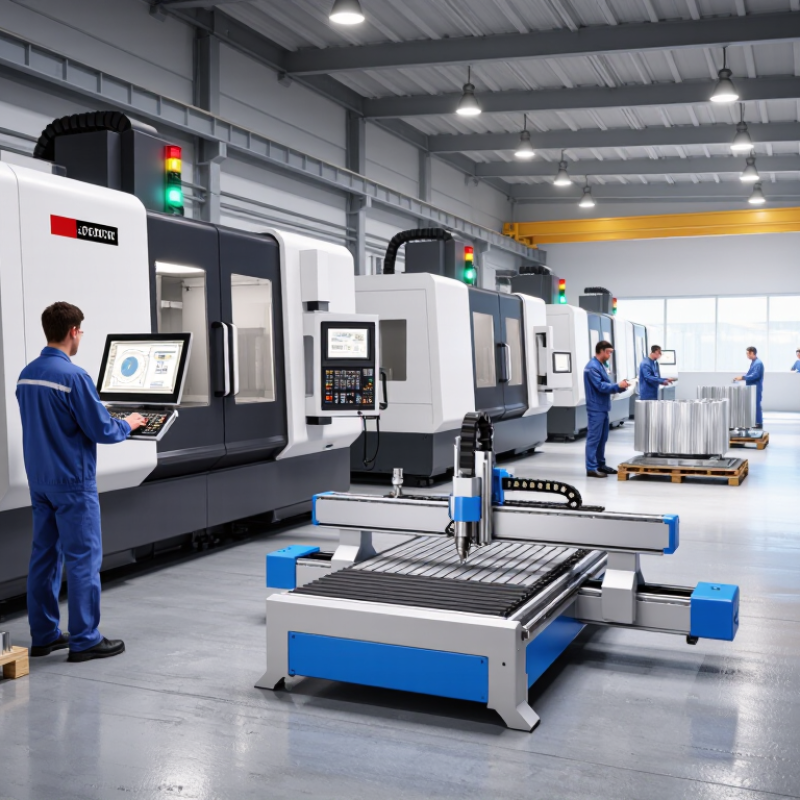
Table of Contents
[Hide]
Understanding China’s CNC Equipment Industry
What Is the Best CNC Equipment from China?
Understanding China’s CNC equipment industry requires more than comparing prices. The sector includes large factories, specialized workshops, component suppliers, and software developers. This broad network supports milling machines, turning centers, routers, and multi-axis systems. Equipment quality varies widely. Buyer judgment matters.
In my experience, the best machine matches the job, material, tolerance, and production volume. A rigid cast-iron structure reduces vibration during heavy cutting. Accurate linear guides support repeatable movement. Servo motors, spindle power, cooling systems, and chip removal also affect daily performance. Ask for inspection records, sample parts, and test-cut results. Details matter. A machine that looks impressive may still struggle with heat control or difficult tooling.
China’s industry has improved through automation, engineering education, and stronger quality management. Many manufacturers now provide customized configurations and remote technical support. However, after-sales service can differ between regions and suppliers. Check response times, spare-part availability, installation procedures, and operator training before ordering. I once focused too heavily on specifications and underestimated maintenance access. That was a costly lesson. A lower purchase price may become expensive when downtime, training, and replacement parts are ignored. Independent verification remains useful, especially for tolerance claims and long-term reliability. Some suppliers communicate clearly; others need more detailed questions. The best choice is usually the one with transparent documentation, practical testing, and dependable support.
What Is the Best CNC Equipment from China? – Understanding China’s CNC Equipment Industry
A practical comparison of major CNC equipment categories and their typical capabilities
| Equipment Type | Typical Axes | Typical Working Capacity | Spindle or Cutting Capability | Typical Positioning Accuracy | Best For | Indicative New-Equipment Price Range |
|---|---|---|---|---|---|---|
| 3-Axis Vertical Machining Center | 3 linear axes | Approx. 500–1,200 mm X-axis travel; 400–600 mm Y-axis travel | 7.5–22 kW spindle; approximately 6,000–12,000 rpm | About ±0.005–0.010 mm | General milling, mold components, fixtures, and production parts | US$25,000–100,000 |
| 5-Axis Machining Center | 3 linear axes plus 2 rotary axes | Commonly suited to parts up to approximately 300–800 mm in diameter | 10–30 kW spindle; approximately 8,000–20,000 rpm | About ±0.003–0.008 mm | Aerospace parts, medical components, impellers, turbine parts, and complex molds | US$100,000–400,000+ |
| CNC Turning Center | Typically 2–4 controlled axes | Approx. 200–600 mm maximum turning diameter; 300–1,000 mm turning length | 11–30 kW spindle; approximately 2,500–6,000 rpm | About ±0.005–0.010 mm | Shafts, bushings, flanges, threaded parts, and rotational components | US$30,000–150,000 |
| CNC Lathe with Live Tooling | Typically 3–7 controlled axes | Approx. 200–500 mm turning diameter; 300–800 mm turning length | 12–30 kW main spindle; driven tools commonly 3–10 kW | About ±0.003–0.008 mm | Turn-mill work, off-center holes, slots, and complete machining in one setup | US$60,000–250,000 |
| Swiss-Type CNC Lathe | Typically 5–13 controlled axes | Commonly optimized for bar diameters of approximately 3–32 mm | 10–20 kW main spindle; high-speed tooling for small-diameter parts | About ±0.002–0.005 mm | High-volume medical, electronics, automotive, and precision small-part production | US$80,000–300,000 |
| CNC Router | 3–4 axes | Common table sizes range from 1,300 × 2,500 mm to 2,000 × 4,000 mm | 3–15 kW spindle; approximately 12,000–24,000 rpm | About ±0.05–0.15 mm | Wood, plastics, composite panels, aluminum sheets, signage, and nesting operations | US$8,000–60,000 |
| Wire Electrical Discharge Machine | Typically 4–5 controlled axes | Approx. 300–800 mm X-axis travel; cutting thickness commonly 100–300 mm | Fine wire cutting with approximately 0.10–0.30 mm brass wire | About ±0.002–0.010 mm | Hardened steels, stamping dies, intricate profiles, and narrow slots | US$25,000–150,000 |
| CNC Sinker EDM | 3–5 controlled axes | Typical worktank capacity of approximately 500–1,200 mm per side | Servo-controlled electrode machining; finishing capability commonly reaches Ra 0.2–0.8 μm | About ±0.005–0.015 mm | Deep cavities, sharp internal corners, mold inserts, and hardened conductive materials | US$30,000–180,000 |
| CNC Gear Hobbing Machine | Typically 3–6 controlled axes | Commonly supports gears of approximately 200–800 mm outside diameter | Hob speeds and feeds selected according to gear module, material, and tooth geometry | About ±0.010–0.030 mm | Automotive, industrial transmission, reducer, and power-transmission gears | US$50,000–250,000 |
| CNC Surface Grinder | Typically 3–4 controlled axes | Grinding areas commonly range from 500 × 250 mm to 1,000 × 500 mm | Grinding wheels commonly operate at approximately 1,500–3,600 rpm | About ±0.003–0.010 mm | Flat surfaces, precision plates, mold components, and hardened steel finishing | US$20,000–100,000 |
Note: Figures are typical market ranges for new equipment manufactured in China and may vary according to machine size, control system, automation, accuracy testing, tooling, inspection equipment, and export configuration. Actual specifications should be confirmed in the machine quotation and acceptance protocol.
Related Posts
-
Revolutionizing Manufacturing with CNC Boring Mill Innovations at the 138th Canton Fair 2025
-
Why Choose a CNC Machine for Your Business?
-
How to Choose the Best CNC Machine Tools for Your Business
-
What Are the Top CNC Machines for 2026?
-
How to Choose the Right CNC Machine Tools for Your Business Needs
-
China Best Vertical Machining Center for Global Buyers?