The best CNC lathe from China is not automatically the most expensive model or the one with the longest feature list. It is the machine that fits your materials, tolerances, batch sizes, and available floor space. A compact shop cutting steel bar has different needs from a production line turning thousands of aluminum parts. Details matter. So do the controller, spindle capacity, tool configuration, and service response.
Manufacturing-systems expert Dr. Yoram Koren’s work supports a useful selection principle: choose equipment for the production system it must serve, not for impressive specifications alone. This is a paraphrase, not a direct quotation. Applied to a lathe cnc purchase, that means checking sample-part results, repeatability, chip handling, and the supplier’s commissioning plan. Ask what the quoted price includes. A machine may look complete in a brochure, yet still require extra tooling, training, or installation support.
Chinese manufacturers offer a broad range of CNC lathes, from entry-level machines to advanced turning centers. Comparing them fairly takes more than reading catalog figures. Request a live demonstration, inspect machining results, and clarify warranty coverage and spare-parts availability. If possible, speak with buyers who run similar materials and workloads. Some claims may be hard to verify remotely. That is worth admitting. This guide outlines practical ways to assess machine capability, supplier reliability, total ownership costs, and the trade-offs that shape a confident purchase.
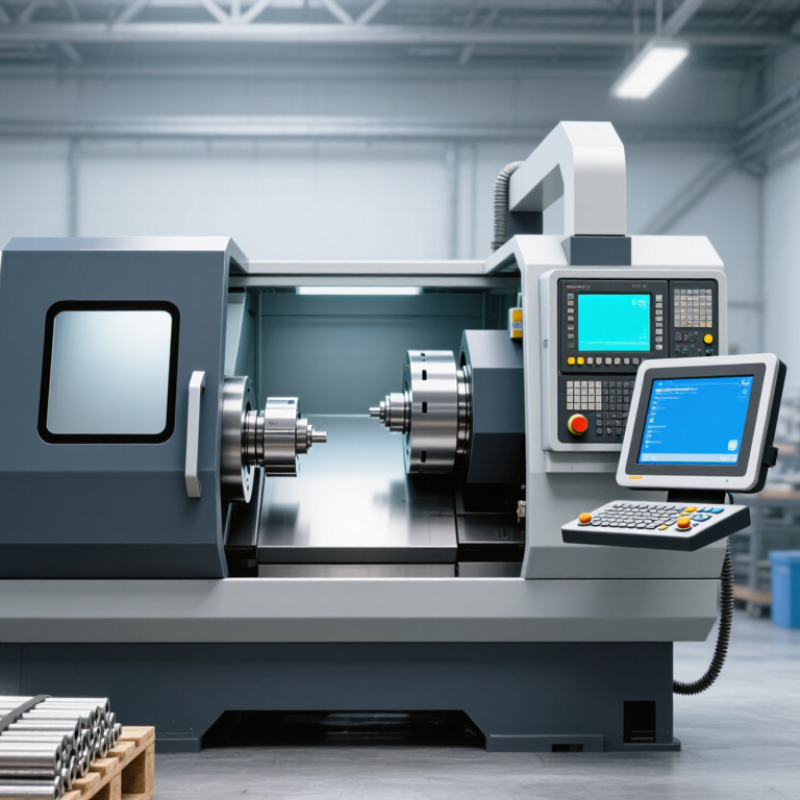
A CNC lathe shapes a workpiece by rotating it against a cutting tool. The machine’s controller follows programmed instructions to guide tool movement and cutting speed. Unlike a manual lathe, it can repeat a sequence with consistent dimensions once setup is correct. The spindle turns.
A typical cycle begins with stock secured in a chuck. The operator selects tools, sets the work offset, and enters or loads the machining program. A turret can hold several tools, allowing the machine to turn, face, and cut grooves without manual tool changes. The controller coordinates spindle rotation with movement along the machine’s axes. Coolant may help manage heat and clear chips.
Good results depend on more than the program. Material, tool condition, clamping pressure, and measurement all affect the finished part. Before cutting, experienced operators check the setup and run a cautious first pass. A dry run helps reveal possible tool-path errors. Still, the first cut may not match the simulation perfectly. That detail is easy to overlook. Small adjustments can improve fit, surface finish, and repeatability, but they take judgment as well as technical knowledge.
Chinese CNC lathes vary widely in bed layout, spindle capacity, tooling, and automation. A compact slant-bed model may clear chips quickly and suit small, repeatable parts. A heavier flat-bed machine may handle larger workpieces, but needs more floor space. Turret stations, bar capacity, and spindle torque can matter more than headline turning diameter.
Gardner Intelligence’s 2023 World Machine Tool Survey put China’s 2022 machine-tool consumption at about US$27 billion. That figure signals a large, diverse manufacturing base, not uniform quality. That matters. Compare machines by checking actual test cuts, thermal stability, tool-change time, and measured accuracy under load.
A shiny enclosure tells little. Ask to inspect a turned sample: look for consistent surface finish, clean shoulders, and dimensions checked with calibrated instruments. I would be cautious about treating catalogue tolerances as shop-floor results; setup, tooling, and operator skill affect them.
Also review the control interface, service documentation, and chip handling. Small details count. A lathe that holds tolerance through a long production run may be a better fit than one with a higher maximum speed.
The best machine depends on the parts you actually make. Check the maximum turning diameter, bed length, and spindle bore against your largest workpiece. A 200-millimeter shaft may fit in the chuck but still exceed the machine’s practical capacity. That detail is easy to miss. For steel parts, assess spindle power, chuck grip, and bed rigidity; vibration can spoil the finish and shorten tool life. Ask for repeatability figures and a sample cut using material similar to yours.
Control and support matter just as much as cutting capacity. Choose a control system your operators can learn and your technicians can troubleshoot. Confirm what is included: tooling, installation guidance, training, and spare parts. Request a written specification, then compare it with a trial-cut report or inspection data. A polished brochure is not proof. Even a capable lathe may be a poor fit if routine maintenance requires parts that are difficult to obtain.
Tips: Bring a drawing of a real part to the supplier. Ask about tolerances, cycle time, and surface finish for that part. Check service response times before ordering. Leave some capacity for future work, but do not pay for features you will rarely use. The “best” choice is rarely perfect; be clear about the compromises you can accept.
What Is the Best CNC Lathe from China?
How to Compare Chinese CNC Lathe Manufacturers
The best choice depends on your parts, materials, and production volume. Compare machine specifications against your actual work, not just a catalog. Ask each manufacturer for cutting samples using similar materials and dimensions. Inspect the surface finish, chip control, and repeatability across several parts. One polished sample proves little.
Look closely at spindle power and torque, turret configuration, axis travel, and positioning accuracy. Ask how accuracy is measured and whether test results are available. A machine may meet a stated tolerance in controlled conditions, yet perform differently during long production runs. That matters. Check the control system, too; operators should be able to use it confidently, or training must be included.
Service can separate two otherwise similar offers. Confirm which spare parts are stocked, how technical support works across time zones, and what installation and training cover. Request references from buyers with comparable workloads. Review warranty terms and the full delivered cost, including tooling and commissioning. I might give after-sales support more weight than some buyers do, but a fast reply is not proof of dependable service. Verify it with specific response procedures and records.
Compare manufacturers against the requirements that matter to your production—not just the quoted price.
These percentages are an illustrative buyer-priority framework, not manufacturer ratings or market-survey results. Adjust the weights to match your parts, tolerances, production volume, and service needs.
What Is the Best CNC Lathe from China?
The best CNC lathe is the one that fits your parts, production volume, and workshop—not necessarily the machine with the highest specifications. Start with a real part drawing. Note its maximum diameter, length, material, tolerances, and required surface finish. A 40-mm steel shaft needs different capacity and cutting power from a small aluminum fitting. Check spindle bore, chuck size, turret stations, and whether the machine needs a tailstock or bar feeder. These details shape daily output.
Consider how the machine will run across a full shift. For short batches, setup time and easy program changes may matter more than maximum speed. For long production runs, check cycle consistency, chip removal, and access to replacement parts. Ask for a cutting test using material and tooling similar to yours. Review the results, including dimensions and finish, rather than relying only on a brochure. That matters. Confirm installation, operator training, warranty terms, and service response in writing. A lower purchase price can become costly if downtime lasts weeks. Still, comparisons are rarely tidy: a feature that looks essential on paper may add little value on your actual parts. Choose based on measurable needs, and leave room for a careful acceptance check before production begins.
The best CNC lathe is the machine that matches your part size, material, tolerance, and production volume. The ranges below are general selection guidelines, not specifications for a particular machine; confirm actual capacity and performance with the supplier.
| Production need | Suitable lathe configuration | Key capacity to check | Selection priorities | Questions to ask before ordering |
|---|---|---|---|---|
| Small parts and short runs Components such as pins, bushings, and small shafts |
Compact 2-axis slant-bed or flat-bed CNC lathe | A typical small-machine turning diameter may be around 150–250 mm; confirm maximum turning length and chuck size against the actual part. | Easy setup, accessible tooling, reliable control, and a footprint suitable for the shop floor. | Can the machine hold the workpiece securely? Are the tool turret, chuck, and control included in the quoted configuration? |
| Medium-size components General turning of steel, aluminum, or similar materials |
General-purpose 2-axis CNC lathe with a slant bed or rigid flat bed | Compare maximum turning diameter, distance between centers, spindle bore, chuck diameter, and tool-turret capacity with your largest part. | Bed rigidity, spindle torque at the speeds you use, chip evacuation, and the availability of suitable tooling. | What are the continuous spindle power and torque figures? Are capacity figures measured with the standard chuck and turret fitted? |
| Bar-stock production Repeated machining of long parts from bar |
Bar-capable CNC lathe, typically equipped with a bar feeder and appropriate spindle bore | Choose the spindle bore and bar-feeder capacity for the maximum bar diameter; check bar length, support, and remnant handling. | Reliable feeding, spindle liner fit, guarding, chip control, and stable operation over long unattended cycles. | Is the bar feeder included? What bar sizes and stock lengths are supported, and what safety equipment is supplied? |
| Complex parts in fewer setups Parts requiring turning plus cross-drilling or milling |
Lathe with live tooling; a Y-axis or sub-spindle may be appropriate for the part mix | Check tool stations, live-tool speed and power, Y-axis travel, sub-spindle capacity, and supported programming functions. | Reduced handling and setup time, adequate tool access, and proven cycle performance on representative parts. | Can the supplier demonstrate the complete part cycle? Which options, software functions, and holders are included? |
| Heavy or large-diameter work Large shafts, flanges, or parts with substantial cutting loads |
Heavy-duty CNC lathe with a bed and spindle sized for the workpiece and cutting forces | Verify maximum swing, maximum turning diameter, workpiece weight, chuck capacity, spindle torque, and center support requirements. | Structural rigidity, safe workholding, suitable foundation requirements, and sufficient low-speed torque. | What are the allowable workpiece weight and chuck limits? What foundation, lifting, and installation requirements apply? |
| High-volume repeat production Long runs of consistent parts across shifts |
Production-oriented CNC lathe configured for the operation, with automation where justified | Assess cycle time, spindle duty, tool life, loading method, coolant capacity, and the time required for changeovers. | Uptime, repeatable setup, accessible service parts, operator safety, and support for the planned production schedule. | Can the supplier run a sample part and report the process assumptions? What training, warranty, and service response are available? |
"*" indicates required fields