Learn more about how Trevisan’s Horizontal Machining Centers can help you minimize set up time and labor costs.

What Is the Best CNC Turning Machine in 2026?

Choosing the best cnc turning machine in 2026 is not a brand contest. It is a fit between part geometry, production volume, tolerances, and the shop’s real operating costs. Grand View Research estimated the global CNC machine market at USD 86.83 billion in 2023, with growth projected through 2030. That figure covers more than turning equipment, so it signals broad investment—not demand for any one lathe type.

Manufacturing quality expert W. Edwards Deming offered a useful test: “In God we trust; all others must bring data.” For a machine buyer, that means checking cycle-time trials, spindle-load records, repeatability results, and service-response times. A catalogue’s maximum spindle speed tells only part of the story. A bar-fed production shop may value unattended running and quick tool changes; a job shop may need flexible chucking and easier programming. Listen to the spindle. Watch chips clear the enclosure. Ask for a sample cut using your own material.

There is no universal winner. That is the uncomfortable part. A fast machine can still be a poor choice if setup takes too long or local support is weak. Compare turning diameter, bar capacity, axis configuration, control, tooling, and total cost over several years. Verify claims with a test cut and written specifications. This guide will compare machine types and selection criteria, helping readers judge which cnc turning machine fits their work—not merely which one looks strongest on paper.
What Is the Best CNC Turning Machine in 2026?

What Is a CNC Turning Machine and How Does It Work?

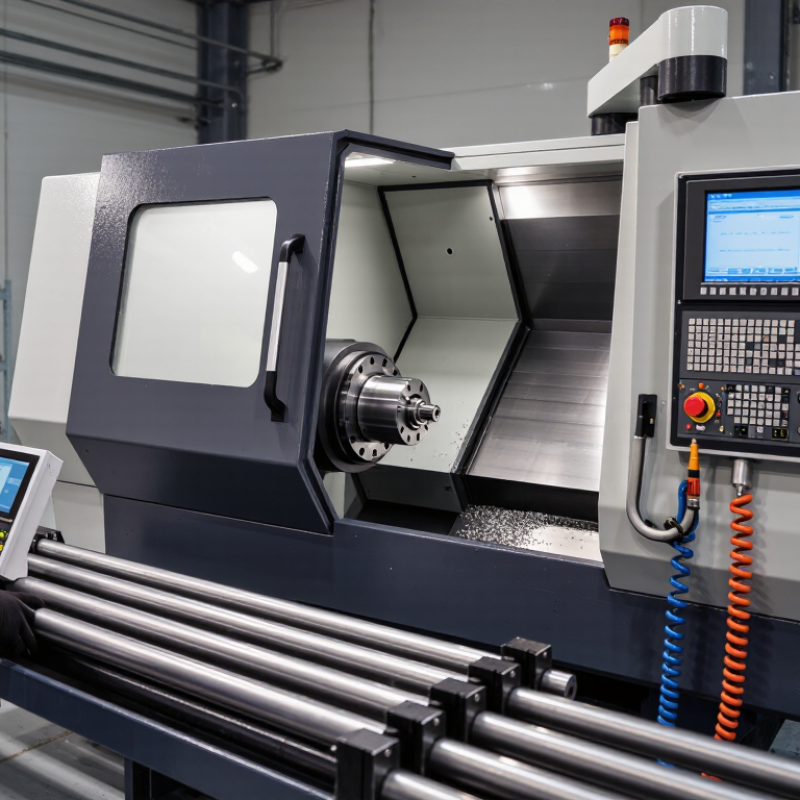
A CNC turning machine shapes a rotating workpiece with a cutting tool controlled by a computer. The workpiece is clamped in a chuck and spun by the spindle. The tool moves along programmed axes, removing material to create features such as shoulders, grooves, and threads. A typical shop-floor example is a steel bar becoming a stepped shaft, with each diameter cut to a specified size. Some machines also use live tooling to mill flats or drill cross-holes without moving the part to another machine.

The controller reads coded instructions and coordinates spindle speed, tool movement, and, when fitted, coolant and tool changes. Operators choose cutting tools and set work offsets, then verify the first part with measuring instruments. It is not entirely automatic: a poor setup or worn insert can still spoil a batch. Grand View Research’s CNC Machine Market Size, Share & Trends Analysis Report estimated the global CNC machine market at USD 83.99 billion in 2023, reflecting broad industrial investment—not a guarantee that every shop needs the same machine.

Tips: Match the machine’s bar capacity and spindle speed to your actual parts. Check a first-off component with a micrometer. Small errors matter. A faster cycle is not always a better one.

Which Features Define the Best CNC Turning Machine in 2026?

The best CNC turning machine in 2026 is the one that fits the parts and materials a shop actually runs. “Best” is not the same as fastest. A machine cutting steel shafts may need strong low-speed torque and a rigid spindle, while small aluminum parts may benefit more from higher speeds and quick tool changes. Match bar capacity, chuck size, and turning diameter to real jobs, not just occasional exceptions. Fit matters more.

Accuracy depends on more than the control system. A stable bed, consistent turret indexing, and effective thermal compensation help keep dimensions steady during long runs. Ask for a test cut in a representative material, then measure parts after the machine warms up. That is measurable. A polished demonstration can still leave questions about repeatability, setup time, and operator training.

Look closely at chip evacuation, coolant access, workholding, and routine maintenance. Tangled chips around a tool can interrupt production; awkward access can make daily cleaning a chore. Safety doors and clear operating procedures matter, too. I would not choose from specifications alone. A machine can look ideal on paper and still be a poor fit for a shop’s floor space, power supply, or staffing. Some trade-offs are unavoidable.

How Do CNC Turning Machine Types and Configurations Differ?

CNC turning machines differ mainly in spindle layout, axis count, and how parts move between operations. A two-axis horizontal lathe suits shafts and sleeves, while a vertical configuration can support heavy, short workpieces that sit securely on a large chuck. Swiss-type machines feed slender bars through a guide bushing, reducing deflection during small-diameter work. A mill-turn center adds live tooling and extra axes, allowing cross-holes or flats without moving the part to another machine. More axes do not automatically mean better parts.

Configuration matters on the shop floor. A bar feeder helps repeat long production runs; a sub-spindle can finish the back face in the same cycle. For mixed batches, quick-change tooling and accessible controls may matter more than peak spindle speed.

Grand View Research estimated the global CNC machine market at $101.22 billion in 2023, reflecting broad investment in automated machining, not turning machines alone. IFR’s World Robotics 2024 reported 541,302 industrial robots installed worldwide in 2023; robotic loading can extend unattended production, but needs space and stable part presentation.

A small detail, often overlooked. The best choice depends on material, tolerance, batch size, and operator skill.

I would still question a configuration chosen only from a machine’s maximum axis count.

How Do Leading CNC Turning Machines Compare by Performance and Cost?

A capable CNC turning machine in 2026 is not automatically the fastest or most expensive model. Compare spindle speed, torque, tool capacity, and positioning accuracy against the parts you actually produce. High speed can help with small aluminum components, while tougher alloys may need stronger low-speed torque. A rigid machine also helps control vibration and maintain consistent finishes during long runs. Still, published accuracy figures do not tell the whole story; setup, tooling, and maintenance matter.

Cost includes more than the purchase price. Check installation, workholding, programming, energy use, service access, and expected downtime. A machine with a larger tool turret may reduce changeovers, but only if your jobs use those tools regularly. For a small shop, a simpler configuration can deliver better value. For mixed production, flexibility may justify a higher investment. Compare quotations using the same options and warranty terms. It’s not a perfect calculation; production schedules change.

Tips: Ask for a test cut using your material and a representative part. Measure cycle time, surface finish, and repeatability. Request a written list of included accessories, training, and service response times. Then compare the machine’s cost per productive hour, not just its sticker price.

What Is the Best CNC Turning Machine in 2026? - How Do Leading CNC Turning Machines Compare by Performance and Cost?

Machine Type Typical Configuration Typical Work Capacity Performance Strengths Typical New-Machine Price (USD) Best Fit Main Trade-Off
Standard 2-axis slant-bed lathe One spindle, one turret, X and Z axes About 200–400 mm maximum turning diameter; bar capacity commonly around 40–80 mm Reliable turning performance, straightforward programming, and comparatively low setup and maintenance complexity Approximately $40,000–$120,000 General-purpose job shops and production of turned parts that need no milling operations Parts requiring cross-holes, flats, or other milled features usually need a secondary operation
Y-axis live-tooling lathe One spindle, live-tool turret, typically X, Z, and Y axes Often about 200–400 mm maximum turning diameter; capacity depends on chuck and machine size Turns and mills many features in one setup; reduces handling and alignment between operations Approximately $100,000–$250,000 Mixed-part production with milled details, cross-holes, or off-center features Higher purchase price and more demanding programming and tool management than a basic 2-axis lathe
Twin-spindle, multi-turret lathe Main and sub-spindles; one or more turrets, sometimes with live tooling Commonly suited to parts roughly 150–350 mm in diameter; exact capacity varies by layout Can complete front- and back-side operations in one machine; overlapping operations can shorten cycle time Approximately $180,000–$500,000 Stable, repeatable production of medium- to high-volume components Requires higher investment, careful process planning, and sufficient production volume to justify added capacity
Swiss-type sliding-headstock lathe Sliding headstock, guide bushing, and multiple tools; configuration may include back-working tools Typically optimized for bar stock around 12–38 mm, with larger-capacity versions available Excellent support for long, slender parts; simultaneous machining can deliver short cycles on small components Approximately $100,000–$350,000 Small, precise, high-volume parts such as pins, connectors, and medical or electronic components Setup and programming are specialized; less suitable for large-diameter parts or frequent low-volume changeovers
Heavy-duty large-bore lathe Large spindle bore and chuck; often configured for long or heavy workpieces Turning diameters commonly above 400 mm; spindle bores and bed lengths vary widely Designed for large workpieces, higher cutting loads, and long components Approximately $150,000–$600,000 or more Energy, transportation, oilfield, and other applications involving large shafts, tubes, or heavy components Large floor-space, foundation, lifting, and installation requirements; over-specified for small-part work

How to choose: There is no single best CNC turning machine for every shop. Match machine capacity and configuration to part size, material, tolerance, production volume, and required operations. Price ranges are broad, indicative estimates for new machines in 2026; actual quotations vary by specification, region, options, and supplier. Tooling, bar feeders, automation, installation, training, and taxes may add substantially to the total cost.

How Can Buyers Choose the Right CNC Turning Machine for Their Needs?

Start with the part, not the machine. Record its maximum diameter, length, material, tolerance, and monthly volume. Then check the turning machine’s swing, spindle bore, bar capacity, and tool stations against those needs. Leave room for the chuck, jaws, and cutting tool; a part that fits on paper may still collide during machining. That detail is easy to miss. For hardened alloys, compare spindle power and rigidity, not just top speed. For complex parts, live tooling or a second spindle may reduce handling, but adds setup and maintenance demands.

Plan for the people who will run it. The U.S. Bureau of Labor Statistics projects a 2% employment decline for machinists and tool-and-die makers from 2023 to 2033, while estimating about 34,200 annual openings. That makes controls, training, and local service practical buying criteria. The International Federation of Robotics’ World Robotics 2024 report counted 4.28 million industrial robots operating worldwide in 2023, up 10% from 2022. This signals growing automation, not a requirement to automate every lathe. Ask suppliers to demonstrate your actual part, material, and cycle. Measure finished dimensions, changeover time, chip control, and tool wear. A polished demo can hide a weak production fit. Budget for tooling, installation, maintenance, and downtime—not only the purchase price.

What Is the Best CNC Turning Machine in 2026?

Choose a machine whose spindle-speed range, torque, rigidity, and tooling suit the materials and part sizes you plan to turn. The chart shows broad, indicative carbide-tool cutting-speed ranges; actual values vary with the alloy, tool grade, coating, and cutting conditions.

How to use this: Check that the machine can reach the required spindle speed at your workpiece diameter. Cutting speed is not spindle RPM: RPM = (1,000 × cutting speed) ÷ (π × workpiece diameter in mm). Also verify torque, work envelope, and rigidity for your parts.

Scroll to Top
Scroll to Top